


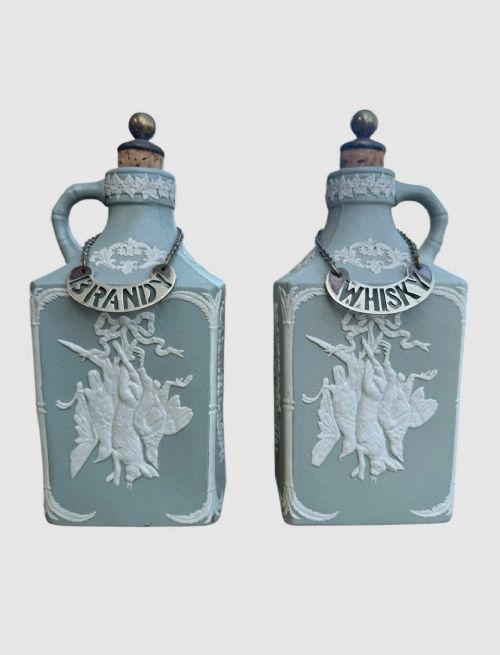


Vintage Liquor Set
A vintage liquor set gathers decanters, glasses and stands to hold spirits ready for pouring.
Vintage Liquor Set
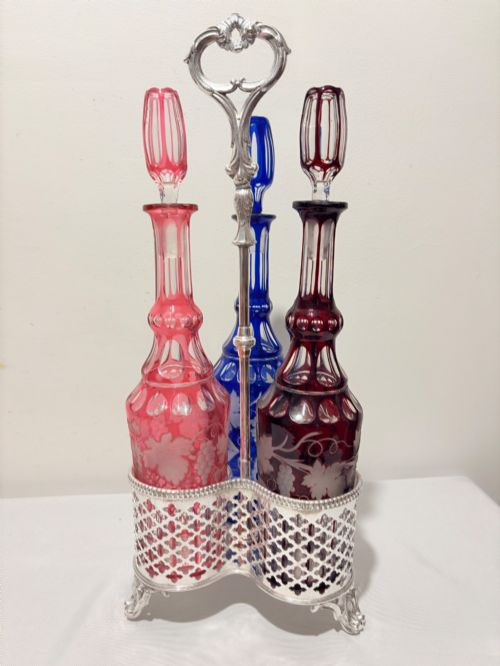
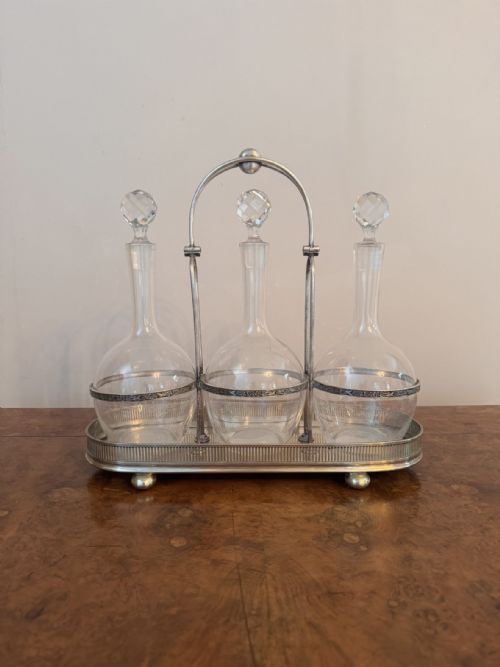
A vintage liquor set brings together matched drinking vessels and their containers, spanning forms such as tantalus frames, fitted boxes known as caves à liqueur, and standalone decanters paired with glasses or labels. These assemblies date from the Victorian, Edwardian, and Art Deco periods, drawing on styles ranging from ornate Rococo Revival to clean geometric lines.
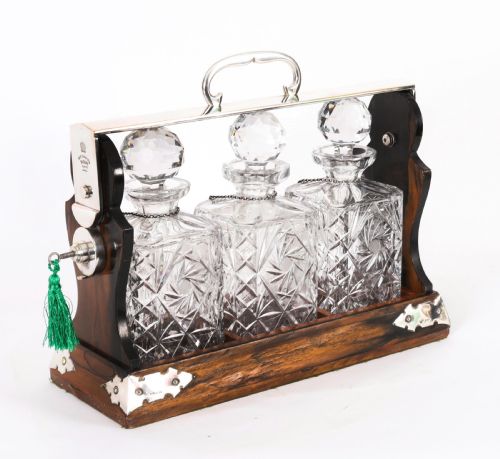
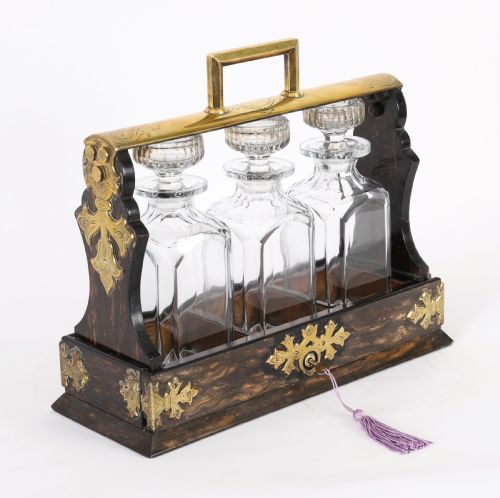
The most common examples on this page are silver-plated or oak-framed tantalus units housing cut crystal decanters, alongside Art Deco glass sets complete with matching glasses. Such groupings were designed for entertaining, often incorporating locking mechanisms or fitted compartments for secure storage.
Pieces incorporate materials like lead crystal, ruby and cranberry glass, brass mounts, and coromandel or golden oak woodwork. Makers and designers utilised these elements to create functional drinkware for home bars and sideboards.
Materials and construction
Decanters and matching glasses are shaped from clear, cut, or coloured lead crystal and glass, frequently employing techniques like optical blowing, hand enamelling, and acid etching. Frames and stands combine cabinet timbers such as oak and coromandel with brass hardware, silver plate, and Old Sheffield Plate.
Tantalus frames rely on secure metal locking bars designed to prevent the unauthorized removal of decanters from their wooden bases. Silver-plated stands and decanter labels utilise metal fabrication and stamping methods, often finished with hallmarked silver or applied chains.
Several sets include tiny locking bars designed specifically to stop thirsty guests from helping themselves.
Distinctions in standard and execution
Quality rests upon the precision of glass cutting, the clarity of crystal, and the integrity of mounts and locking mechanisms. Maker attribution also plays a role, with documented works by designers and firms commanding greater attention.
Cabinetwork displays variance in timber selection and marquetry stringing, where finer boxes exhibit precise joinery and substantial brass or silver mounts. Intricate hand-enamelling and well-preserved silver plating separate standard utility wares from exhibition pieces.
Betjemann·Karl Palda·James Powell·Val Saint Lambert·Hukin and Heath·Elkington
The Vintage Liquor Set Glossary
- Tantalus
- A locking drink cabinet that holds decanters in place by their stoppers, denying access to the contents without a key while displaying the bottles.
- Cave a Liqueur
- A fitted wooden box containing a set of decanters and small glasses, often lined with velvet or silk.
- Tott Pail
- A small container or bucket used alongside dispensers for holding ice or measures.
- Old Sheffield Plate
- A composite material made by fusing a thin sheet of silver to a copper base, utilised before electroplating.
- Decanter Label
- A small tag hung by a chain around the neck of a bottle to identify the spirit inside.
Vintage Liquor Set: Frequently Asked Questions
What is a tantalus?
A tantalus is a lockable wooden or metal stand that holds decanters securely by their necks, allowing guests to see the spirits inside while preventing unauthorized pouring.
The name derives from Greek mythology, describing how the bottles remain visible yet out of reach until unlocked with a key.
How were liquor sets used?
These sets were kept on sideboards, in games compendiums, or in dedicated smoking rooms to serve whiskey, brandy, and dessert wines to visitors.
They functioned both as practical barware for evening hospitality and as decorative display items reflecting the host's taste.
How do I care for antique glass?
Wash crystal decanters and glasses gently by hand in warm water using mild soap, avoiding sudden temperature changes that can crack old glass.
Store them with stoppers slightly ajar or removed if dampness persists inside the vessel.
How do I date a set?
Dating relies on combining material evidence, such as oak frames and cut crystal styles, with silver hallmarks and maker signatures.
Art Deco geometric designs point toward the interwar years, whereas heavy brass-mounted oak frames and cut glass typically indicate the Victorian or Edwardian eras.