

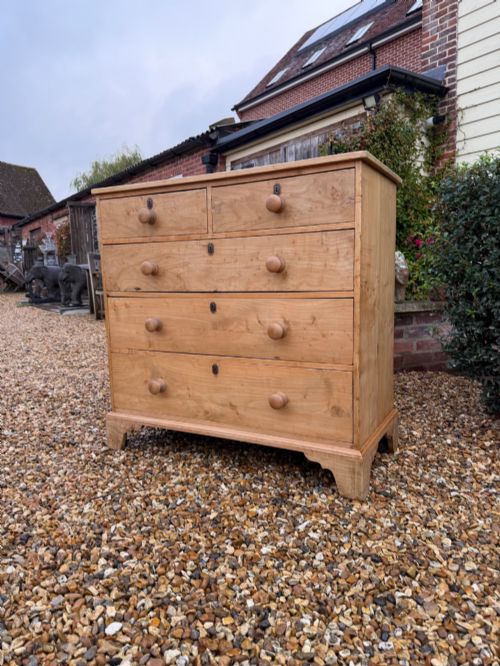
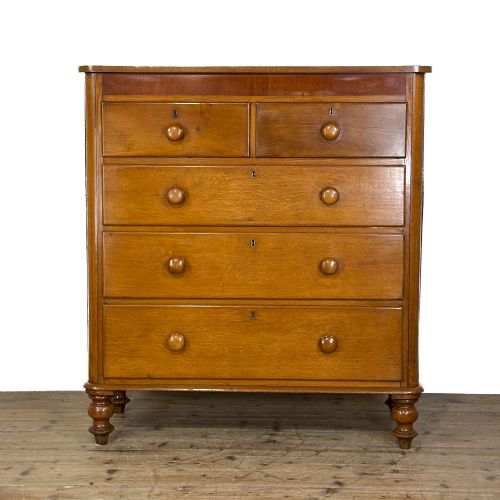
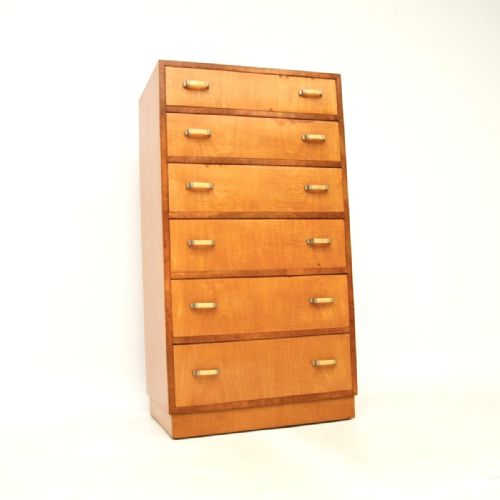

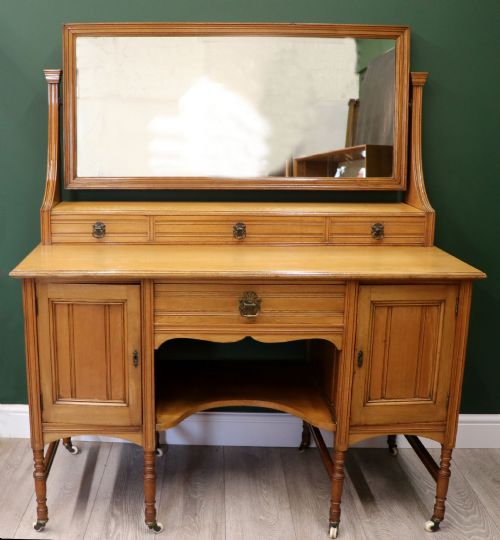

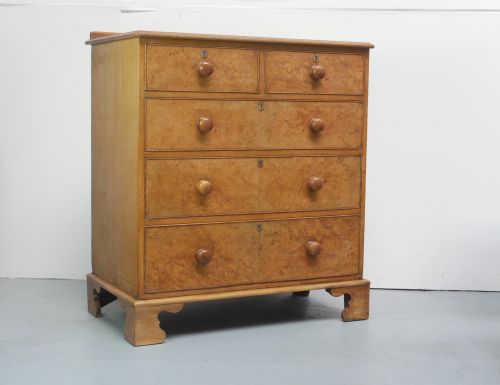


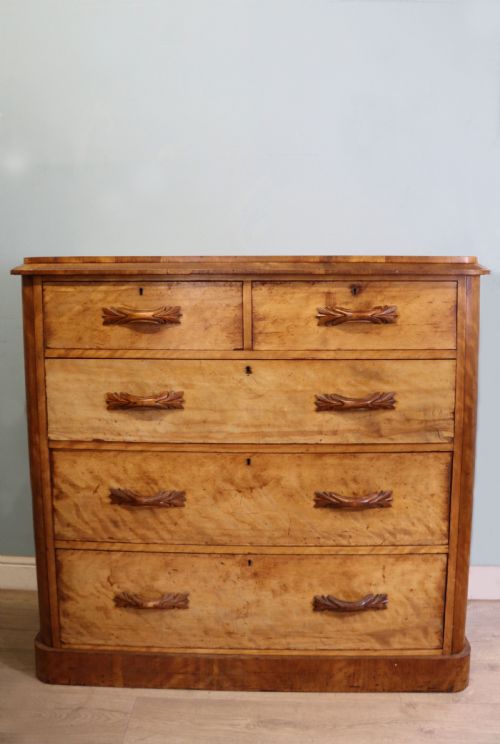


Vintage Light Wood Dresser
These vintage light wood dresser pieces are practical storage items built from pale timbers like pine, ash, oak, and satinwood.
Vintage Light Wood Dresser
The selection on this page relies heavily on nineteenth-century pieces alongside Edwardian and Art Deco examples. Oak, pine, ash, and satinwood dominate the physical evidence, often appearing in forms like the chest of drawers or the dressing chest.
Buyers seeking a vintage light wood dresser will encounter both British vernacular pieces and continental examples, including Swedish birch and Japanese tansu chests. The overarching character of these items comes from their pale natural wood tones, whether finished with a limed surface, bleached oak, or polished flame birch.
How they were made
Construction relies primarily on solid timbers such as oak, pine, ash, and walnut, frequently enhanced by decorative veneers like satinwood, flame birch, and burr ash. Cabinetmakers shaped these materials into functional carcases, often incorporating brass hardware for handles and drawer pulls.
Surface treatments play a distinct role in achieving the pale aesthetic, with techniques including bleaching, liming, and polishing to highlight the natural grain. Carving and serpentine shaping appear on specific styles, such as French commodes and English country potboard dressers, showing varied levels of joinery skill.
Vintage Light Wood Dresser Retail Price Guide 2026
Typical asking prices for vintage light wood dresser among the pieces listed under this phrase on Sellingantiques today, from the lower quarter to the upper quarter. They describe what is for sale here now, not the wider market.
Materials represented across the inventory include oak, pine, ash, satinwood, walnut, brass, metal, Paulownia wood, and flame birch.
What varies in quality
The standard of timber selection largely dictates the visual appeal of each piece, particularly where figured veneers like flame birch or burr ash are involved. Grain alignment and the preservation of natural wood tones through careful bleaching or liming distinguish finer examples.
Joinery execution and the integrity of original hardware, such as brass pulls and fitted drawer dividers, separate standard utilitarian items from finer cabinetwork. The precision of serpentine fronts and the depth of carved details on oak and ash surfaces also indicate the original maker's skill.
The Vintage Light Wood Dresser Glossary
- Potboard dresser
- A traditional dining room or kitchen storage unit featuring an open lower shelf for displaying pottery alongside enclosed drawer space above.
- Chiffonier
- A compact sideboard or cabinet developed in the nineteenth century, typically featuring a combination of drawers and lower cupboard doors.
- Flame birch
- A distinctive timber veneer showing a wavy, undulating grain pattern resembling flickering flames, popular in Swedish furniture design.
- Serpentine commode
- A chest of drawers or cabinet featuring a distinctive undulating front profile with alternating convex and concave curves.
- Satinwood
- A hard, durable timber with a golden yellow sheen and a lustrous grain, frequently utilised as a decorative veneer in eighteenth and nineteenth-century pieces.
Vintage Light Wood Dresser: Frequently Asked Questions
How do I care for antique wood surfaces?
Maintain pale wood finishes by dusting regularly with a soft, dry cloth and avoiding placement near direct heat sources or strong sunlight. Wax polishes suited to antique timber help preserve the natural lustre without building up excessive residue.
Protect surfaces from moisture and heavy impacts, as older finishes on timbers like satinwood and pine respond best to gentle, consistent environmental conditions.
Where were these pieces made?
The inventory reflects diverse origins, including British workshops producing oak and pine items, French cabinetmakers crafting serpentine commodes, and Swedish makers utilising flame birch. Pieces also span Japanese tansu chests and American walnut tables.
Geographic origins dictate the distinct regional styles, from English Country potboard dressers to Art Deco modernist dressing tables from the 1930s.
How do I identify the period of a dresser?
Dating relies on combining stylistic markers with construction techniques, timber choices, and hardware styles. Eighteenth-century pieces often feature heavy oak with limed finishes, while Victorian and Edwardian examples utilise ash, pine, and satinwood.
Art Deco items from the 1930s introduce modernist lines and contrasting veneers like walnut and satinwood, separating them from earlier nineteenth-century vernacular furniture.