



Vintage Light Bowl
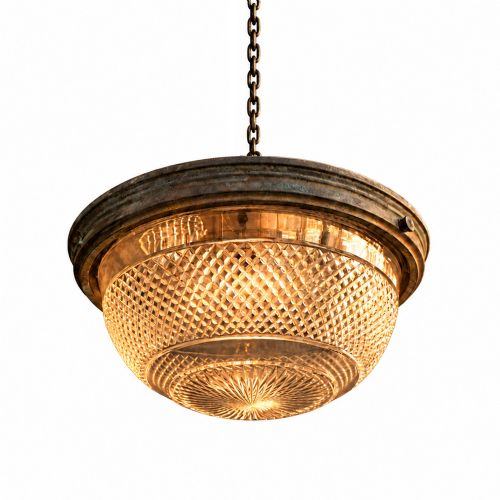
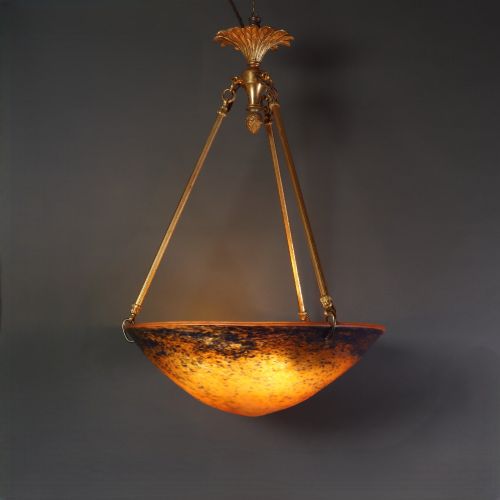
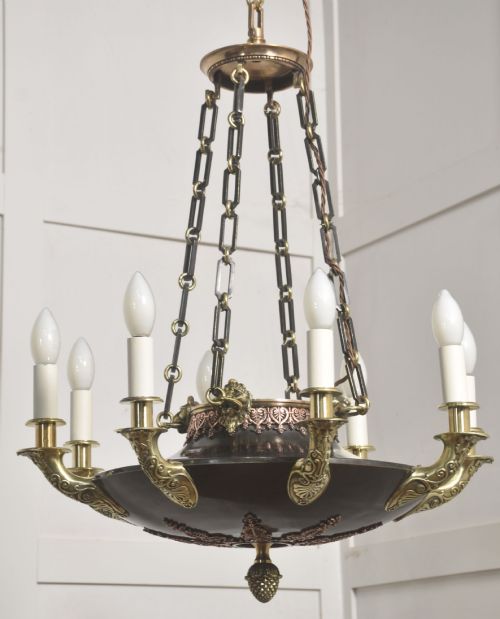
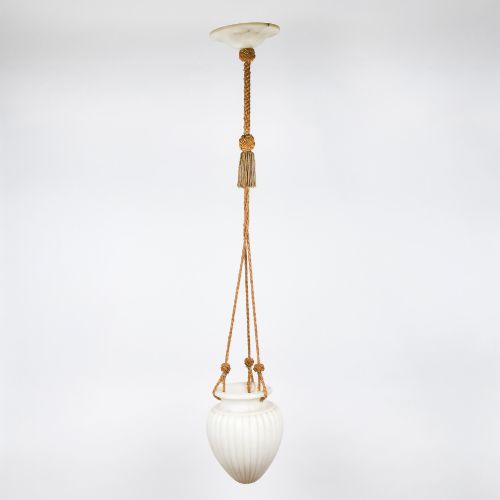
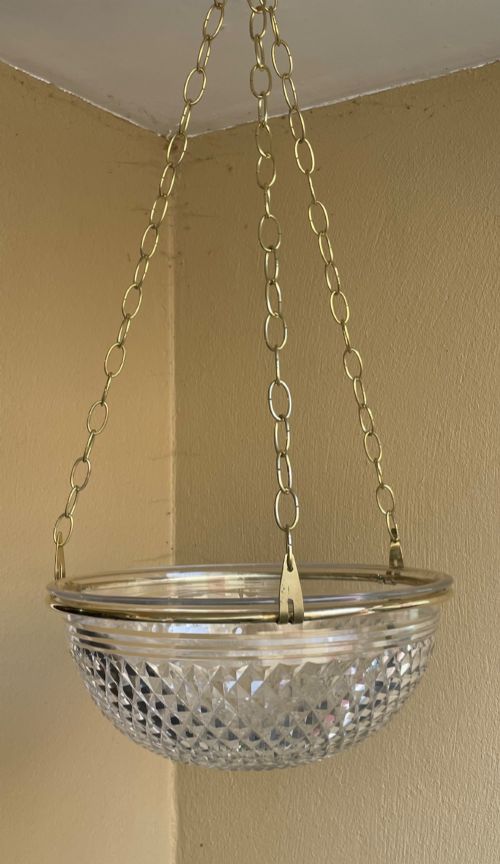
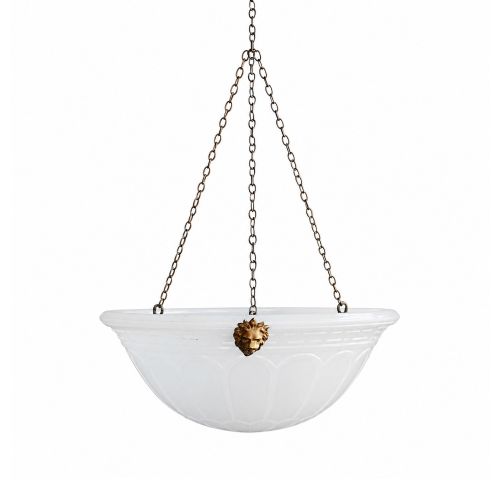
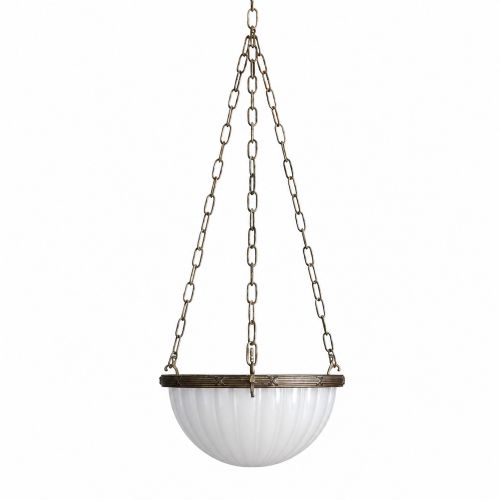
These vintage light bowl fixtures illuminate rooms through suspended glass, alabaster or crystal dishes, offering a direct route to period ceiling lighting.
Vintage Light Bowl
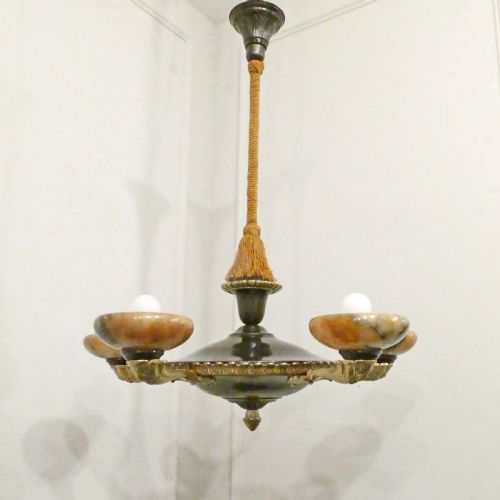
A vintage light bowl encompasses ceiling lights, pendants, plafonniers and chandeliers that use a hanging dish or basin as the primary diffuser. These fixtures appear across periods from the nineteenth century through the mid-twentieth century, with strong representation from the Art Deco and Edwardian eras.
The form functions primarily to cast downward and ambient light through pressed satin glass, cut crystal or carved alabaster. Suspended by brass, bronze or copper chains and cords, these bowls occupy a central position in period interior schemes.
Materials and construction
Makers utilised heavy mineral blocks of white alabaster, carved into smooth campana urn bases or shallow dishes, alongside moulded and pressed glass formulas like moonstone, opaline and satin finishes. Metalwork components in brass, copper, bronze and silver plate secure the bowls using multi-point suspension rings and chains.
Glass shaping techniques ranged from deep-acid etching and polychrome enamelling to heavy hand-cut facets. Artisans combined these translucent diffusers with cast metal mounts to create stable, weight-bearing hanging assemblies.
Vintage Light Bowl Retail Price Guide 2026
Typical asking prices for vintage light bowl among the pieces listed under this phrase on Sellingantiques today, from the lower quarter to the upper quarter. They describe what is for sale here now, not the wider market.
Distinguishing quality in light bowls
Quality rests in the depth and clarity of the material, whether in the crispness of hand-cut facets on heavy crystal or the uniform density and natural veining of carved alabaster. Superior examples display balanced proportions between the hanging dish and its metal suspension hardware.
The integration of the maker's artistic vision defines the upper tiers, seen in signed moulded glass or detailed cast bronze mounts with rams head or neo-classical motifs. Lesser pieces rely on plain, unarticulated metal and generic glass blanks without signature design elements.
Charles Schneider·Jefferson·René Lalique·Wedgwood
The Vintage Light Bowl Glossary
- Plafonnier
- A ceiling-mounted or shallow suspended bowl light that sits close to or directly beneath the ceiling rose. This French term typically applies to Art Deco glass dome and dish fixtures.
- Alabaster
- A fine-grained, translucent form of gypsum or calcite used to carve soft-edged hanging bowls. It diffuses light with a warm, even glow.
- Satin glass
- Glass treated with hydrofluoric acid or sandblasting to produce a dull, velvety surface texture. It softens bulb glare effectively in twentieth-century lighting.
- Campana urn
- A bell-shaped vessel form with a flared rim and constricted stem, often utilised as a decorative base or central element in nineteenth-century designs.
- Diaper lustre
- A decorative surface treatment featuring a repeated geometric pattern with an iridescent sheen. It appears on ceramic and glass lighting components from the early twentieth century.
Vintage Light Bowl: Frequently Asked Questions
How do you hang a heavy alabaster bowl?
Hanging a heavy stone or thick glass bowl requires secure fixing to ceiling joists using steel mounting brackets that match the weight of the fixture. The original brass or bronze chains distribute the load evenly across multiple suspension points.
Professional electrical installation is essential to ensure the internal wiring safely supports the combined weight of the metal hardware and stone basin.
What rooms suit a plafonnier?
Plafonniers work well in hallways, bedrooms and dining spaces with lower ceilings where a hanging chandelier would hang too low. Their close-to-ceiling profile provides ample ambient illumination without obstructing movement.
They pair effectively with Edwardian and Art Deco interior schemes, echoing the architectural proportions of smaller or mid-sized rooms.
How do I clean antique glass shades?
Cleaning antique glass and crystal requires warm water and mild soap, removing the shade from its metal mounts where possible. A soft cloth prevents scratching on sensitive frosted or enamelled surfaces.
Alabaster bowls demand special care, as the porous stone absorbs water easily and should be wiped with a dry or barely damp cloth instead.
Can I use modern LED bulbs?
Modern LED bulbs fit into most vintage fixtures provided the wattage and physical dimensions match the original lamp holder specifications. LEDs generate less heat, which helps protect nineteenth-century silk cords and painted glass surfaces.
Selecting warm white bulbs preserves the soft amber and cream tones emitted by alabaster and opaline glass bowls.