





Vintage Life Pool Scoreboard
A vintage life pool scoreboard is a dedicated room piece built to track matches, crafted from timbers like mahogany and oak.
Vintage Life Pool Scoreboard
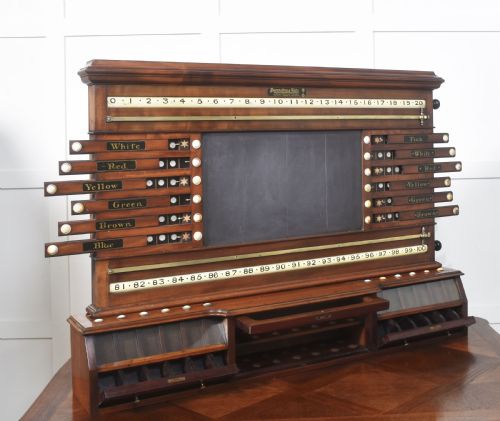
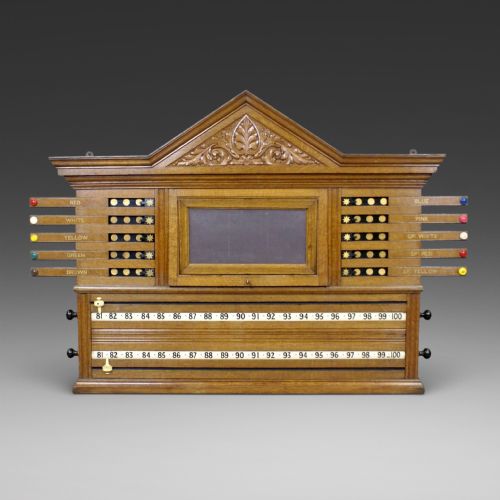
When you search for a vintage life pool scoreboard, you are looking at nineteenth and early twentieth century room furnishings designed for cue sports. These wooden wall fixtures accommodated the scoring systems needed for games such as life pool, billiards, and snooker.
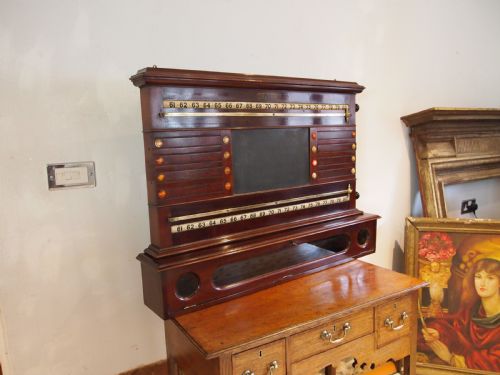
The versions you are most likely to meet on this page span the Victorian and Edwardian eras, taking the form of wall-mounted scoreboards or larger score cabinets. They frequently originate from makers active in London and Manchester during the second half of the nineteenth century and the early decades of the twentieth century.
How they were made
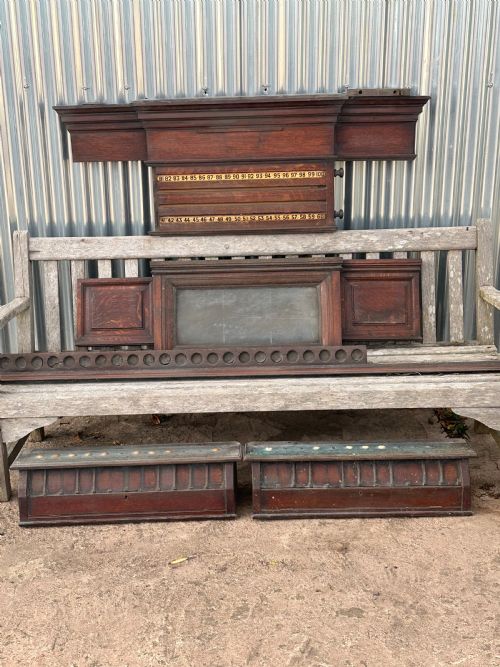
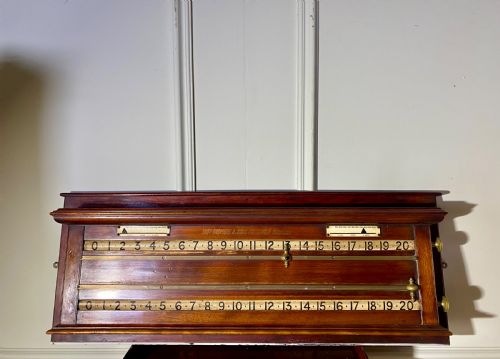
These scoreboards rely on solid timbers such as mahogany, oak, and English walnut for their main bodies and cabinets. Workshops constructed them to withstand the heavy atmosphere of a nineteenth century games room.
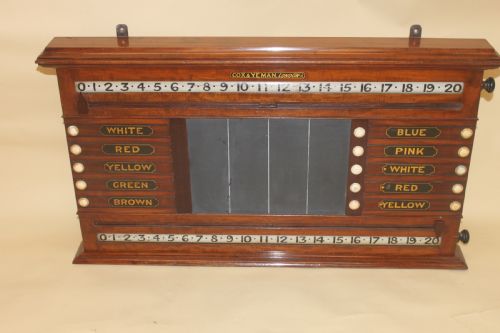
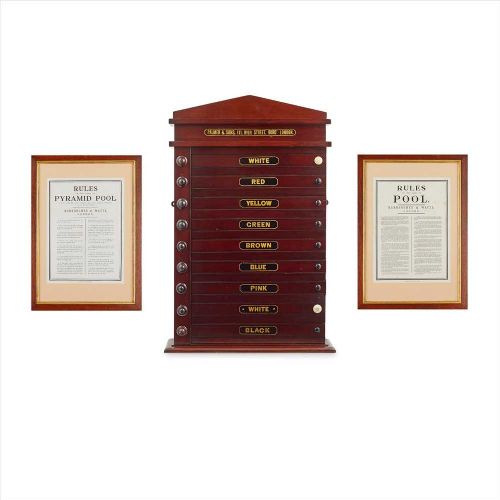
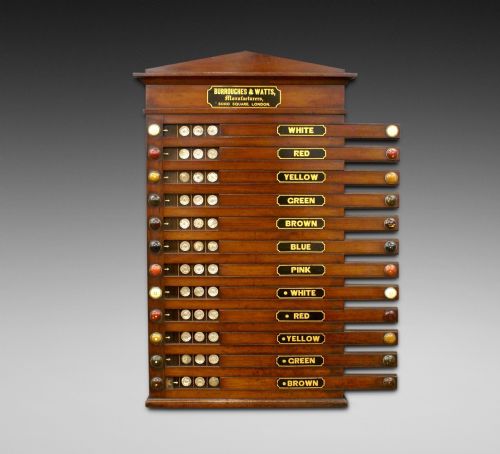
Details and sliding markers incorporate brass, bone, glass, and celluloid to display the numbers clearly during a match. Selected examples integrate slate panels or decorative prints alongside the woodwork.
Listings feature items spanning the nineteenth century through the Edwardian period, utilising mahogany, oak, walnut, brass, bone, and celluloid.
What varies in quality
Quality in these scoreboards rests primarily on the selection of timber and the complexity of the cabinetwork. Heavier woods like English walnut and figured oak, alongside larger architectural proportions, distinguish the finer pieces from simpler utility boards.
Makers' signatures and attributed workshops also alter the character of a piece, separating standard games room equipment from works bearing the names of prominent nineteenth century billiard furnishers.
Orme and Sons Manchester·Thurston and Co of London·Cox and Yeman London·Burroughes and Watts·Palmer and Sons
The Vintage Life Pool Scoreboard Glossary
- Life pool
- A cue sport popular in the nineteenth century where players start with a specific number of lives. Scoreboards for this game required distinct sliding pointers or markers to track remaining lives.
- Mahogany
- A dense tropical timber utilised extensively for nineteenth century furniture and games room accessories. Its stability and grain made it a primary choice for quality scoreboards.
- Celluloid
- An early semi-synthetic plastic used for numbering strips and markers on period scoreboards. It provided a durable, pale surface that contrasted against the dark timber backing.
- Score cabinet
- An enclosed wall fixture featuring doors and internal storage alongside the main scoring dials. These larger formats often housed chalk, rules, or accessories within the cabinet structure.
Vintage Life Pool Scoreboard: Frequently Asked Questions
What is a life pool scoreboard?
A life pool scoreboard is a wall-mounted wooden board designed to track scores and remaining lives during nineteenth century cue sports. These pieces feature sliding markers and dials arranged on timber backboards.
They served as functional furniture in billiard rooms and gentlemen's clubs before surviving as decorative antiques for modern interiors.
Which woods were used for scoreboards?
Maker workshops constructed these scoreboards using hardwoods such as mahogany, oak, and English walnut. These durable timbers were chosen to match other furniture in Victorian and Edwardian billiard rooms.
Finer examples frequently display figured grain patterns and heavier proportions suited to large score cabinets.
How do you date a scoreboard?
Dating relies on the construction style, timber choices, and incorporated materials like bone, brass, or celluloid. Victorian examples often feature simpler mahogany or oak boards, while Edwardian pieces lean towards larger enclosed score cabinets.
Maker stamps, stamps from firms like Thurston or Burroughes and Watts, and associated prints also help narrow down the period of manufacture.
Where were these scoreboards made?
The majority of these scoreboards originated in workshops based in London and Manchester during the nineteenth and early twentieth centuries. Prominent billiard furnishers produced them alongside tables and cues.
These urban firms supplied clubs, private residences, and public houses across Britain with standardised games room equipment.