




Vintage Leather Trinket Box
These vintage leather trinket boxes bring practical desk storage and tactile warmth to any room, offering fitted compartments and rich textures for everyday use.
Vintage Leather Trinket Box
A vintage leather trinket box combines utilitarian storage with period character, appearing across diverse eras from the Victorian epoch through the mid-twentieth century. Buyers searching this phrase encounter receptacles designed for desks, dressing tables, and writing cabinets.
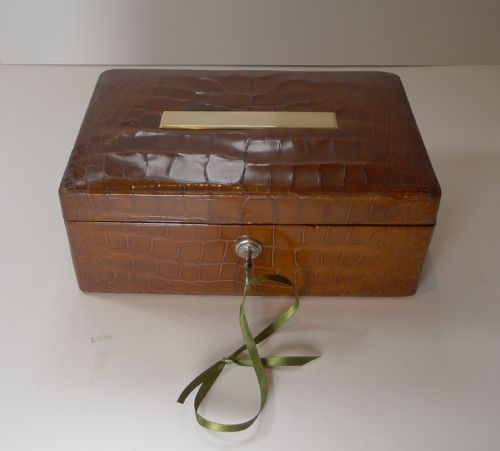
The selections span traditional rectangular jewellery cases, faux book caskets, and novelty forms such as carved wooden footballs alongside crocodile and pigskin examples. French provincial and Art Deco styles sit alongside English Victorian pieces, reflecting broad international production.
Most items on this page date from the late nineteenth century up to the 1950s, utilising durable hides over wooden or metallic frames. These containers served varied functions, from holding pens and stationery to safeguarding personal jewellery.
How they were made
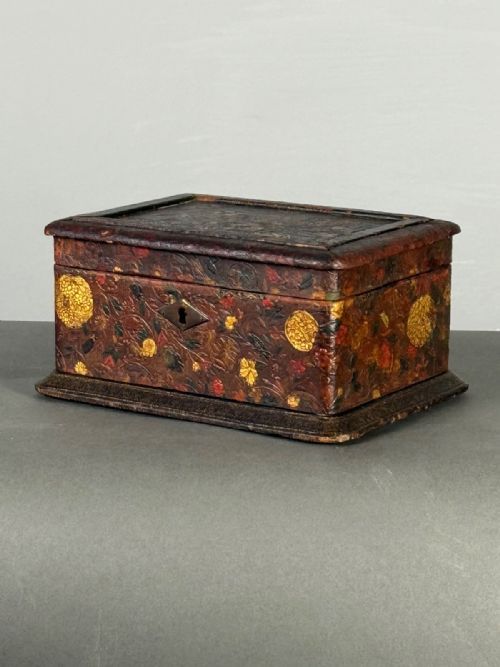
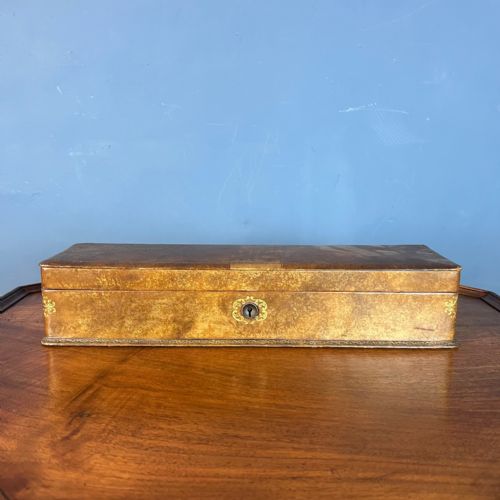
Maker construction relies on heavy-grade leather, crocodile skin, or pigskin stretched over rigid wooden or metallic carcases. Artisans often applied fine tooling, blind stamping, or gold leaf to embellish the exterior surfaces.
Interior arrangements frequently feature tailored compartments lined for delicate items, paired with brass hinges, clasps, or locks. Specialised workshops employed polychrome pigment and gold tooling to finish luxury items destined for Parisian or English markets.
Vintage Leather Trinket Box Retail Price Guide 2026
Typical asking prices for vintage leather trinket box among the pieces listed under this phrase on Sellingantiques today, from the lower quarter to the upper quarter. They describe what is for sale here now, not the wider market.
The inventory encompasses French provincial work, Art Deco designs, and novelty pieces shaped like soccer footballs.
What varies in quality
Quality separates mass-produced utility containers from pieces bearing precise hand-tooled gold leaf and specialist materials like genuine crocodile skin. The integrity of the underlying wooden or metal structure dictates long-term durability.
Fine craftsmanship shows in the crispness of tool work, the precise alignment of brass hardware, and the preservation of original pigmented surfaces or gold leaf ornamentation.
Susse Freres Paris
The Vintage Leather Trinket Box Glossary
- Tooled leather
- Leather decorated by pressing heated metal tools into the damp hide to create patterns. This technique provided both structural durability and decorative depth.
- Gold leaf
- Extremely thin sheets of beaten gold applied to leather or wood surfaces for ornamentation. It remains a hallmark of high-grade nineteenth-century desk accessories.
- C casket
- A decorative container with a hinged lid, often constructed to resemble a small safe or bound volume. These items were popular for concealing valuables on library desks.
- Polychrome
- The practice of decorating surfaces in multiple colours. This finish appears on select nineteenth-century Parisian leatherwork to enhance visual contrast.
- Pigskin
- A durable animal hide characterised by distinct follicle patterns visible on the surface. It offered sturdy protection for interwar travel and desk accessories.
Vintage Leather Trinket Box: Frequently Asked Questions
What were leather trinket boxes used for?
These boxes stored personal valuables, small jewellery items, writing implements, and desk seals. Their compact size kept precious items organised within reach on household desks and dressing tables.
Over decades of use, they transitioned from functional stationery holders into decorative display pieces that retain their tactile appeal.
How do I date a vintage leather box?
Dating relies on observing material choices, hardware styles, and manufacturing techniques recorded across different decades. Victorian examples often feature heavy brass clasps and intricate gold tooling, whereas interwar pieces utilise alternative skins and cleaner lines.
Comparing structural forms against known periods helps narrow down the origin of each container.
Are these boxes suitable for daily use?
Solid construction using wood and thick hide allows these containers to withstand regular opening and closing. Their robust brass hinges and fitted interiors continue to protect modern contents effectively.
Placing them out of direct sunlight helps preserve the historic leather and any applied gold leaf detailing.
What materials are common in these pieces?
Surfaces primarily feature cow leather, crocodile skin, or pigskin stretched over wooden or metallic frames. Additional elements include brass hardware, gold leaf ornamentation, and polychrome pigments.
Wood also appears independently, notably in carved novelty items shaped as everyday objects.