



Vintage Leather Toy
These vintage leather toy pieces bring lasting nursery character to a room, spanning carved wooden horses and folk art animals crafted across the late nineteenth and early twentieth centuries.
Vintage Leather Toy
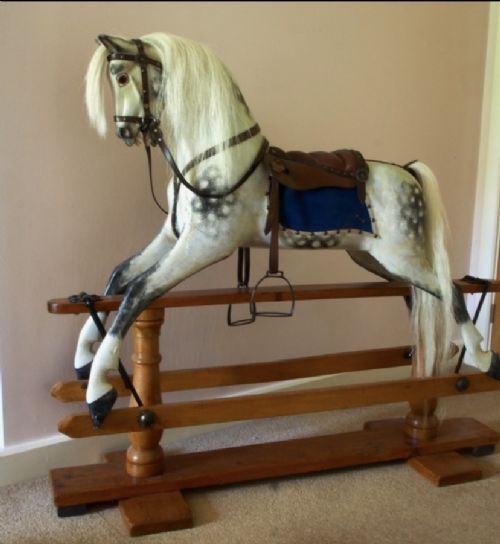
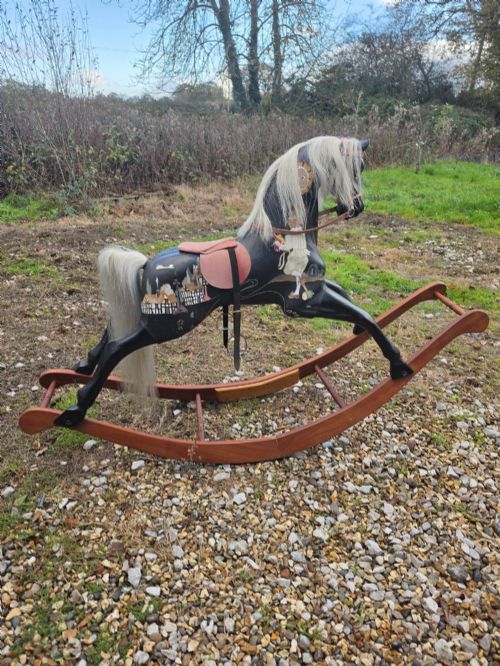
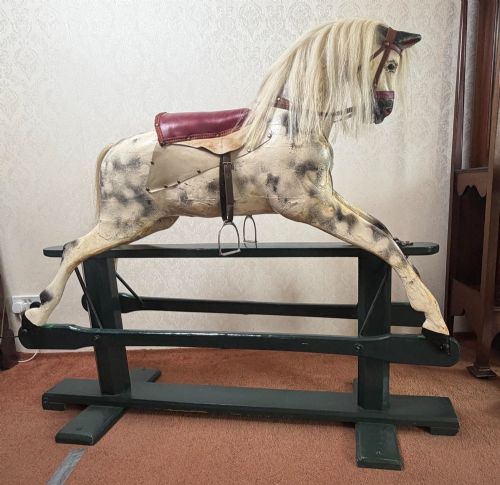
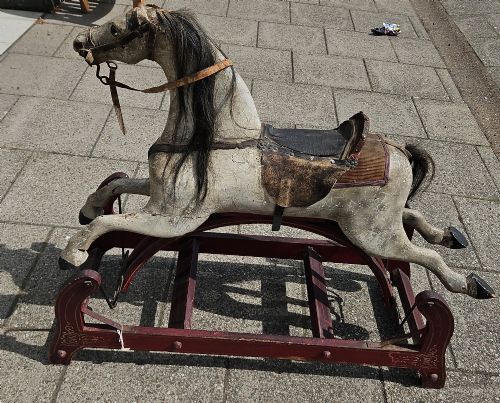
When you search for vintage leather toy, you enter a field dominated by substantial wooden rocking horses and pull-along toys rather than small pocket figures. The examples found here range from robust Victorian models to early twentieth century pieces.
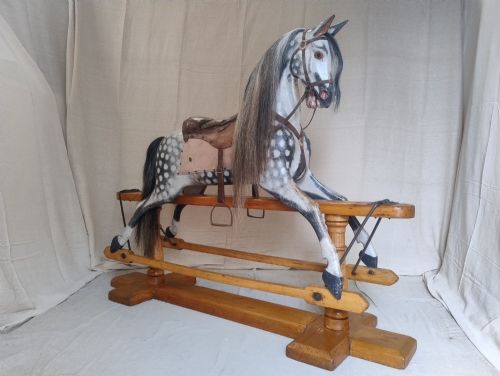
Most entries belong to the rocking horse tradition, mounted on original curved wooden rockers or safety stands. Alongside these equines, folk art sculptures such as carved dogs demonstrate the broader scope of animal figures made for children.
Makers and makers' yards such as G & J Lines of London and F.H. Ayres represent the high-grade production typical of this era. Pieces span the decades from the eighteen-eighties through to the nineteen-forties, maintaining traditional forms.
How they were made
Makers carved bodies primarily from pine and other woods, shaping the animal forms by hand before applying skins and finishes. Leather covered these wooden carcasses, often combined with horsehair for mannes and tails.
Internal frameworks utilised metal, iron, and steel components to secure rockers and provide structural stability for riders. Glass eyes and painted details completed the expressions of these animals, merging upholstery techniques with woodwork.
Vintage Leather Toy Retail Price Guide 2026
Typical asking prices for vintage leather toy among the pieces listed under this phrase on Sellingantiques today, from the lower quarter to the upper quarter. They describe what is for sale here now, not the wider market.
Some early dogs feature opening mouths and pop-out eyes to delight Victorian children.
What varies in quality
Quality rests upon the strength of the carved wooden anatomy and the neatness of the leather covering. Makers who invested time in naturalistic muscle definition and secure stitching produced superior results.
The presence of original rocking stands, genuine horsehair tails, and untouched painted surfaces elevates certain examples above standard workshop output. Maker attribution, particularly to established London firms, marks the upper tier.
G & J Lines of London·F.H. Ayres·Collinson
The Vintage Leather Toy Glossary
- Rocking horse
- A carved wooden toy mounted on curved wooden rockers or a safety stand designed for children to ride. These objects form the majority of the current selection.
- Folk art
- Items created by traditional artisans outside mainstream academic training, often displaying distinct regional character. The dog sculpture listed here exemplifies this expressive approach.
- Horsehair
- Natural hair utilised for the mannes and tails of equine toys. It provides authentic texture and movement to antique animals.
- Pull-along toy
- A wheeled childs toy designed to be towed across the floor by a string. Smaller figures often took this mobile form.
- Safety stand
- A rigid wooden frame holding a rocking horse aloft so the animal swings without tipping over. This innovation appeared in the later nineteenth century.
Vintage Leather Toy: Frequently Asked Questions
How do I date an old rocking horse?
Dating relies upon construction methods, shoe styles, and the shape of the wooden body. Victorian examples often feature distinct carving depth and heavier ironwork.
Makers' stamps or labels underneath the belly provide the most secure evidence for specific years. Changes in stance and tack over the decades also help narrow down the period.
Were these toys meant for play?
These pieces were built as robust playthings for children in Victorian and Edwardian nurseries. Sturdy pine and iron construction ensured they survived daily use.
Over generations, many transitioned from playroom favourites to decorative interior items. Their durable materials allowed them to endure decades of active childhood service.
What is a safety stand rocking horse?
A safety stand holds the horse within a rigid wooden frame using swinging iron arms. This design prevented the animal from tipping completely over during vigorous rides.
It became popular in late nineteenth century homes with polished floors and active children. The mechanism alters the footprint of the toy significantly compared to simple curved rockers.
How should I care for antique leather toy pieces?
Keep these items away from direct sunlight and damp conditions to protect the wooden structure and leather skin. Stable indoor temperatures prevent the organic materials from drying out or cracking.
Gentle dusting preserves the original surface without disturbing old paint or horsehair mannes. Heavy cleaning agents should be avoided entirely to retain historical integrity.