

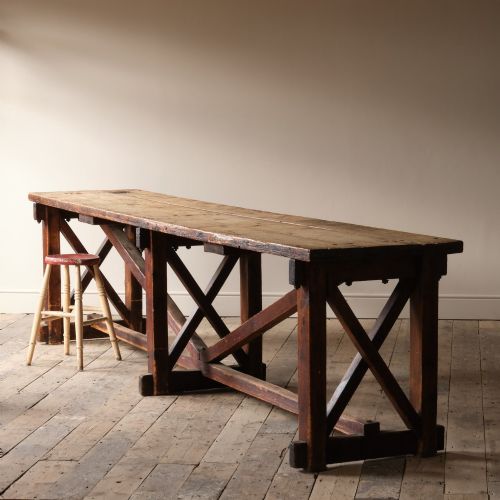
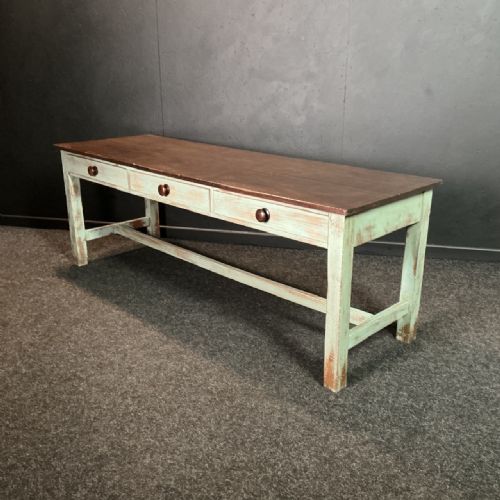
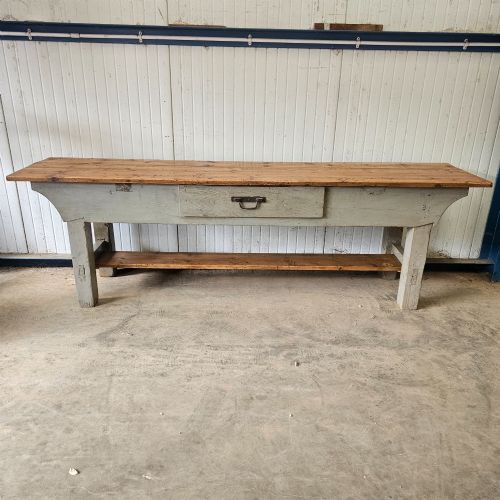
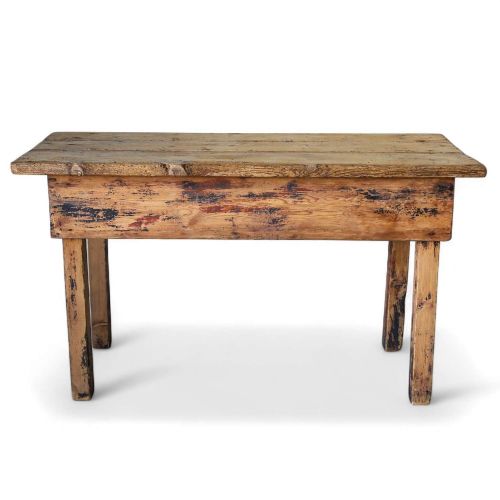


Vintage Kitchen Workbench
A vintage kitchen workbench provides a practical, hard-working surface for food preparation while anchoring a room with heavy timber character.
Vintage Kitchen Workbench
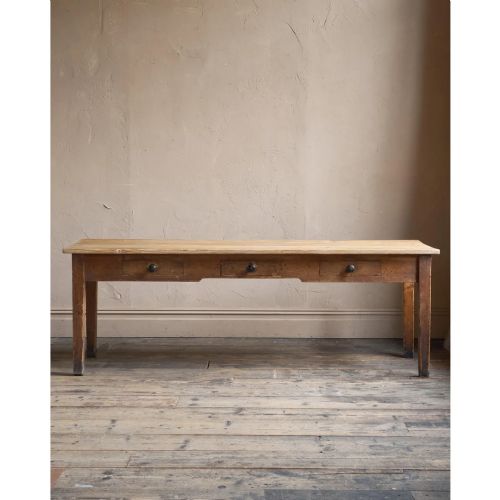
When searching for a vintage kitchen workbench, buyers encounter robust utility furniture originating from the nineteenth century up through the nineteen-thirties. The selection spans utilitarian carpentry benches fitted with wooden vises alongside scrubbed-top farmhouse tables and multi-tier scullery prep surfaces.
Most examples hail from English, French, and Scandinavian workshops, manifesting in styles ranging from rustic farmhouse to industrial utility. These heavy timber forms bridge the gap between antique dining tables and dedicated worktables.
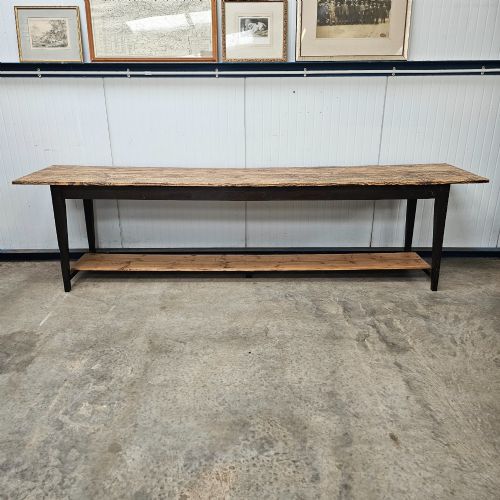
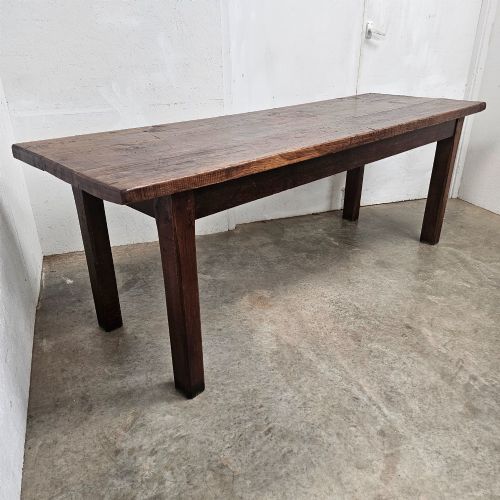
Forms include long harvest tables, two-tier console tables, and butcher's blocks designed for heavy daily use. Their origins lie in functional domestic and tradesman environments rather than formal reception rooms.
How they were made
Construction relies heavily on dense native hardwoods such as oak, beech, sycamore, elm, and substantial pine. Heavy timber tops are joined to sturdy frames using traditional joinery designed to withstand continuous pressure and hammering.
Many pieces incorporate structural iron elements, including cast iron brackets, trestle supports, and functional wooden vises with metal screws. Surfaces frequently display layers of original paint or show the scrubbed-grain finish resulting from decades of vigorous daily cleaning.
Vintage Kitchen Workbench Retail Price Guide 2026
Typical asking prices for vintage kitchen workbench among the pieces listed under this phrase on Sellingantiques today, from the lower quarter to the upper quarter. They describe what is for sale here now, not the wider market.
Listings feature pieces spanning from the mid-nineteenth century through the nineteen-thirties, constructed primarily in pine, oak, beech, and iron.
What varies in quality
Quality rests in the integrity of the original construction and the proportion of the timber used for the top. Thick, solid planks that have survived decades of daily utility without excessive warping represent the upper tier of these pieces.
The presence of original working mechanisms, such as wooden carpenter vises or untouched painted finishes, elevates a piece above standard utilitarian replacements. Patina earned through honest historical use distinguishes a superior workbench from a later imitation.
The Vintage Kitchen Workbench Glossary
- Scrubbed top
- A wooden tabletop cleaned repeatedly with water and a stiff brush, removing surface dirt and leaving a pale, textured grain. This finish is typical of nineteenth-century prep and scullery tables.
- Scullery table
- A heavy utility table designed for food preparation and washing tasks in domestic back-kitchens. These typically feature robust pine construction and often include drawers for utensils.
- Harvest table
- An elongated dining or work table traditionally used during seasonal agricultural gatherings. They provide substantial length and narrow proportions suited to communal workspace.
- Carpenter's bench
- A heavy workshop table fitted with an integrated wooden screw vice and dog holes for clamping timber. They serve as functional kitchen islands in contemporary homes.
- Trestle table
- A table supported by two or more upright frames connected by a horizontal beam. This construction maximises legroom beneath the work surface.
Vintage Kitchen Workbench: Frequently Asked Questions
How do I clean a wooden workbench top?
Scrub the surface using warm water and mild soap with a stiff-bristled brush, following the direction of the grain. Avoid harsh chemical cleaners that strip the historical patina.
Dry the timber thoroughly with a clean cloth and apply food-safe mineral oil or beeswax to nourish the dry wood fibres.
Can I use an old carpenter's bench for cooking?
A carpenter's bench makes an excellent kitchen island for food preparation, provided the surface is cleaned and sealed appropriately. The integrated vice adds a distinct character feature while remaining functional for light clamping.
Ensure any old industrial oils or finishes are safely removed from the working surface before preparing food directly on the timber.
How do I date a nineteenth-century work table?
Examine the construction methods, tool marks, and fixings used beneath the tabletop and frame. Hand-cut joinery and forged iron bolts typically indicate nineteenth-century production.
Wear patterns, timber shrinkage, and accumulated layers of historic paint or wax provide further clues to the age and working history of the piece.
Are these tables suitable for everyday dining?
Many worktables and scullery pieces feature comfortable heights and overhangs that accommodate seating for daily meals. Their sturdy frames withstand heavy daily use just as they did in past centuries.
Check the clearance beneath the aprons and drawers to ensure chairs fit comfortably underneath the top.