

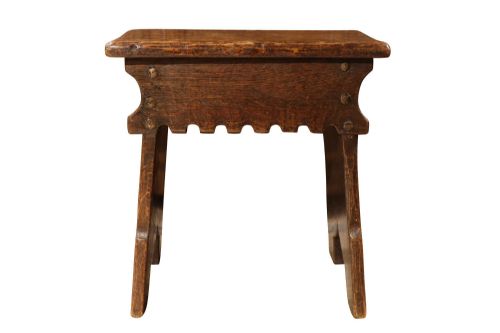


Vintage Jointed Stool
These vintage jointed stool examples offer solid timber construction and honest craftsmanship, making them versatile seats or small tables for any room.
Vintage Jointed Stool
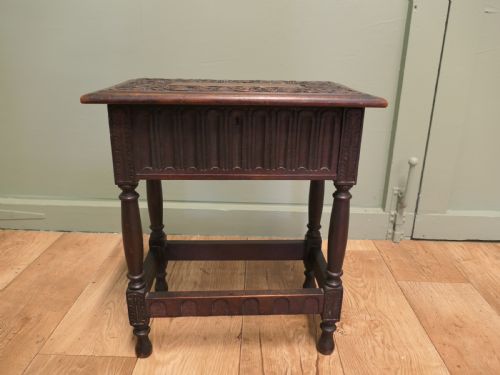
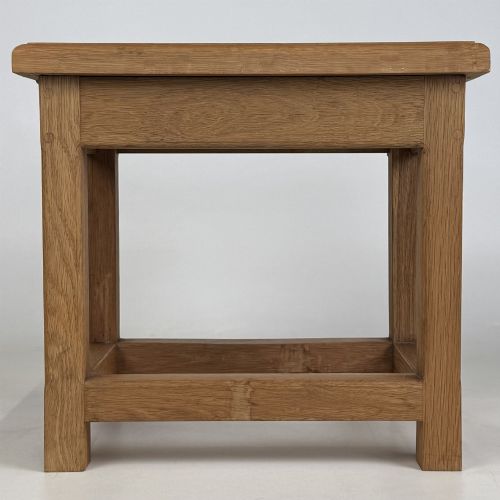
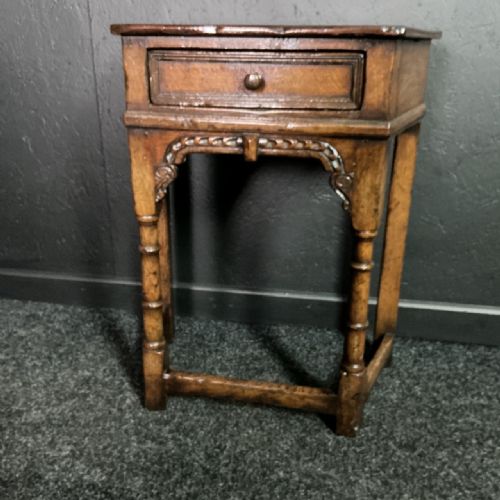
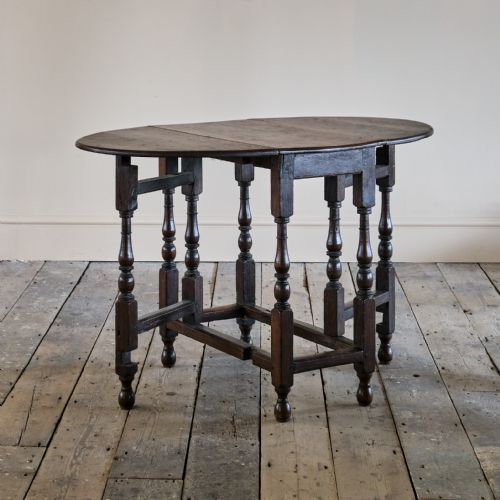
A vintage jointed stool is a sturdy wooden seat built using mortise and tenon joints, often held together with wooden pegs rather than modern metal fixings. When searching for a vintage jointed stool, buyers encounter formats ranging from simple low seats to five-plank variants and box designs.
The pieces appearing on this page span several centuries, reaching from the seventeenth century through to the early decades of the twentieth century. Alongside standard stools, the selection includes related forms such as occasional tables, side tables, and small box stools.
Revival styles heavily influence the later items, with Jacobean Revival and Gothic Revival aesthetics frequently appearing alongside rustic farmhouse pieces. Buyers are most likely to meet solid oak examples dating from the nineteenth and early twentieth centuries.
Materials and construction methods
Oak dominates the manufacture of these items, appearing as solid oak, English oak, and general dark wood or hardwood. Workshops relied on heavy timber planks to ensure the frames could withstand daily weight and robust handling.
Joinery relies on pegged construction, utilising wooden dowels to lock the joints firmly in place. Additional materials such as hessian and fabric occasionally appear on upholstered variants and footstools.
Vintage Jointed Stool Retail Price Guide 2026
Typical asking prices for vintage jointed stool among the pieces listed under this phrase on Sellingantiques today, from the lower quarter to the upper quarter. They describe what is for sale here now, not the wider market.
Distinctions in quality and execution
Quality rests primarily in the weight of the timber and the tightness of the pegged joints. Heavier, denser oak framing separates substantial farmhouse and revival seating from lighter occasional pieces.
The sophistication of the carving and the integrity of the surface finish distinguish standard utilitarian seating from finer decorative interpretations, such as apprentice pieces or revival items.
David Oakleafman Langstaff
The Vintage Jointed Stool Glossary
- Joint stool
- A traditional wooden seat constructed with mortise and tenon joints rather than turned legs glued into a seat. These pieces were common in sixteenth and seventeenth century households.
- Pegged construction
- A method of securing joints using wooden pins or dowels driven through the timber connection. This technique provides structural strength without iron nails.
- Five-plank stool
- A primitive form of seating assembled from five distinct boards joined together to form a box-like or trough structure. They represent early domestic utilitarian furniture.
- Apprentice piece
- A small-scale model made by a trainee craftsman to demonstrate mastery of joinery and woodworking techniques. These items display the same detail as full-size furniture.
Vintage Jointed Stool: Frequently Asked Questions
How are vintage jointed stools different from regular stools?
These stools rely on rigid frame construction using pegged joints and stretchers near the base for stability. This technique creates a rigid skeleton capable of supporting heavy loads.
Regular modern stools often use simpler glued joints or metal screws that loosen over time. The traditional jointed method keeps the timber frame square and dependable through centuries of use.
Were these stools used as tables too?
Yes, their flat tops and sturdy frames made them convenient movable surfaces for food, lighting, or small items in early homes. Their height matched chairs and benches of the period.
In modern rooms, many owners repurpose them as compact side tables or bedside stands. Their small footprint suits them well to smaller spaces.
How do I spot a true seventeenth century stool?
Genuine seventeenth century pieces show deep patination on the oak, hand-cut peg ends, and wear patterns consistent with centuries of physical use. The timber often feels dry and dense.
Revival pieces from later centuries usually display sharper machine-cut edges and different tool marks. Comparing the timber grain and construction quirks helps clarify the age.
Can I use an antique jointed stool for daily seating?
Solid oak jointed stools are exceptionally durable and built to handle everyday weight without structural failure. Their pegged frames remain robust despite their age.
Placing them on level flooring prevents any strain on individual legs. They function reliably as extra seats in busy living areas.