

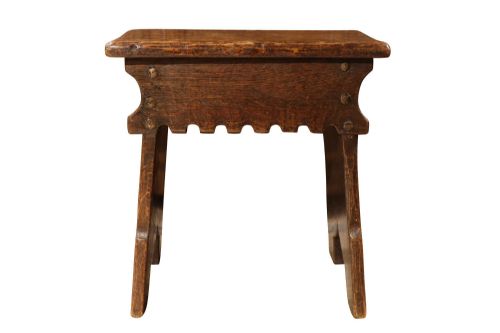


Vintage Joint Stool
These vintage joint stool examples offer sturdy timber frames and peg construction, prized for versatile seating and display.
Vintage Joint Stool
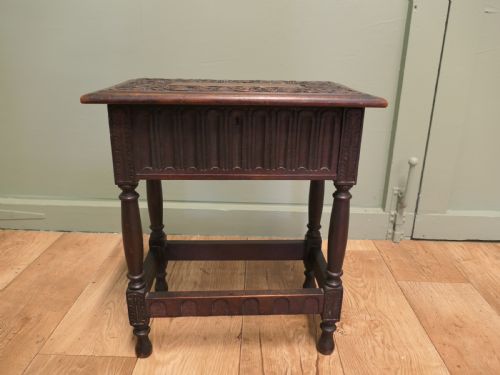
A vintage joint stool provides a solid timber seat raised on four pegged legs, often doubling as an occasional table or side stand in domestic spaces. The pieces gathered under this phrase span periods from the seventeenth century through to the Edwardian era and the 1930s.
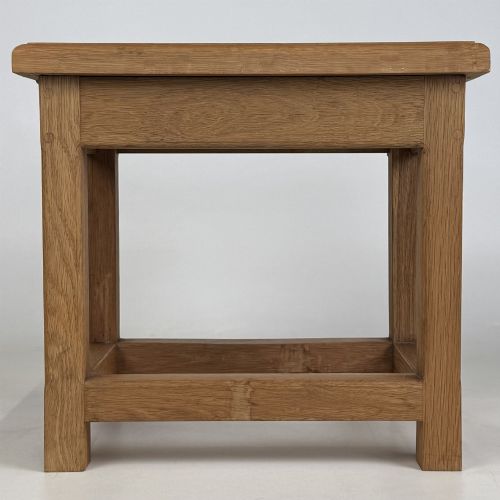
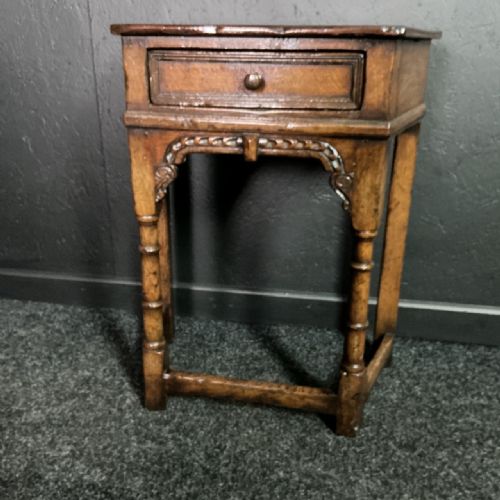
The versions most commonly met on this page are constructed from oak and take straightforward forms such as low side tables, five-plank stools, and box stools. Examples range from rustic farmhouse variants to Jacobean revival pieces influenced by earlier centuries.
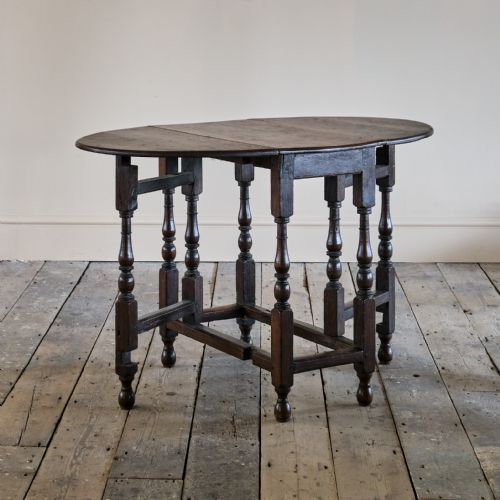
Beyond standard seating, the forms listed include miniature furniture, storage stools, footstools, and occasional tables. These items serve equally well for compact seating or as display surfaces in traditional and eclectic interiors.
How they were made
Construction relies heavily on solid English oak and other hardwoods joined with pegged tenons rather than metal fasteners. This pegged construction ensures the rigid frame remains stable under daily use.
Some variations incorporate fabric or hessian upholstery, while others display carved wooden tops and structural box compartments. Iron elements appear occasionally to reinforce joints and stress points on heavier items.
Vintage Joint Stool Retail Price Guide 2026
Typical asking prices for vintage joint stool among the pieces listed under this phrase on Sellingantiques today, from the lower quarter to the upper quarter. They describe what is for sale here now, not the wider market.
Apprentice pieces allowed young woodworkers to demonstrate mastery by crafting tiny, fully detailed miniature stools that could sit on the palm of a hand.
What varies in quality
Quality rests in the grade of timber selected and the precision of the joinery, particularly how cleanly the wooden pegs fit into the mortise and tenon joints. Heavy, solid oak pieces with crisp carving represent the upper end of the range.
The integrity of the structural frame dictates the longevity of each piece, distinguishing robust daily-use furniture from lighter decorative items. Examples retaining untouched pegged construction hold greater mechanical purity than altered pieces.
David Oakleafman Langstaff
The Vintage Joint Stool Glossary
- Joint stool
- A traditional wooden stool built using mortise and tenon joints secured by wooden pegs. These sturdy pieces served various domestic duties from seating to small tables.
- Pegged construction
- A method of joining timber components using wooden pins rather than nails or metal screws. This technique allows the wood to expand and contract naturally with seasonal humidity changes.
- Five-plank stool
- A primitive form of seating constructed from five individual boards joined together to form the top and sides. Such pieces showcase straightforward utilitarian construction.
- Box stool
- A seat featuring a hinged or removable top that conceals a storage compartment underneath. These multifunctional items were used to store textiles and small household goods.
Vintage Joint Stool: Frequently Asked Questions
What is a joint stool?
A joint stool is a sturdy wooden seat constructed with joined timber frames and pegged joints rather than glued legs. They earned their name from the joiner's craft used to build them.
Historically, these pieces served multiple household purposes, functioning as seats, small side tables, or platforms for household tasks.
How old are these stools?
The pieces listed span from the seventeenth century up through the Edwardian period and into the twentieth century. Revival styles from the nineteenth century intentionally replicate much older seventeenth-century designs.
Examining the timber type, wear patterns, and joint construction helps determine the approximate age of an individual piece.
Can I use them as tables?
Yes, many of these stools function effectively as low side tables, coffee tables, or plant stands. Their flat wooden tops and robust frames make them ideal surfaces for daily use.
Placing items on them adds functional wooden surface area to a room while maintaining a traditional aesthetic.
Are they comfortable for seating?
Unupholstered timber stools provide firm, upright seating suited for short durations at a table or by a hearth. Some examples feature padded tops covered in fabric or hessian for added comfort.
Their primary historical design focused on durability and compact storage rather than lounging.