
Vintage Jewellery Chain
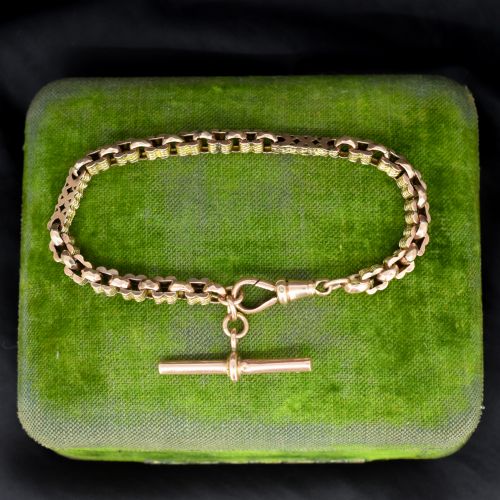
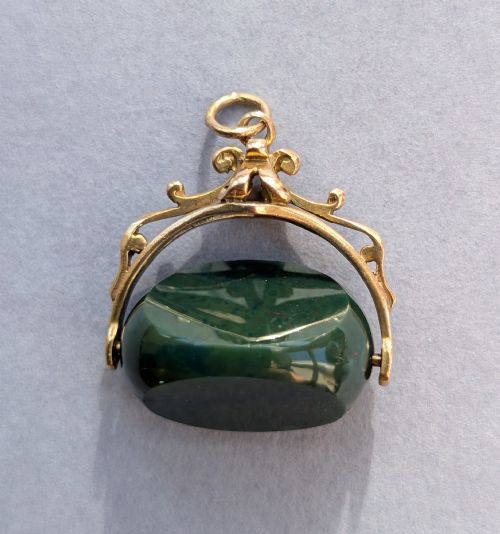
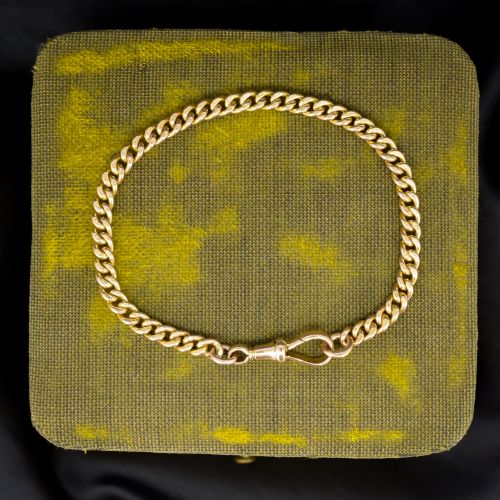
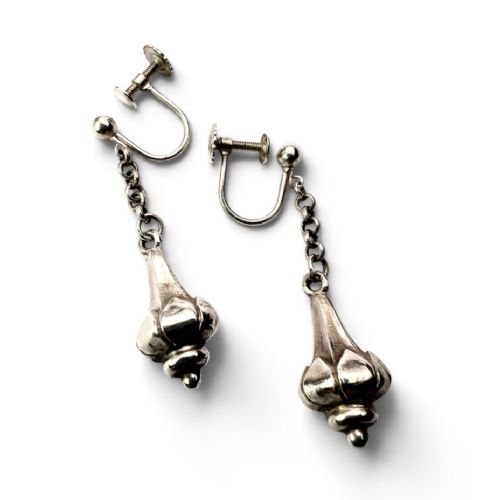
Vintage jewellery chain spans substantial pocket watch albert chains converted for the neck, delicate Edwardian pendants, and heavy gold bracelets.
Vintage Jewellery Chain
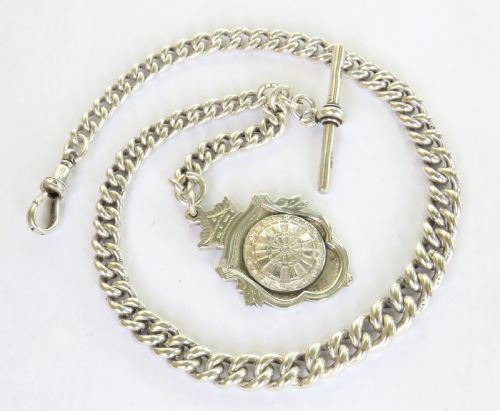
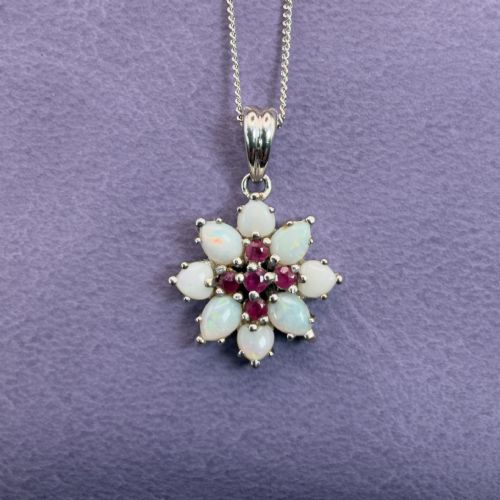
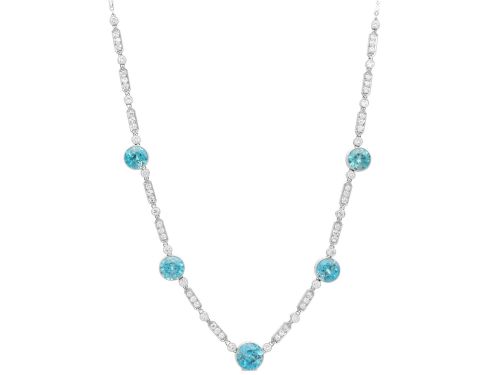
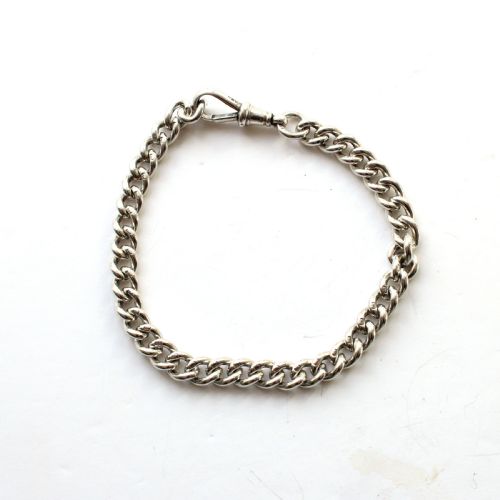
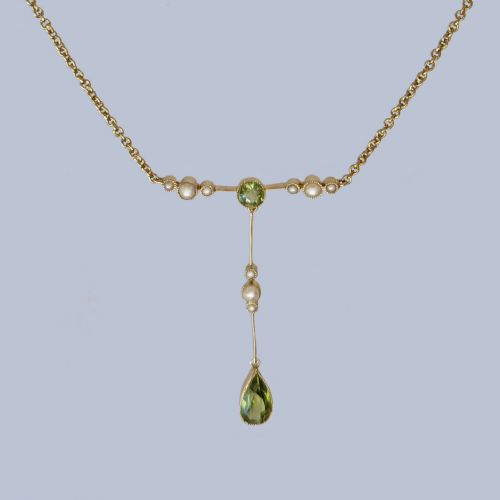
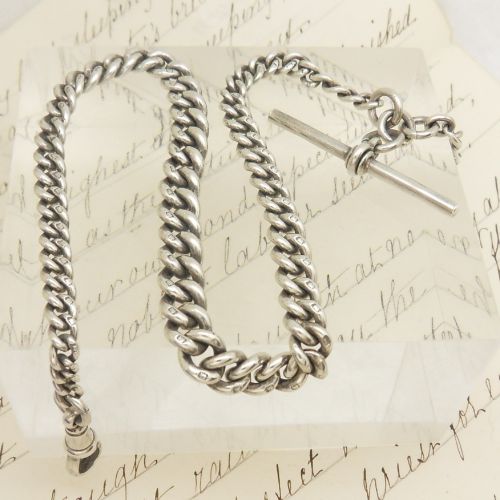
When searching for vintage jewellery chain, buyers encounter a diverse selection of necklaces, bracelets, and pocket watch albert chains sourced from the nineteenth century through the mid-twentieth century. The selection ranges from robust sterling silver curb link watch chains with dog clips and T-bars to fine 9ct rose gold pendant chains adorned with turquoise, pearl, and aquamarine.
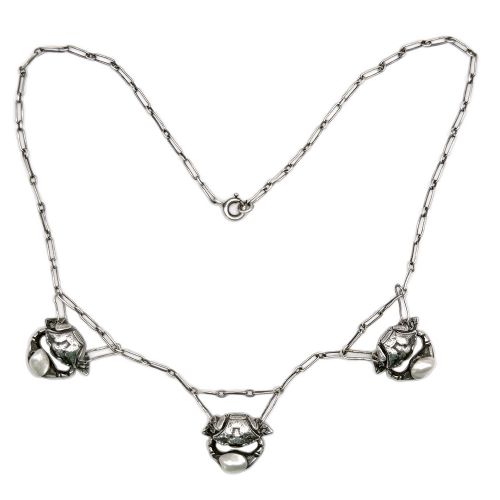
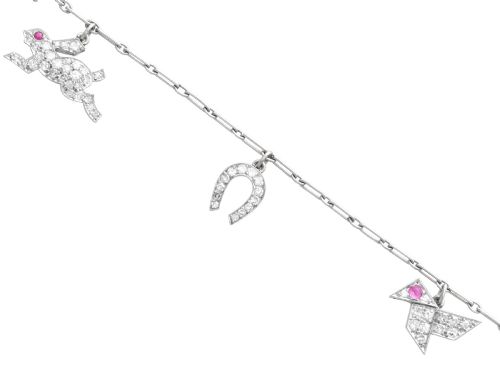
The pieces on this page frequently cross functional boundaries, such as heavy albert chains originally intended for pocket watches now worn as necklaces, alongside dedicated Art Deco crystal necklaces and Arts and Crafts moonstone designs. Styles span Victorian, Edwardian, Art Nouveau, and Mid-Century aesthetics, constructed in materials from paste glass to solid yellow and rose gold.
Materials and construction methods
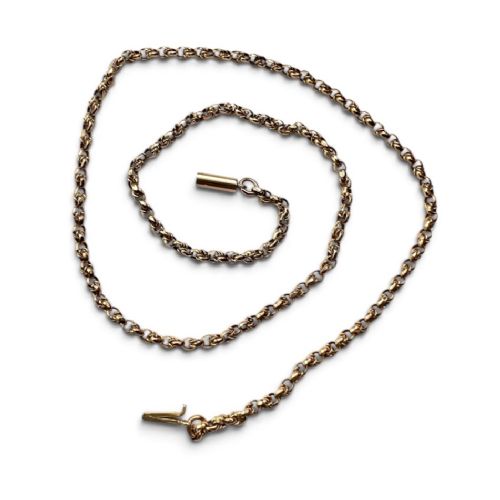
Goldsmiths and silversmiths utilised solid 9ct, 15ct, and 18ct gold alongside sterling silver and rolled gold to fabricate these pieces. Metal components were formed into specific link configurations, including trombone, love knot, and uniform or graduated curb patterns, often finished with engraved detailing or rollerball elements.
Gemstones such as almandine garnets, red agate, amethysts, and natural pearls were set into pendants or integrated directly into bracelet and necklace links. Secure fastenings like concealed clasps, dog clips, and heart padlocks were engineered to withstand daily wear while maintaining decorative harmony with the chain work.
Design periods represented on this page include Victorian, Edwardian, Art Deco, and Mid-Century object types.
Distinctions in quality and execution
The calibre of a chain is demonstrated by the substantial weight of the precious metal and the structural integrity of each individual link, where solid gold or heavy sterling silver commands greater permanence than rolled gold alternatives. Hand-engraved surface patterns and precise articulation in complex link formations reveal the artisan's skill.
Top-tier examples retain their original components, such as matching T-bars, dog clips, and secure dog-clip swivels, alongside well-matched natural gemstones or seed pearls. The quality extends to the seamless operation of clasps and the careful balancing of graduated curb links to ensure proper drape and wearability.
The Vintage Jewellery Chain Glossary
- Albert chain
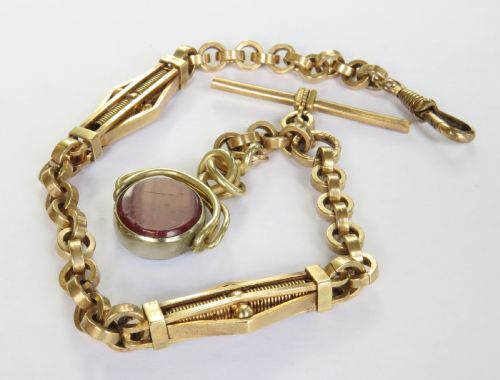
- A heavy pocket watch chain designed to be secured through a waistcoat buttonhole, featuring a T-bar at one end and a swivel clasp or dog clip at the other. These sturdy chains are frequently worn today as necklaces or wrapped bracelets.
- Trombone link
- A jewellery link design composed of elongated rectangular wire sections alternating with smaller circular or oval connectors. This geometric form became especially popular during the Victorian and Edwardian periods.
- Dog clip
- A spring-loaded swivel fastening commonly found on watch chains and heavy bracelets. It allows the wearer to securely attach fobs, pendants, or secure the chain to itself.
- Rolled gold
- A material made by mechanically bonding a thin layer of gold to a base metal core, providing the appearance of solid gold at a different tier of manufacture. It differs from solid metal through its layered construction.
Vintage Jewellery Chain: Frequently Asked Questions
How do I wear a pocket watch chain as a necklace?
Pocket watch chains, often termed albert chains, typically measure between fourteen and twenty inches, making them well-suited for wearing directly around the neck. You can secure the dog clip to a jump ring or connect the T-bar through a decorative link to achieve a shorter, layered drop.
The original T-bar and swivel clasps left attached to these chains add authentic historical character when worn to the front or side. Ensure the weight of any attached fob or pendant matches the structural heft of the chain links to maintain proper balance.
What is the difference between solid gold and rolled gold chains?
Solid gold chains consist of precious metal all the way through, graded by karat weight such as 9ct, 15ct, or 18ct gold. They maintain their intrinsic material value and resist wear down to the base metal over decades of use.
Rolled gold items feature a substantial layer of gold mechanically fused to a base metal core, offering durability superior to standard gold plating. While they present the visual warmth of solid gold, care must be taken over long periods to prevent wear at points of high friction.
How can I identify an Edwardian chain?
Edwardian chains, produced roughly between the coronation of Edward VII and the First World War, frequently utilise 9ct rose gold or sterling silver. They lean towards lighter, airier constructions incorporating delicate filigree, seed pearls, aquamarines, or peridots.
The metalwork from this period often displays precise millegrain edges and romantic motifs such as love knots or flowing floral ribbons. Hallmarks stamped onto the links or dog clips can further verify the exact decade of manufacture.
Can I attach pendants to an antique curb link chain?
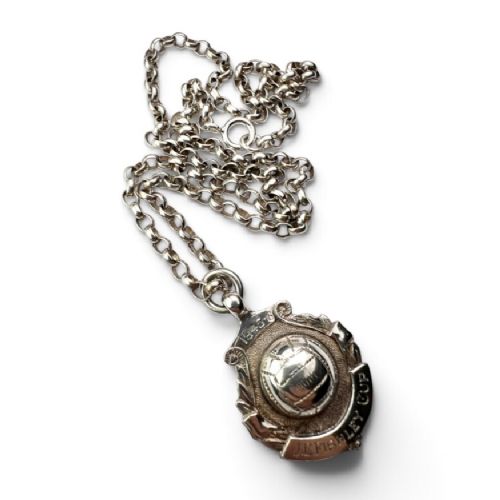
Heavy curb link chains and watch chains are structurally robust enough to support various pendants, provided the bail or jump ring on the pendant is wide enough to slide over the links. Many antique chains come equipped with original dog clips that make swapping pendants straightforward.
When hanging a pendant from an albert chain, the existing T-bar can be left to hang as part of the decorative drop. Ensure the connection points are secure before regular daily wear.