


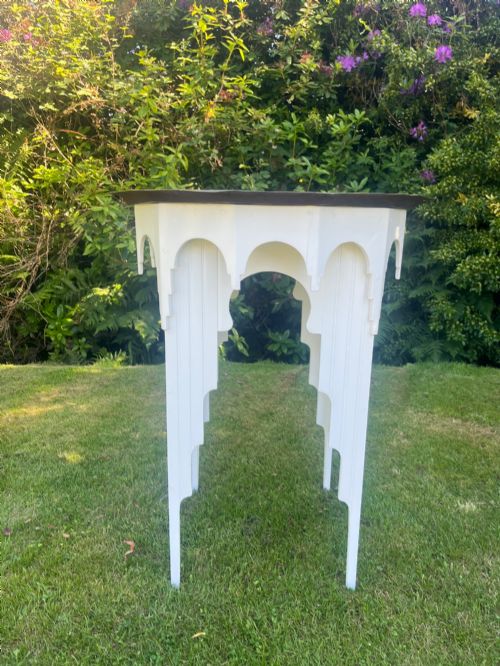


Vintage Islamic Table
These vintage islamic table examples bring intricate woodwork, mother-of-pearl, and brass into a room.
Vintage Islamic Table
A vintage islamic table brings intricate craftsmanship into a room through Moorish Revival, Ottoman, Mamluk Revival, and Persian styles. Side tables and occasional tables dominate the selection, offering compact surfaces inlaid with detailed geometric patterns.
Makers utilised walnut as a primary timber for these occasional and side tables, often embellishing the frames with bone and mother-of-pearl inlay. Alongside wooden surfaces, brass centre tables and cairoware lamps introduce reflective metalwork to the category.
The objects span from the nineteenth century into the early decades of the twentieth century, reflecting sustained European and Middle Eastern design exchange. Pieces range from Moorish Arabic inlaid tables to Bohemian style octagonal side tables.
How they were made
Craftsmen built these tables using solid walnut timber, shaping octagonal and occasional forms with traditional joinery. Surfaces received elaborate geometric decoration through the precise insertion of mother-of-pearl and bone segments into the wood.
Metal versions rely on heavy brass construction, frequently decorated with etched and inlaid calligraphy or arabesque motifs. Artisans also worked with painted wood and combined textiles such as silk and metallic thread on felt grounds for related decorative objects.
Vintage Islamic Table Retail Price Guide 2026
Typical asking prices for vintage islamic table among the pieces listed under this phrase on Sellingantiques today, from the lower quarter to the upper quarter. They describe what is for sale here now, not the wider market.
A Cairo-trained artisan might inlay a quiet tea table with enough pearl to make the moon jealous.
What varies in quality
Quality separates pieces by the density and precision of the inlay work, where tightly fitted mother-of-pearl and bone create seamless geometric patterns. Simpler executions rely on painted surface decoration rather than intricate individual tesserae.
The architectural complexity of the wooden framework also defines the upper tier, seen in multi-sided octagonal structures versus basic four-legged occasional tables. Heavier gauge brass and deeper, crisper hand-chased detailing distinguish superior metal tables from plainer brass tops.
Liberty & Co
The Vintage Islamic Table Glossary
- Moorish Revival
- A nineteenth-century architectural and decorative style that reinterpreted traditional North African and Spanish Islamic design motifs. It frequently appears in European furniture production.
- Mother-of-Pearl
- The iridescent inner layer of mollusc shells used extensively for intricate geometric inlay on wooden furniture. Artisans cut these thin shell sections to fit precisely into carved channels.
- Occasional Table
- A small, portable table designed for specific, intermittent uses within a room layout. These pieces often feature folding bases or compact octagonal tops.
- Mamluk Revival
- A design movement inspired by the art and architecture of the Mamluk Sultanate, characterised by heavy brass work and intricate geometric strapwork. Items from this tradition often feature inlaid silver and copper details.
- Cairoware
- Metalwork originating from Cairo, typically brass inlaid with silver or copper, popular during the nineteenth and early twentieth centuries. These objects include lamps and vessels decorated with dense calligraphic bands.
Vintage Islamic Table: Frequently Asked Questions
What is a vintage islamic table?
These pieces are decorative wooden or metal tables produced in styles such as Moorish Revival, Ottoman, and Mamluk Revival during the nineteenth and early twentieth centuries. They incorporate traditional Middle Eastern woodworking and metalworking traditions.
Craftsmen built them using materials like walnut, mother-of-pearl, bone, and brass to create highly patterned surfaces suitable for reception rooms and studies.
How were these tables used originally?
Such tables functioned primarily as occasional or side surfaces for serving coffee, displaying decorative objects, or holding lamps within domestic interiors. Their portable nature allowed them to be moved easily around a reception room.
In European homes influenced by the aesthetic movement, they served as exotic focal points that demonstrated an appreciation for global craftsmanship.
How do I style one at home?
Place an octagonal occasional table beside a neutral sofa or armchair where the detailed inlay can act as a focal point. Keep objects placed on top minimal to allow the geometric woodwork or brass etching to remain visible.
Pairing these tables with complementary textiles like embroidered fragments or rugs helps ground the intricate patterns within a contemporary living space.
How do I tell periods apart?
Earlier nineteenth-century examples often feature denser, finer hand-cut inlay work and heavier walnut construction, reflecting traditional workshop production. Pieces from the early twentieth century may show slightly more standardised construction methods.
Stylistic markers also help, as distinct aesthetic movements like Mamluk Revival or Moorish Revival point to specific nineteenth-century design revivals rather than earlier periods.