



Vintage Insect Brooch Pin
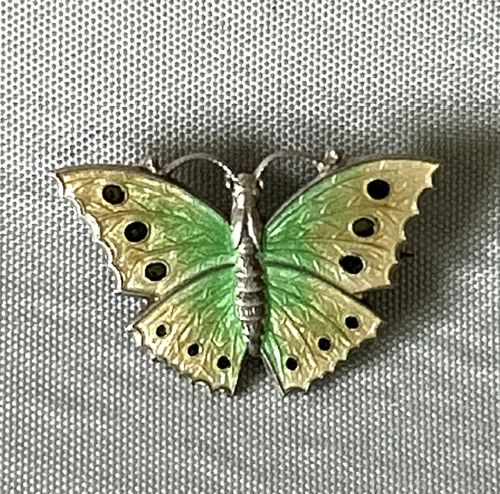
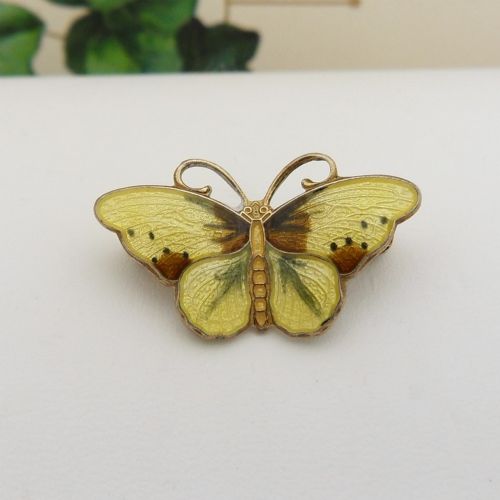
A vintage insect brooch pin brings small creatures of silver, enamel and gemstone to life on a lapel.
Vintage Insect Brooch Pin
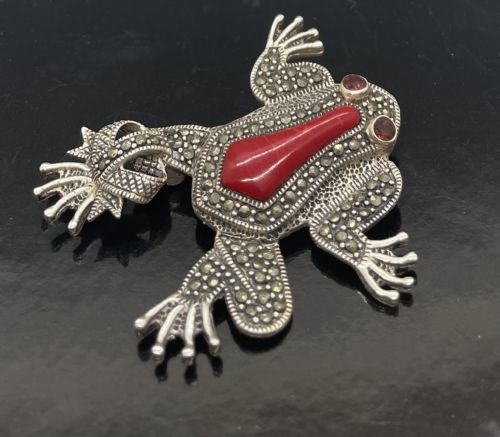
These decorative fasteners served to adorn clothing and hats, evolving from elaborate gemstone-set bar brooches of the late nineteenth century into colourful enamel and sterling silver novelties of the mid-twentieth century. Alongside common butterfly motifs, makers utilised varied insect and amphibian subjects, incorporating materials from moonstones and marcasite to butterfly wing panels.
Examples span from delicate petite dress clips to substantial statement pieces set with diamonds, rubies, sapphires and pearls in yellow gold or silver. Each piece reflects the aesthetic of its decade, shifting from organic nineteenth-century naturalist depictions to stylised geometric Art Deco interpretations and clean mid-century Scandinavian forms.
How they were made
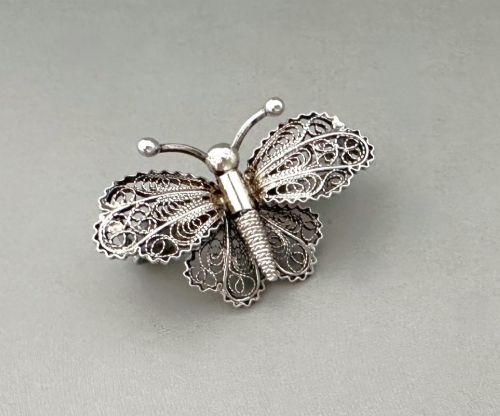
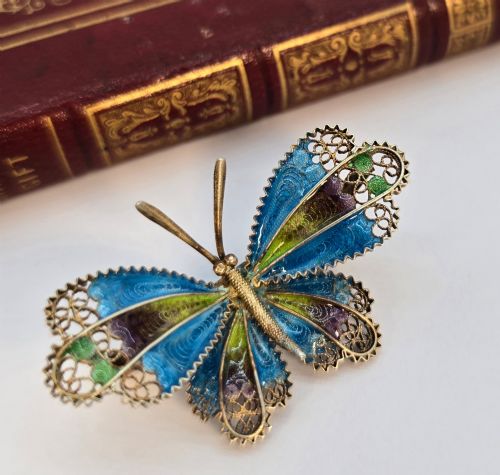
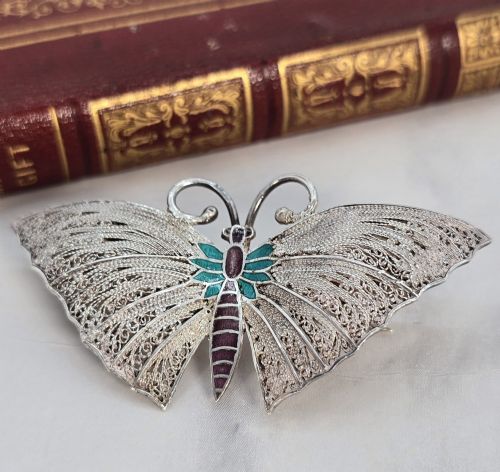
Silversmiths shaped sterling silver, silver gilt and pewter into detailed insect anatomies, often employing fine filigree wirework to delineate wings and bodies. Marcasite crystals were tightly set into metal channels to provide sparkle, while specialised designers applied vibrant enamel over guilloche patterns for translucent colour.
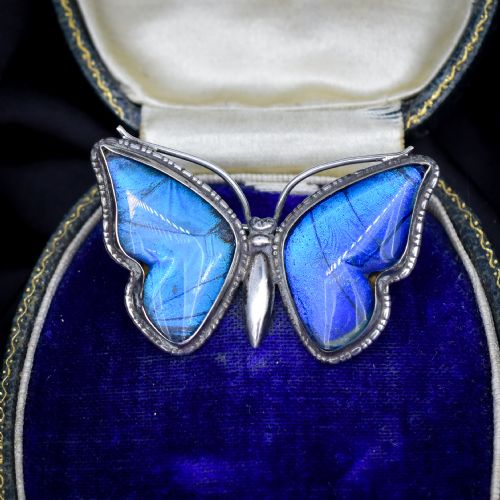
Gemstone-set specimens demanded advanced bench work, securing diamonds, rubies, sapphires, emeralds and pearls into silver-backed settings or yellow gold mounts. Wing panels were frequently constructed using treated butterfly wings sealed beneath bevelled glass to create iridescent natural patterns.
Motifs recorded on this page include frogs, scorpions, dragonflies and butterflies alongside traditional hatpins and bar brooches.
What varies in quality
The distinction between ordinary and exceptional pieces lies in the crispness of the metalwork and the depth of the enamelling. Superior examples display flawless guilloche ground beneath translucent coloured layers, while simpler items rely on opaque flat paint.
Hand-applied filigree wirework demonstrates varying degrees of fine control, where tighter, more intricate soldering elevates the piece above standard mass-produced output. Gemstone quality and secure claw or rub-over settings likewise separate standard novelties from high-atelier jeweller production.
Hroar Prydz·Rene Lalique
The Vintage Insect Brooch Pin Glossary
- Filigree
- Fine metal wire twisted and soldered into openwork patterns. This technique creates lightweight, lace-like wings on butterfly and dragonfly brooches.
- Guilloche
- An engraved mechanical pattern beneath transparent enamel. It creates shimmering, engine-turned geometric waves on silver insect bodies.
- Silver Gilt
- Silver covered with a thin layer of gold. This treatment provides a warm golden tone to the underlying silver structure.
- Marcasite
- Small faceted pyrite stones set closely into metal. They provide a dark metallic sparkle resembling steel cut facets.
- Butterfly Wing
- Iridescent natural wing segments preserved under glass. Tropical species were frequently utilised in early twentieth-century pictorial jewellery.
Vintage Insect Brooch Pin: Frequently Asked Questions
How were insect brooches worn?
Victorian and Edwardian ladies pinned them to bodices, hats, and heavy wool coats as focal accessories.
By the mid-twentieth century, smaller silver and enamel versions fastened easily to lapels and scarves.
Are butterfly wing brooches fragile?
The natural wing material is sealed safely beneath glass panels designed to protect it from daily wear.
Owners should still avoid immersing them in liquid cleaner to preserve the historic setting.
What metals are most common?
Sterling silver and silver gilt appear frequently across the pieces from the 1920s and 1930s.
Earlier Victorian examples occasionally utilise yellow gold alongside silver-topped settings for gemstones.
How do I spot an Art Nouveau piece?
Art Nouveau designs embrace flowing, organic lines inspired by natural plant and insect forms.
They often feature whiplash curves and softer pewter or silver finishes rather than rigid geometric patterns.