




Vintage Hunting Hound
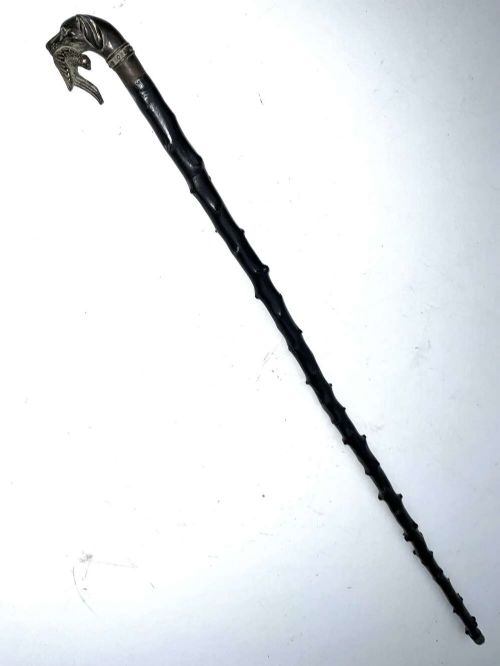
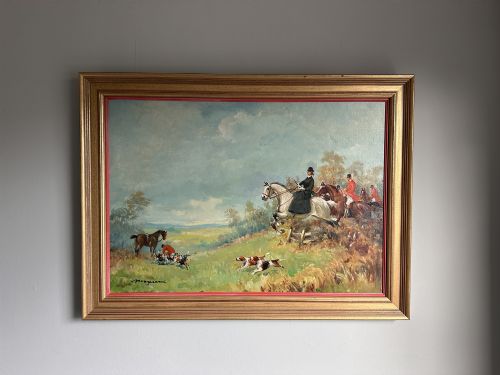
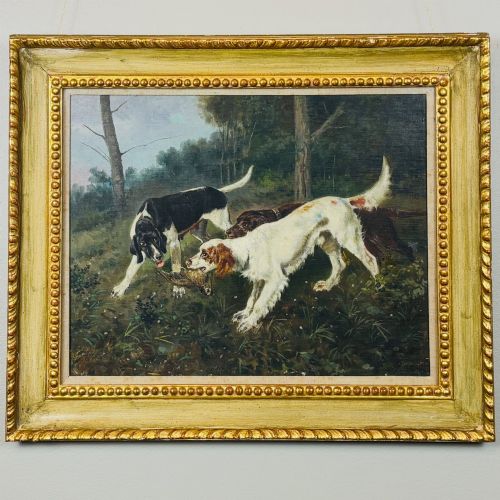
Vintage hunting hound pieces capture the energy of historic field sports through enduring bronze sculptures, oil paintings and ceramics.
Vintage Hunting Hound
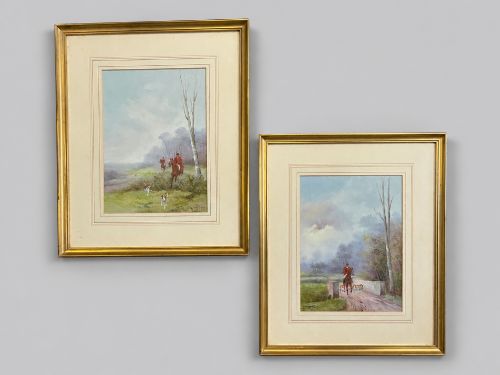
A vintage hunting hound search brings together diverse artistic representations of sporting dogs across multiple centuries and creative mediums. Collectors encounter everything from nineteenth-century animalier bronzes to early twentieth-century watercolours and oils depicting hounds in pursuit or repose.
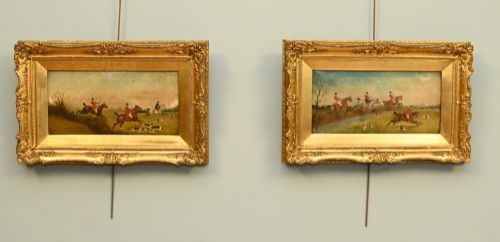
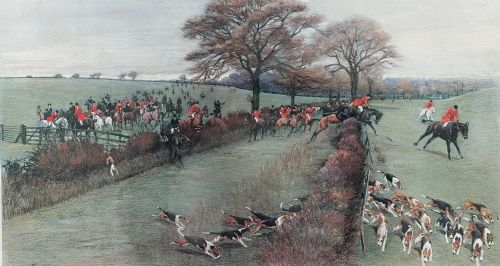
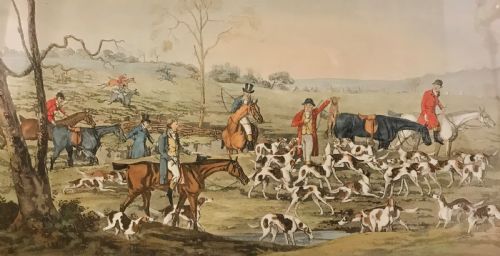
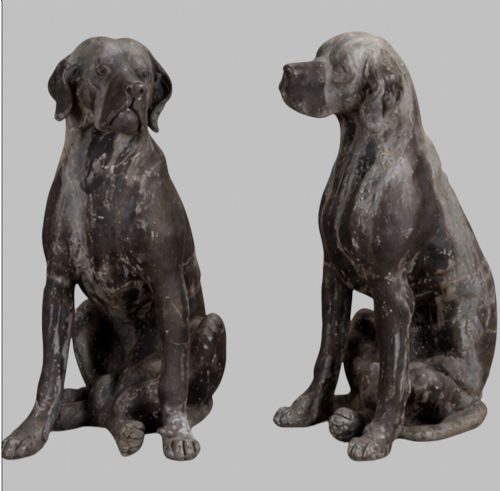
The objects most frequently met on this page originate from the nineteenth and early twentieth centuries, reflecting the high popularity of sporting art during those periods. These pieces range from substantial cast lead garden statues and French spelter figures to delicate hand-coloured engravings and framed watercolours.
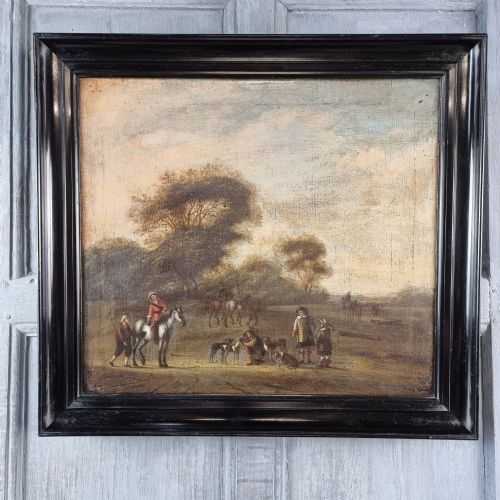
Works span various European traditions, incorporating English sporting art alongside French animalier bronzes and Dutch-influenced tavern scenes. Each item portrays the physical power and attentive posture of hounds, whether rendered in flat media or cast in metal and ceramic.
Materials and construction methods
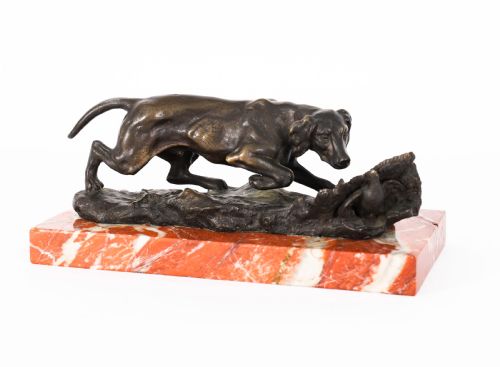
Sculptural pieces rely heavily on metal casting techniques, utilising bronze, brass, spelter, and lead. Bronze works often incorporate marble bases to add weight and contrast to the dark metal patina.
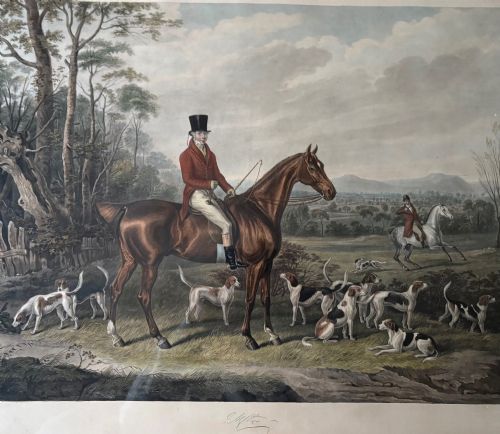
Flat works utilise traditional painting and printing supports, including oil on canvas, oil on wood, watercolour on paper, and hand-coloured engravings. Paper works frequently employ aquatint and lithograph methods alongside original watercolours and ink.
Ceramic figures combine moulded earthenware with painted glazes and highlights, seen particularly in figurative works mounted on shaped porcelain or earthenware bodies.
Vintage Hunting Hound Retail Price Guide 2026
Typical asking prices for vintage hunting hound among the pieces listed under this phrase on Sellingantiques today, from the lower quarter to the upper quarter. They describe what is for sale here now, not the wider market.
Listings feature oil paintings, bronzes, watercolours, and ceramic figurines spanning the Georgian era to the mid-twentieth century.
Judging quality in hound representations
Anatomical precision and muscular definition dictate the success of sculptural representations, where superior casters capture the tension and movement of a working hound. Weaker examples exhibit stiff postures and simplified forms that lose the natural vitality of the animal.
In painted works, the handling of light across the landscape and the integration of the hound into the surrounding scenery separate accomplished artists from commercial copyists. Brushwork showing careful observation of fur texture and pack dynamics indicates a higher grade of artistry.
Carl Kauba·Arthur Wardle·George Wright·Antoine Louis Barye·Christophe Fratin·Nikolai Lieberich·Henri Schouten
The Vintage Hunting Hound Glossary
- Animalier
- A nineteenth-century artistic movement focusing on the realistic portrayal of animals, particularly predators and sporting dogs. Sculptors in this style frequently cast their works in bronze.
- Spelter
- An alloy of zinc and lead used as a less costly alternative to bronze for decorative figures. It is often painted to resemble bronze or patinated metal.
- Aquatint
- An etching method used on paper to produce tones that resemble watercolours or wash drawings. It appears frequently in nineteenth-century sporting prints.
- Foxhound
- A canine breed bred to hunt foxes by scent, dominating the subject matter of Victorian and Edwardian sporting art. They are typically shown in packs or alongside huntsmen.
Vintage Hunting Hound: Frequently Asked Questions
What periods do these pieces date from?
The available selection spans several centuries, stretching from the seventeenth century through the Georgian era and nineteenth century. Many items concentrate in the Victorian, Edwardian, and Art Deco periods.
Twentieth-century examples also appear, including mid-century portraits and pieces dated into the 1930s. The dates reflect the sustained popularity of sporting subjects among artists and makers.
What materials were used for sculptures?
Sculptural objects utilise metal, stone, and ceramic materials depending on the workshop and period. Bronze and spelter are common for metal figures, often mounted on marble bases.
Lead appears in larger garden statues, while porcelain and earthenware form the basis of glazed ceramic figurines.
How do paintings and prints differ?
Paintings consist of original hand-applied pigments on canvas, wood panels, or paper boards, showing individual brushwork. Prints and lithographs are mechanically or manually reproduced graphic works derived from original compositions.
Watercolours offer unique transparent washes on paper, whereas oil paintings provide rich textures and deeper colour saturation.
Where were these hound artworks made?
Origin points span British, French, and Russian studios, reflecting international interest in hunting culture. English sporting art forms a major portion of the works, alongside continental bronze casting traditions.
French animalier sculptors contributed heavily to the sculptural metalwork found in this category.