
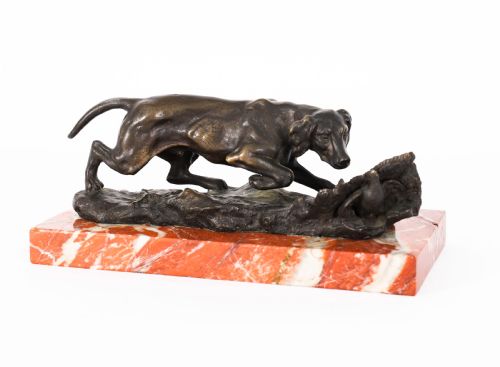
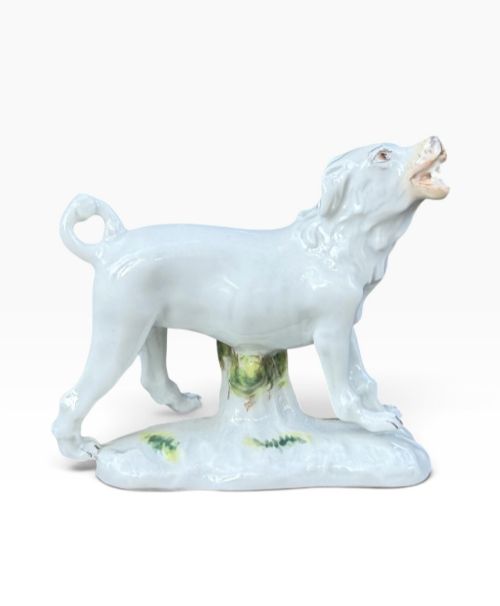


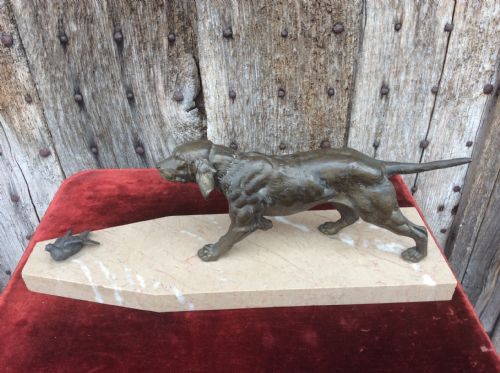


Vintage Hunting Dog Figurine
These vintage hunting dog figurine examples capture canine form through bronze, porcelain and cast iron from the nineteenth century to the art deco era.
Vintage Hunting Dog Figurine
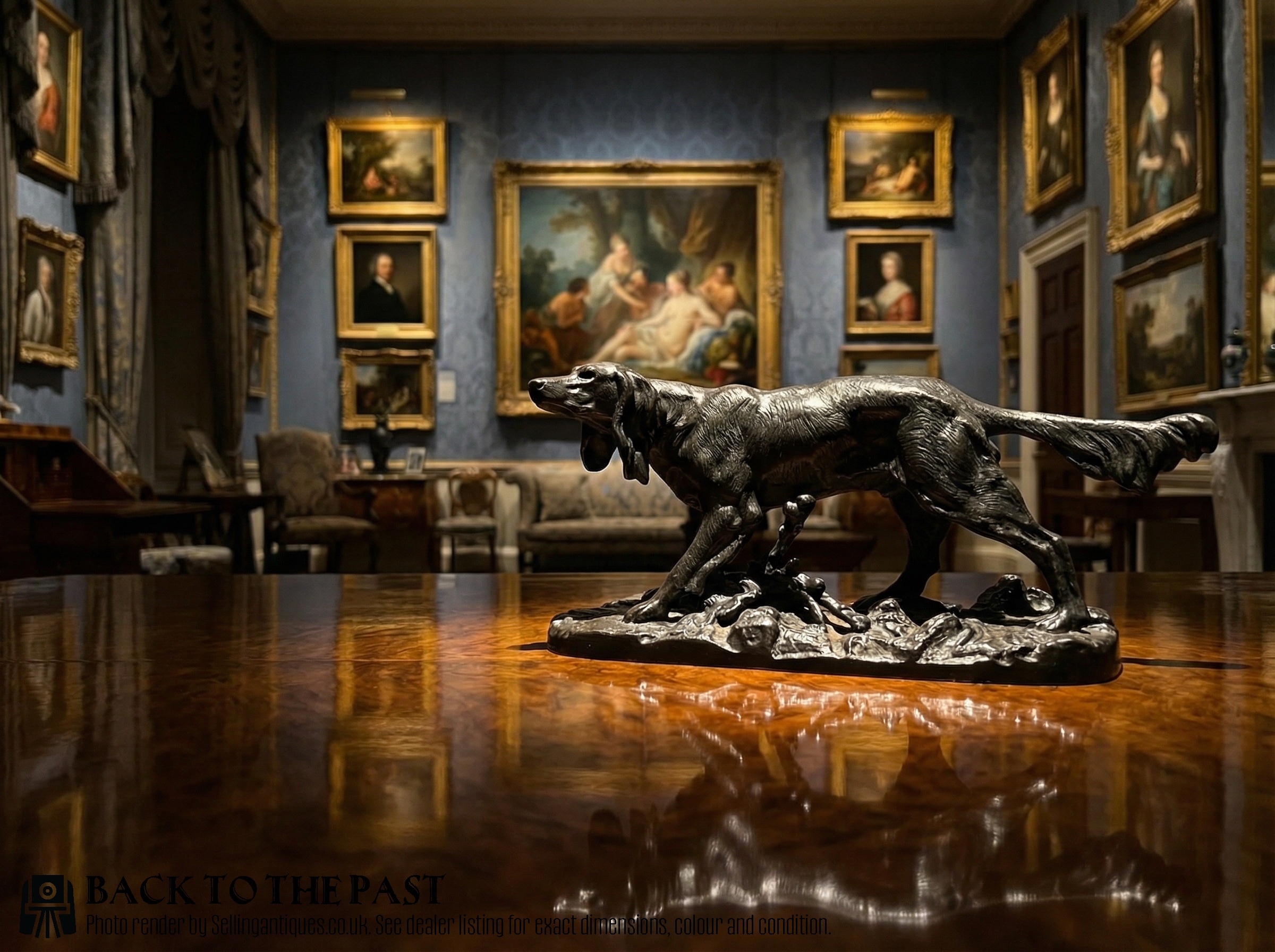
A vintage hunting dog figurine represents hound and sporting breeds modelled in bronze, porcelain, cast iron and parian ware. These decorative sculptures span the nineteenth century, Edwardian period and the art deco era.
The assortment on this page includes bronze sculptures on marble plinths, fireside statues, and glazed ceramic figures. Animalier bronzes and European factory porcelain dominate the selections available to collectors.
Qualities of craftsmanship
The refinement of the casting separates standard metal figures from exceptional animalier bronzes. Surface chiselling and patination define the depth in fur and muscle.
Porcelain quality depends upon the crispness of the mould and the hand-painted application of glaze. Factory marks and signature incisions indicate the standard of execution.
The listings feature works in bronze, porcelain, marble, cast iron, and parian ware spanning the nineteenth century, Edwardian era, and art deco period.
Carl Kauba·Meissen porcelain·Royal Capodimonte Factory·Royal Dux·Antoine Louis Barye·Christophe Fratin
The Vintage Hunting Dog Figurine Glossary
- Animalier
- A nineteenth-century sculptural movement focused on realistic depictions of animals. Artists in this tradition paid close attention to anatomical accuracy.
- Parian Ware
- A fine-grained unglazed porcelain resembling white marble. It gained popularity during the Victorian era for portrait busts and animal figures.
- Spelter
- A zinc alloy used as a substitute for bronze in decorative figures. It is softer than bronze and typically carries a bronze-toned finish.
- Biscuit Porcelain
- Unglazed ceramic fired once to create a matte, porous finish. It allows fine surface details to remain sharp.
Vintage Hunting Dog Figurine: Frequently Asked Questions
Where were these dog figures displayed?
Nineteenth-century bronze sculptures typically sat upon library desks, mantelpieces, or cabinet tops in studies and parlours. Larger examples functioned as fireside statues.
Ceramic and porcelain versions adorned dining rooms and drawing rooms as decorative table centerpieces or cabinet ornaments.
How do I care for porcelain figures?
Dust glazed and biscuit porcelain gently with a soft brush to prevent accumulation in recessed crevices. Avoid abrasive cloths that might scratch unglazed surfaces.
Keep ceramic pieces away from direct sunlight and areas prone to moisture fluctuations to protect the painted details and glaze integrity.
What is an animalier sculpture?
Animalier refers to a nineteenth-century school of art dedicated to realistic animal subjects. Sculptors studied live animals in menageries to capture authentic movement.
These works range from compact desk bronzes of hounds to dynamic scenes featuring setters with game.