


Vintage Horse Sculpture Base
These vintage horse sculpture base pieces combine animal subjects with solid plinths, offering a classic display format for equestrian figures.
Vintage Horse Sculpture Base
A vintage horse sculpture base brings together equine figures and supportive plinths, ranging from grand equestrian monuments to small folk art models. These pieces span the nineteenth and twentieth centuries, capturing animals in bronze, wood, and leather.
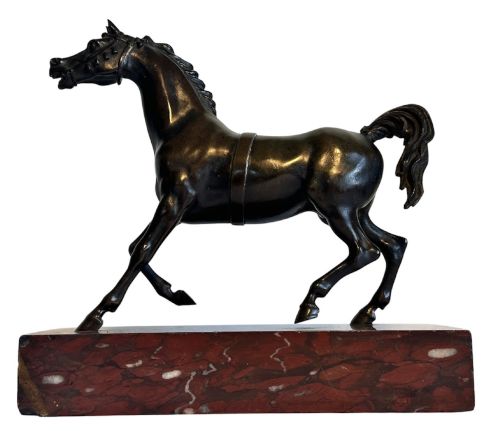
The most common versions on this page are bronze castings mounted on heavy marble plinths, reflecting academic realism and Grand Tour souvenir traditions. Other examples include folk art wooden models and leather figures mounted on integral wooden supports.
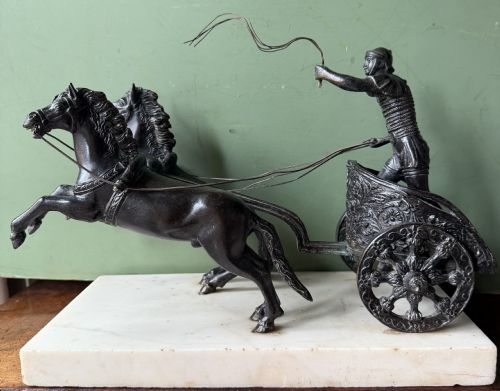
Makers and sculptors often drew on classical and contemporary themes, depicting stallions, charioteers, and racing winners. Each piece relies on the weight of its base to anchor the dynamic metal or organic forms above.
How they were made
Bronze sculptures are cast using traditional foundry methods, capturing fine muscle definition and harness details before being secured to cut marble plinths. Patination gives the metal surfaces varied tones, ranging from deep brown to polished highlights.
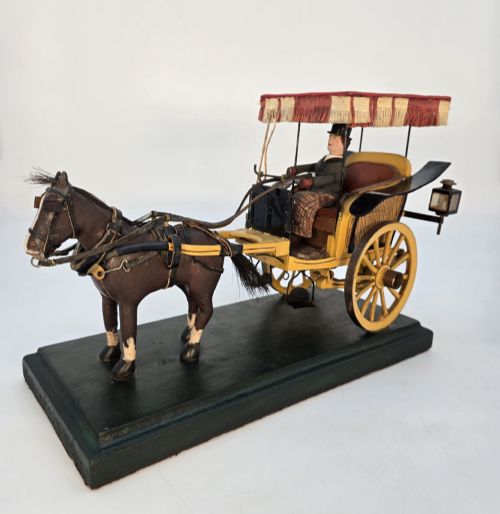
Wooden and folk art models utilise carved timber, paint, and occasional horsehair or leather to build up the body of the horse and its transport or rider. Scratch built examples display hand-cut joints and painted finishes applied directly to the material.
Leather models employ stitched hides stretched over internal armatures to achieve life size or scaled forms. These organic constructions rely on internal wooden or metal frameworks for structural stability.
Several horses come complete with miniature drivers, pull-along wheels, or actual horsehair tails to keep things lively on the shelf.
What varies in quality
The quality of a casting shows in the crispness of the bronze work, where finer examples preserve muscular tension, facial expression, and gear details without smoothing over the surface. Heavier marble bases with clean bevelling and matching veining elevate the overall presentation.
In folk art and hand-built wooden models, quality is measured by the articulation of form and the preservation of original painted surfaces. Maker signatures, accurate proportions, and robust construction distinguish standard workshop output from exceptional studio pieces.
The Vintage Horse Sculpture Base Glossary
- Animalier
- A nineteenth century art movement focusing on the realistic portrayal of animals, particularly horses, lions, and dogs. Animalier sculptors often worked in bronze to capture the natural movement of their subjects.
- Grand Tour
- A traditional trip of Europe undertaken by upper-class European young men of means in the eighteenth and nineteenth centuries. Souvenirs purchased on these journeys frequently included small bronze monuments mounted on marble plinths.
- Patina
- A thin layer that naturally or artificially forms on the surface of bronze through oxidation and age. A desirable patina adds depth and character to the metal sculpture.
- Plinth
- A heavy block or slab acting as a base for a statue or pillar. In these pieces, marble or stone plinths provide essential counterweight and physical support to the metal figures.
- Scratch built
- A model constructed from raw materials rather than from a commercial kit or pre-made parts. Such pieces often demonstrate considerable individual craftsmanship and ingenuity.
Vintage Horse Sculpture Base: Frequently Asked Questions
What periods do these sculptures cover?
The selections span from the nineteenth century through the mid twentieth century, encompassing Victorian, Edwardian, and Art Deco eras. Styles range from academic realism to folk art.
Earlier examples often reflect Grand Tour traditions, while later twentieth century pieces embrace modernist lines or decorative casting techniques.
Are all marble bases original to the bronzes?
Most period bronzes were cast alongside or mounted onto custom-cut marble plinths as part of their initial design. The weight of the stone was necessary to balance the metal figures above.
Examining the mounting pins and the fit between the bronze hooves and the stone can help determine if the components share the same period.
How were folk art wooden horses constructed?
Folk art models were typically hand-carved from local timbers by independent makers using basic woodworking tools. They often feature pinned joints, hand-painted coats, and applied elements like leather harness straps.
Unlike factory-produced toys, these scratch-built pieces display unique proportions and individual artistic choices.