




Vintage Horology Travel Clock
These vintage horology travel clock pieces keep time across distant rooms and journeys, bringing mechanical precision inside portable brass and leather cases.
Vintage Horology Travel Clock
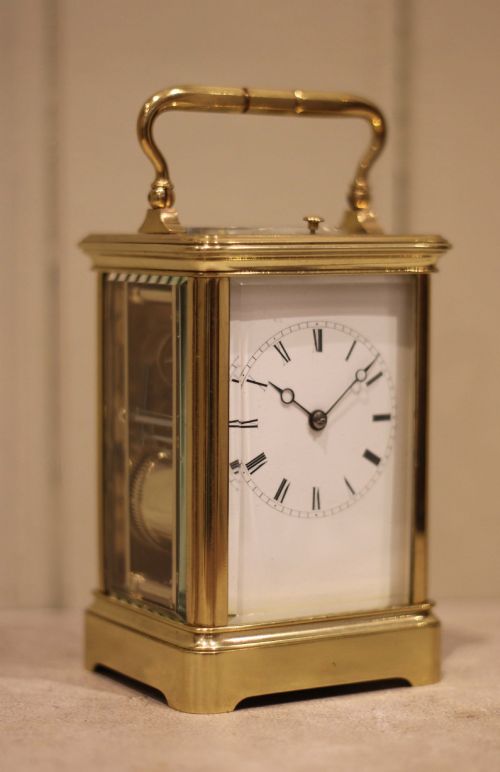
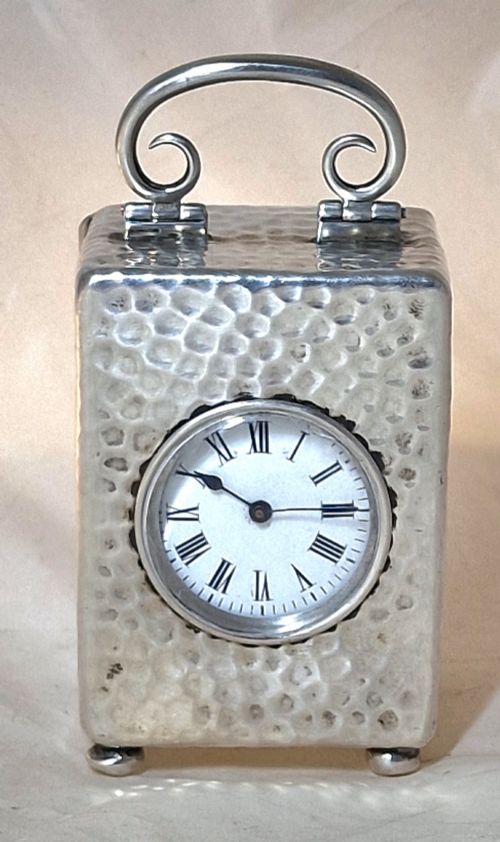
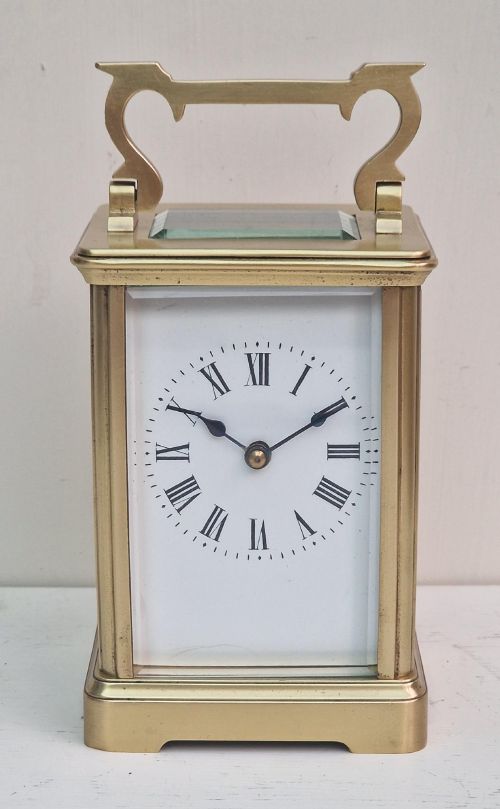
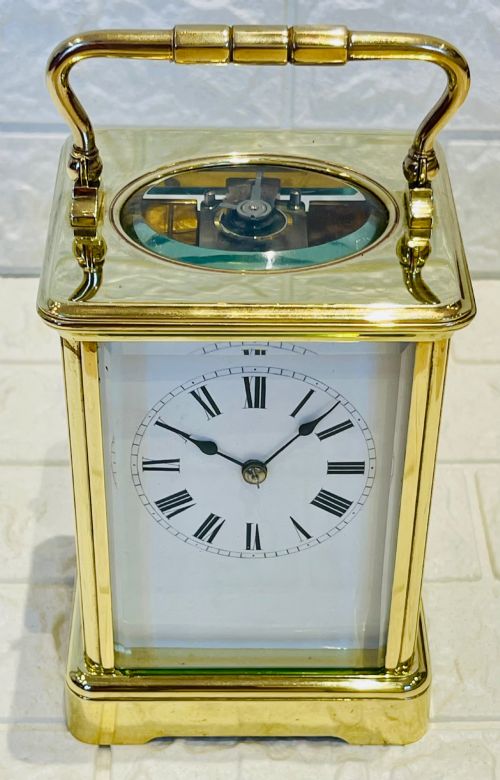
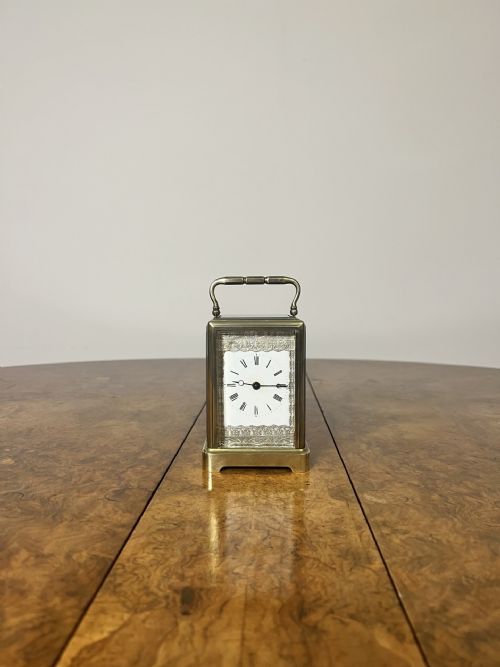
When you search for a vintage horology travel clock, you encounter portable timepieces built to accompany owners on journeys across the nineteenth and twentieth centuries. These objects primarily take the form of carriage clocks and pocket watches housed in protective travel cases.
French workshops and British retailers dominate the selection, spanning periods from the mid-nineteenth century through the Edwardian era and mid-century decades. Carriage clocks stand as the most frequent discovery on this page, often equipped with striking or repeating mechanisms.
How they were made
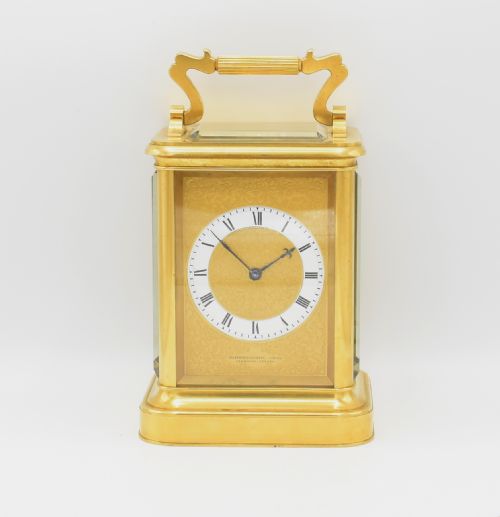
Maker workshops construct these movements from steel and brass, housing the gear trains behind bevelled glass panels fitted into heavy brass or gilt brass frames. Many examples incorporate enamel dials with Roman or Arabic numerals.
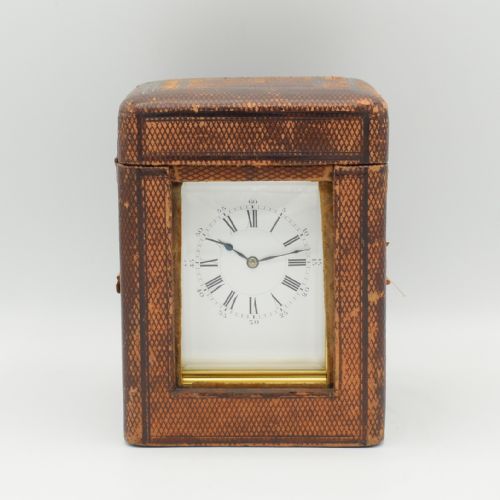
Protective elements involve stitched leather travel cases lined with velvet or silk, alongside solid silver or nickel casings for pocket watches and miniature designs.
One extraordinary nineteenth-century travel clock is cleverly disguised to look entirely like a leather-bound prayer book.
What varies in quality
The sophistication of the internal movement dictates the standard, separating simple time-only pieces from complex mechanisms featuring quarter-striking, five-minute repeating, or alarm functions. The presence of platform escapements with special adjustments marks finer output.
Casing execution and decorative engraving also separate examples, where substantial gilt brass frames and signed enamel dials demonstrate workshop pedigree. Original fitted leather travel cases and accompanying paperwork elevate the completeness of surviving pieces.
Henri Jacot·Antoine Redier·Drocourt·Mappin and Webb·Gontard & Bolviller Paris
The Vintage Horology Travel Clock Glossary
- Carriage clock
- A portable spring-driven clock designed for travelling during the nineteenth century. These pieces feature a handle on top and glass panels revealing the movement.
- Platform escapement
- The tiny horizontal assembly regulating the speed of the clock. Higher grade versions include bimetallic balance wheels for temperature compensation.
- Repeating mechanism
- A complication that chimes the hours and quarters upon pressing a button on the case. This allowed owners to check the time in the dark.
- Goliath pocket watch
- An oversized pocket watch typically measuring much larger than standard pocket watches. These were often mounted in desk stands or travel cases.
- Striking mechanism
- An internal system that automatically sounds the hours or half-hours on a bell or gong. Some examples include alarm functions.
Vintage Horology Travel Clock: Frequently Asked Questions
How do I wind a carriage clock?
Insert the key into the winding square on the backplate and turn clockwise until you feel firm resistance. Take care not to overwind the mainspring.
For repeating mechanisms, use a separate winding arbor for the strike train if the clock has dual trains.
Why does my clock gain or lose time?
Changes in temperature and mechanical wear affect the balance wheel regulation. Adjust the small regulator lever on the platform escapement towards the fast or slow indicator.
Ensure the clock rests on a completely level surface to keep the escapement beating evenly.
How were travel clocks used historically?
Owners packed these portable timepieces into leather cases for carriage journeys and hotel stays. The robust construction protected the delicate gear trains from rough transport.
Upon arrival, travellers placed the clock on a bedside table or desk to maintain accurate time away from home.
How do I identify the period of a clock?
Examine the style of the case, escapement type, and any signature stamps on the movement backplate. Victorian and Edwardian examples often display distinct hand-engraved scrollwork.
Maker marks and serial numbers help narrow down the decade of production.