

Vintage Hat Coat Stand
A vintage hat coat stand brings practical hall storage and strong period character into an entranceway, combining timber, metal or bentwood forms.
Vintage Hat Coat Stand
When you search for a vintage hat coat stand, you encounter hall furniture designed to organise outerwear, hats and umbrellas in domestic entryways. The examples seen on this page span the Victorian, Edwardian and Arts and Crafts periods, moving into early twentieth-century designs.
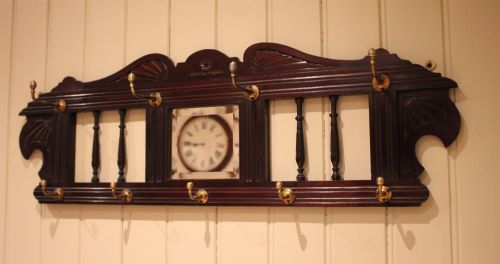
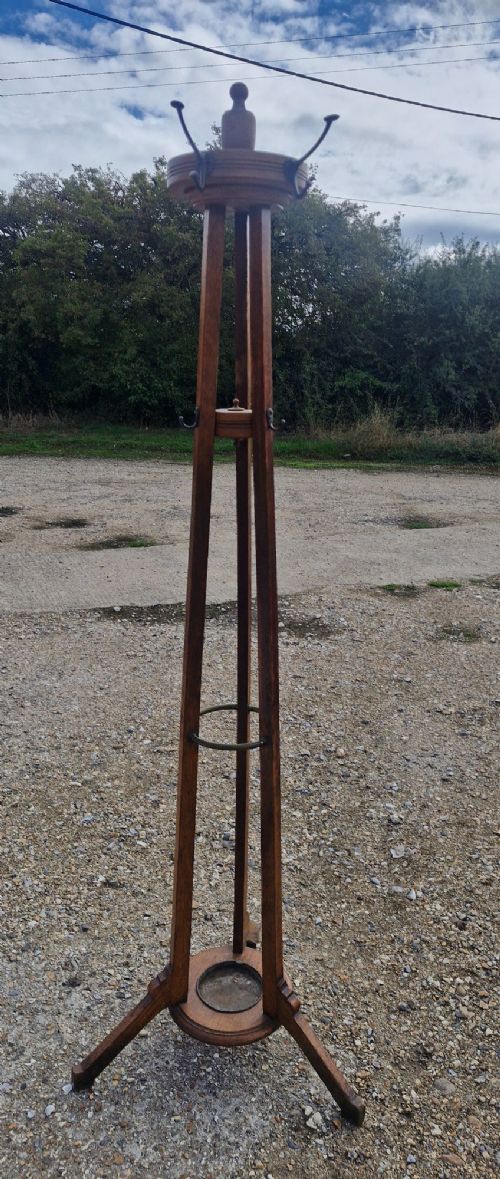
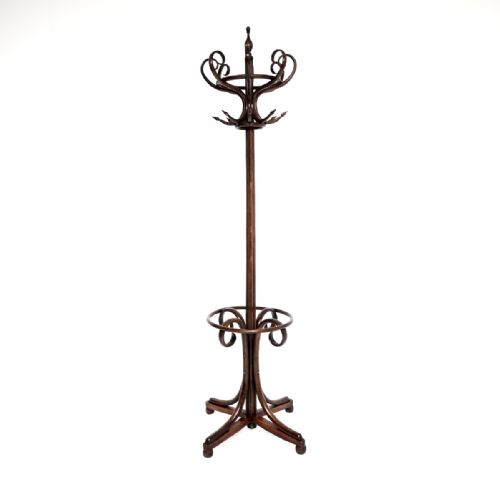
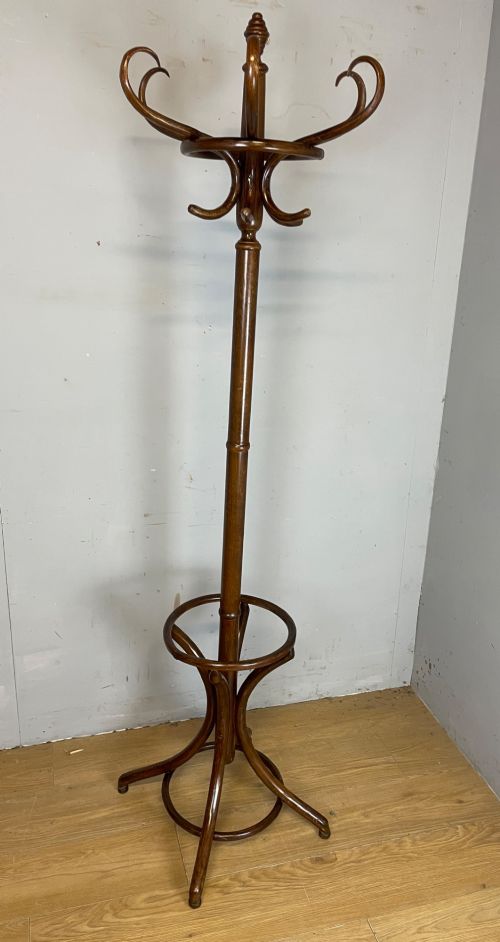
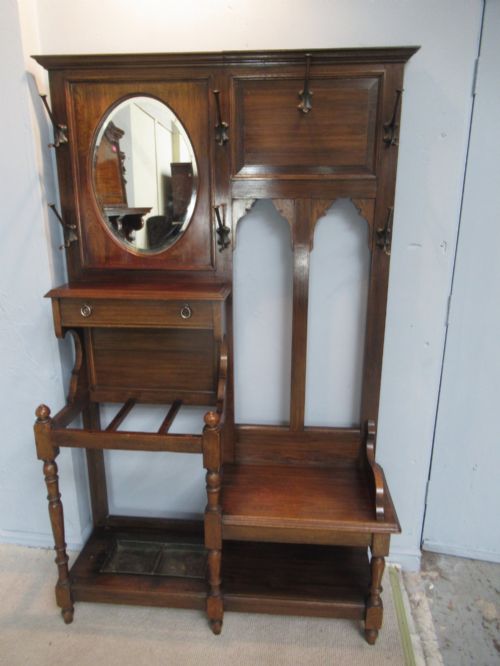
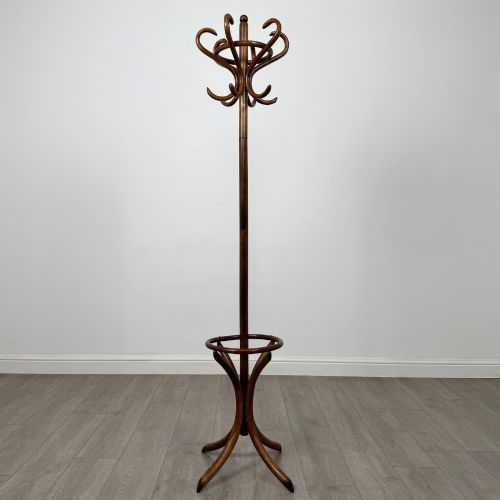
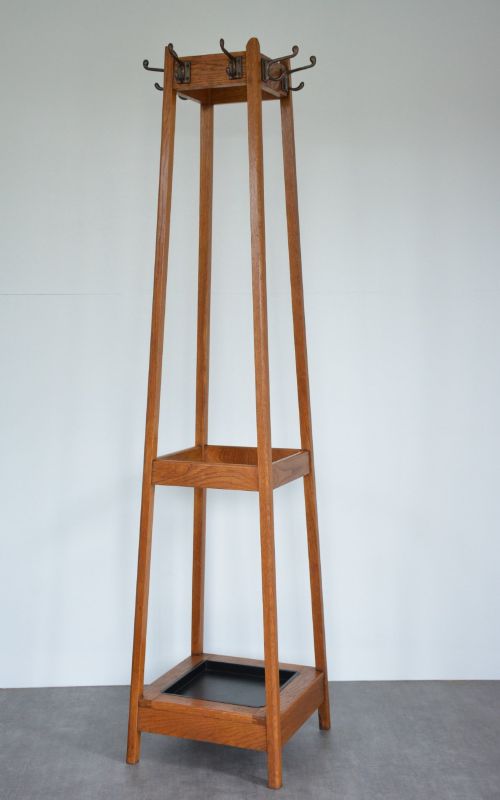
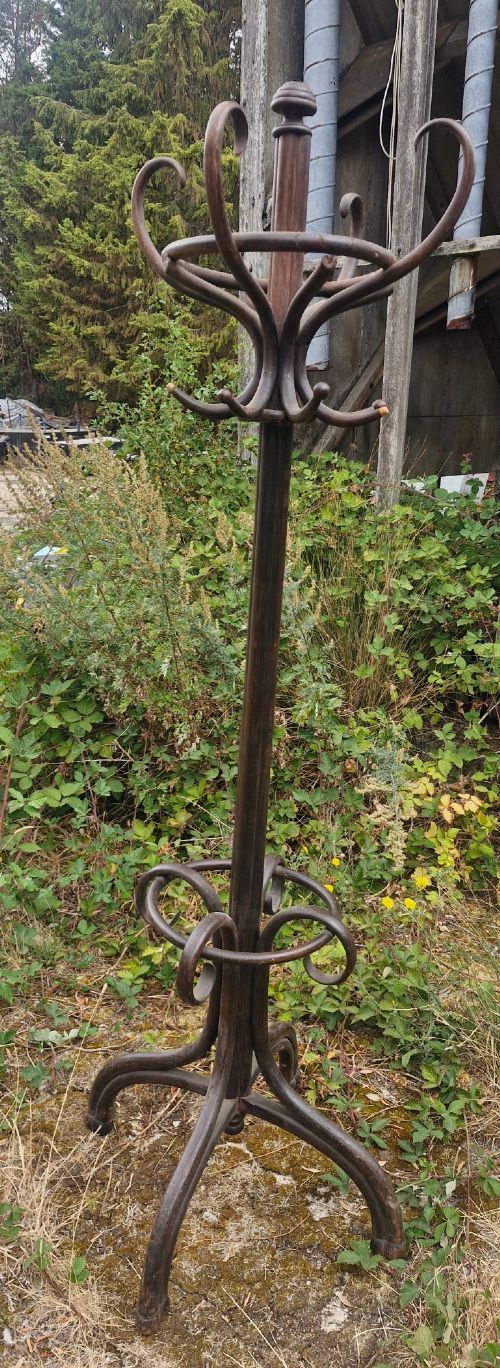
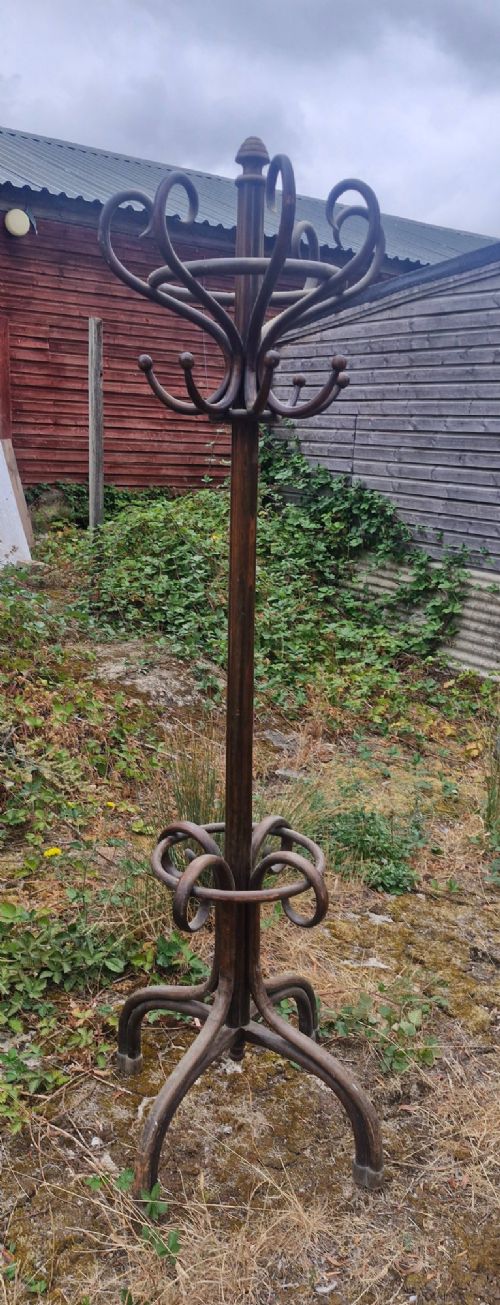
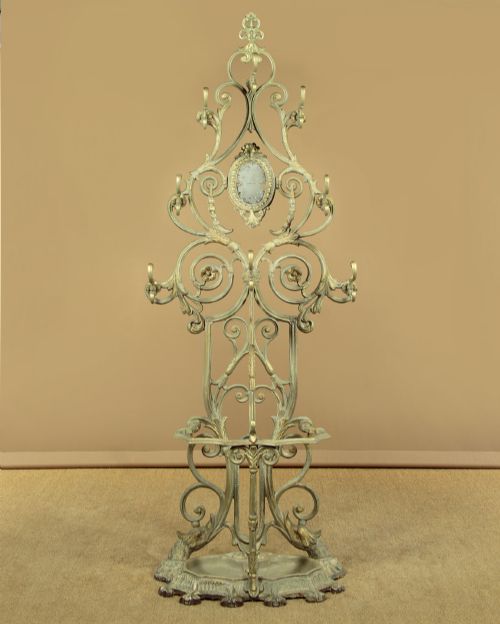
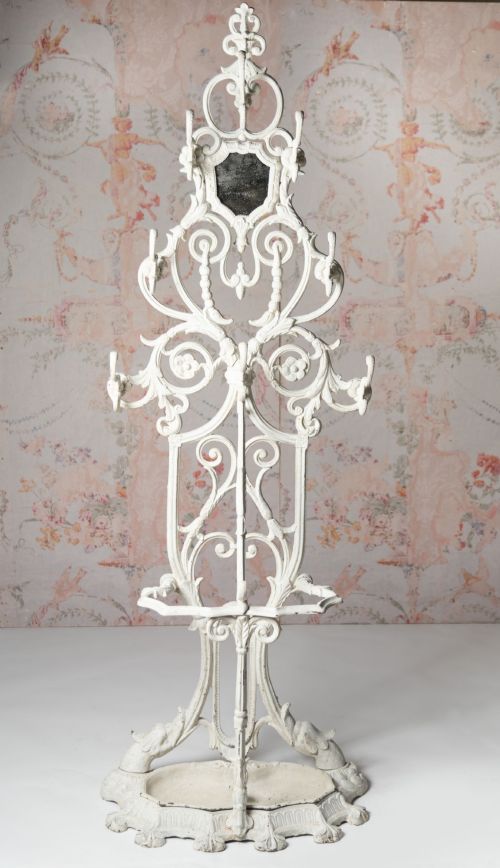
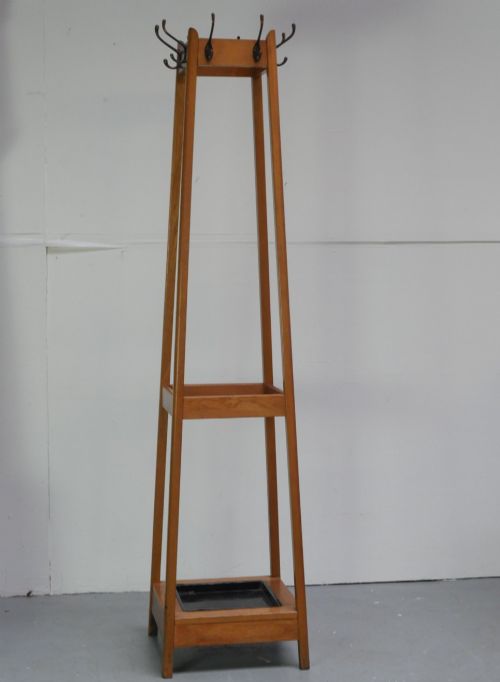
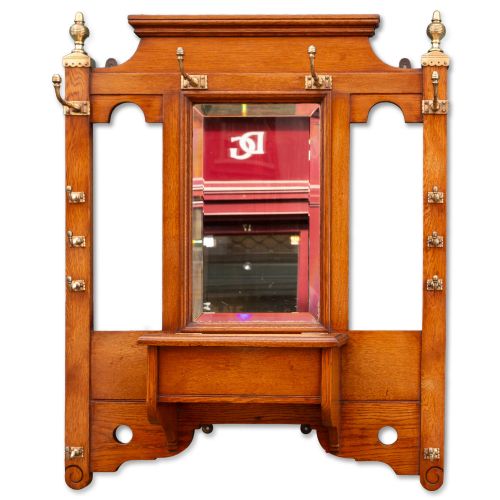
The most common version met here is the bentwood hat and coat stand, frequently shaped from beech or beechwood in the style associated with Thonet. Alongside these upright column pieces, the listings include wall-mounted racks, substantial oak hallstands with mirrors and drip trays, and cast iron or brass variations.
Origins range across British workshops, French makers and Austrian production, encompassing styles from the Aesthetic Movement to Art Nouveau. Buyers select these items to serve an active daily function while introducing period presence to a hallway or reception room.
How they were made
Makers utilised steam-bent beech and beechwood to achieve the characteristic curving uprights and looped hooks of bentwood stands, relying on heat and moisture to manipulate the timber. Solid oak, mahogany and walnut formed the structure of heavier hallstands, often joined with pegged mortise and tenon joints.
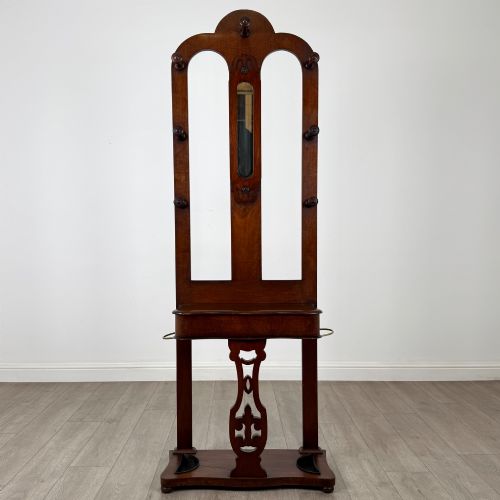
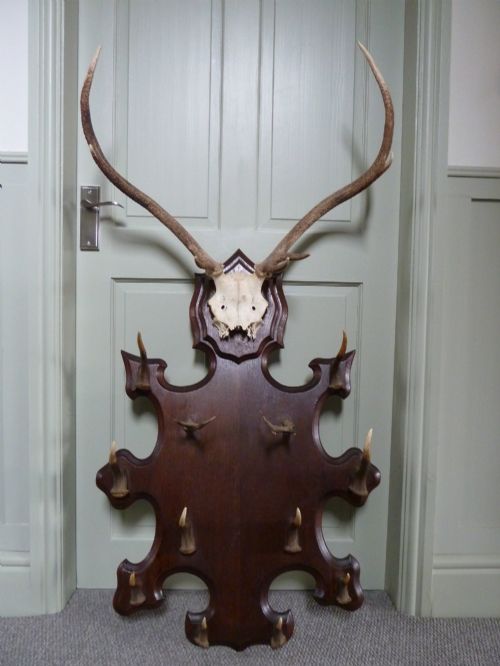
Metal components appear extensively, including cast iron frames shaped into faux bamboo or decorative scrollwork, alongside brass hooks, rails and drip trays. Surface finishes combined polished shellac, honey-coloured varnish and applied carved details such as Green Man motifs or stag antlers.
Period origins on this page range from Victorian and Edwardian decades through to the 1930s.
What varies in quality
The distinction between standard utility items and finer examples rests upon the integrity of the construction and the refinement of the timber bending. Superior bentwood pieces exhibit smooth, continuous curves without splintering, supported by robust rotating mechanisms or well-anchored umbrella rings.
Substantial hallstands demonstrate quality through the depth of hand-carving, the clarity of figuration in the oak or mahogany, and the inclusion of original cast metal drip trays and brass hardware rather than later replacements.
Thonet·Astrola·Jas. Shoolbred·J. Parker Of Woodstock
The Vintage Hat Coat Stand Glossary
- Bentwood
- Wood that has been heated with steam and shaped into curved structural forms. This technique created the lightweight yet resilient frames popular in domestic halls.
- Hallstand
- A piece of hallway furniture combining coat hooks, hat pegs, a mirror and umbrella storage. Larger versions often incorporate a small bench or glove drawer.
- Demi lune
- A half-moon shape used for hall stands designed to sit flush against a wall. This profile maximises floor space in narrow corridors.
- Aesthetic Movement
- A late nineteenth-century design current that prioritised visual beauty over narrative meaning. Pieces from this movement often utilised bamboo and ebonised wood.
- Drip tray
- A metal or ceramic basin positioned at the base of a stand to catch water from wet umbrellas. These trays are frequently removable for emptying.
Vintage Hat Coat Stand: Frequently Asked Questions
How do I care for a bentwood stand?
Keep wooden bentwood frames away from direct heat sources and excessive moisture to prevent the steamed timber from drying out or warping.
Apply a microcrystalline wax periodically to nourish the surface finish and maintain the natural lustre of the beech.
Are wall-mounted racks sturdy enough for heavy coats?
Wall-mounted racks constructed from solid oak or brass securely support heavy winter garments when fixed directly into structural wall studs or masonry.
Ensure appropriate fixings are utilised according to your specific wall type to distribute the weight evenly across the mounting points.
How do I distinguish Victorian from Edwardian stands?
Victorian pieces tend to feature heavier, darker timbers like mahogany and walnut, frequently decorated with elaborate carvings or cast iron scrollwork.
Edwardian and later examples often shift towards lighter oak or honey-toned bentwood, favouring cleaner lines and functional simplicity.
Can I use an antique hallstand in a modern home?
These stands provide practical vertical storage that suits contemporary hallways, offering designated spaces for coats, hats and umbrellas without occupying excessive floor area.
Their varied aesthetic styles allow them to function as sculptural focal points in minimalist or eclectic interiors.