





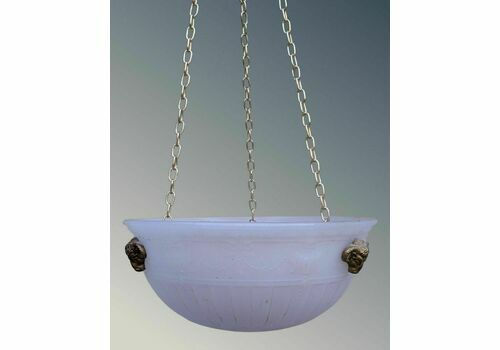


Vintage Hanging Bowl
These vintage hanging bowl options bring diffused overhead illumination and classic character into your rooms.
Vintage Hanging Bowl
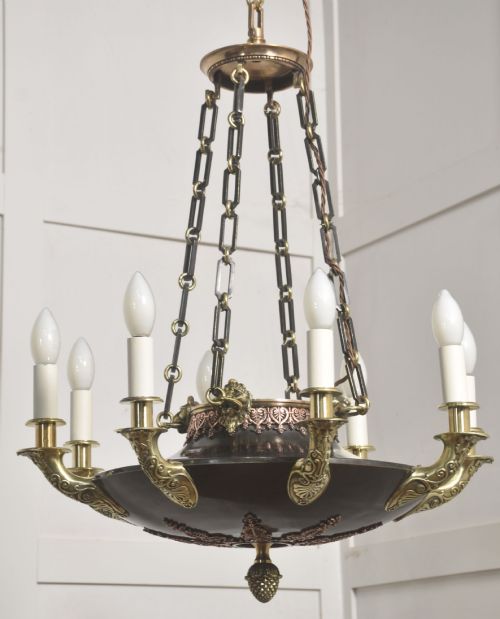
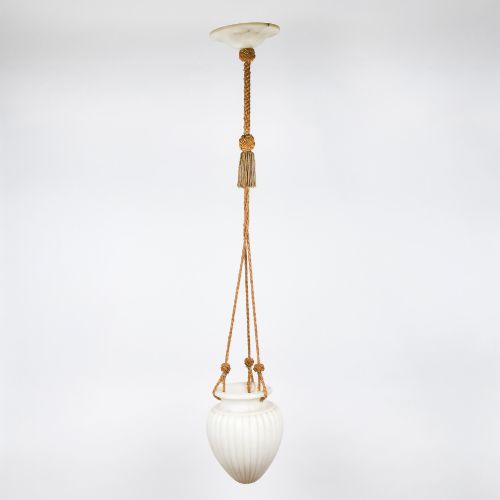
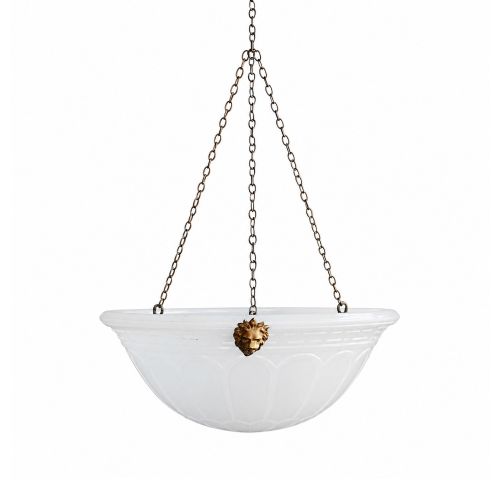
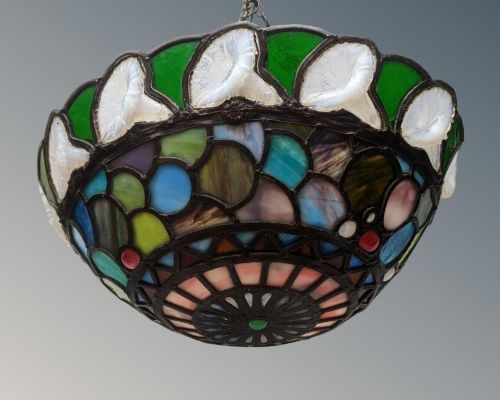
When you search for a vintage hanging bowl, you are looking at ceiling suspended lighting fixtures designed to cast a soft, ambient glow downwards into a room. The most common versions you will meet on this page take the form of shallow dishes or domes hung by chains or cords from a central canopy.
The selections span distinct periods including the Edwardian era, the Victorian period, and the 1920s and 1930s. Stylistically, they range from ornate Classical Revival and Empire Revival designs to cleaner Art Deco and Arts and Crafts aesthetics.
Materials vary widely across these periods, encompassing solid brass, bronze, copper, cut glass, alabaster, and opalescent glass. Forms are primarily structured as pendant lights, ceiling lights, and dish chandeliers.
How they were made
The construction of these fixtures relies heavily on metalworking techniques for the suspension frames, utilising cast or spun brass, bronze, and copper to hold the heavy glass and stone bowls securely. Metal collars, chains, and rams head details are cast and patinated to complement the primary shade.
Bowls and shades are formed from blown, pressed, or cut glass, alongside carved white alabaster. Opalescent, moonstone, and mirrored glass treatments are utilised to manipulate light diffusion, while painted glass finishes add decorative surface detail.
Vintage Hanging Bowl Retail Price Guide 2026
Typical asking prices for vintage hanging bowl among the pieces listed under this phrase on Sellingantiques today, from the lower quarter to the upper quarter. They describe what is for sale here now, not the wider market.
Materials represented across the selection include alabaster, cut glass, bronze, brass, and copper.
What varies in quality
Quality in these pieces is dictated by the depth of material selection and the crispness of the manufacturing execution. Solid cast brass and carved alabaster represent a higher tier of production compared to lighter plated metals and standard pressed glass.
Finer examples show superior weight in the metal components, intricate hand-cut facets in the glass, and integrated decorative elements such as detailed bronze mounts. The overall structural harmony between the suspension hardware and the central bowl determines the distinction between standard utilitarian lighting and finer decorative pieces.
The Vintage Hanging Bowl Glossary
- Pendant light
- A solitary light fixture suspended from the ceiling by a cord, chain, or metal rod. It directs illumination downwards over a specific area.
- Plafonnier
- A bowl-shaped ceiling light fixture that sits relatively close to the ceiling surface. It is typically glass or alabaster held within a metal rim.
- Alabaster
- A fine-grained, translucent stone used historically for carved lighting bowls. It diffuses light with a soft, even warmth.
- Opalescent glass
- Glass exhibiting a milky, iridescent appearance that shifts in tone when lit from within. It creates a gentle, glowing diffusion.
- Cut glass
- Glass decorated by grinding facets or patterns into the surface using a wheel. This technique maximises light refraction and sparkle.
Vintage Hanging Bowl: Frequently Asked Questions
How do I hang a heavy bowl light?
These fixtures require secure anchorage directly into ceiling joists or the use of appropriate toggle fixings to support the combined weight of the metal and stone or glass components.
Professional electrical installation is recommended to ensure the ceiling rose and suspension chains safely bear the load.
What rooms suit a hanging bowl?
They suit hallways, dining spaces, and high-ceilinged living rooms where direct overhead suspension provides functional illumination without obstruction.
The diffused downward light creates an intimate atmosphere in smaller spaces while maintaining floor clearance.
How do I clean alabaster bowls?
Alabaster is a porous stone that absorbs moisture and oils easily, so cleaning requires a dry microfiber cloth or a very slightly damp sponge with mild soap.
Harsh chemical cleaners should be avoided entirely to preserve the natural surface texture and finish of the stone.
How do I date a glass shade?
Dating relies on observing stylistic markers such as geometric Art Deco moulding lines, Edwardian cut glass patterns, or Victorian bronze mounts.
Manufacturing techniques, including the presence of hand-finishing or specific glass colours like moonstone, further indicate the period of origin.