

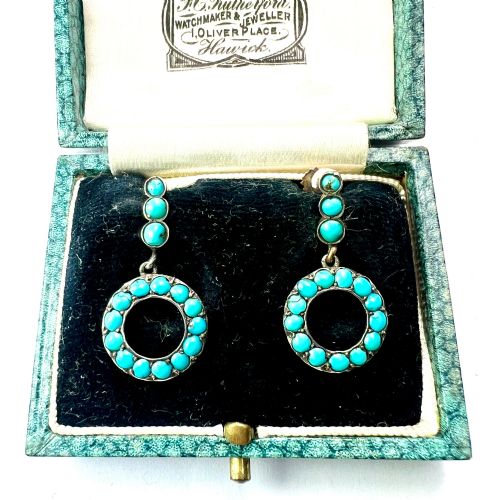


Vintage Halo Earrings
Vintage halo earrings centre a central stone within a brilliant border of smaller gems, offering enduring elegance and striking symmetry.
Vintage Halo Earrings
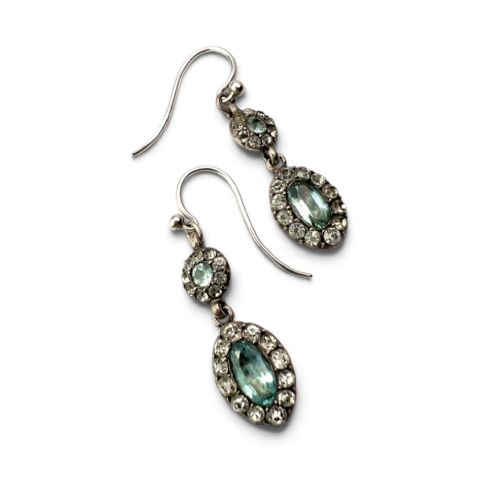
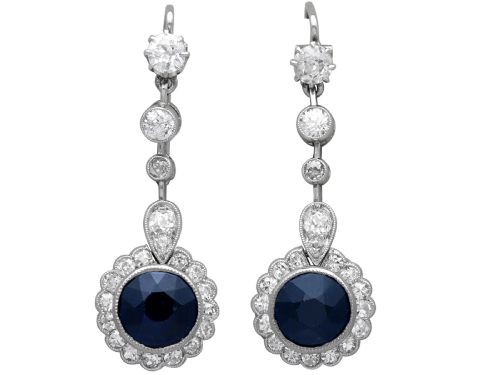
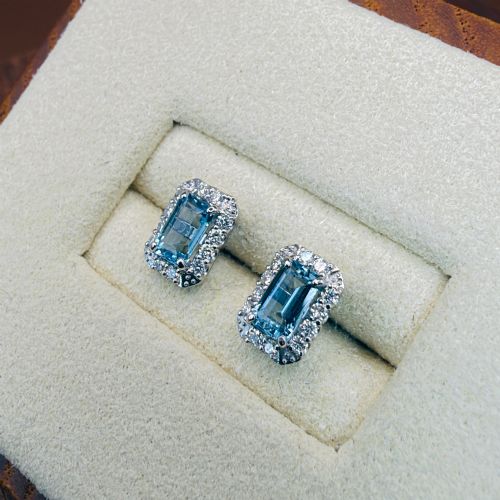
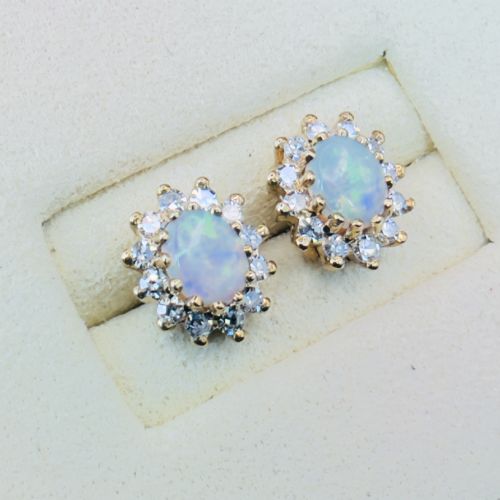
When you search for vintage halo earrings, you encounter cluster designs that frame a primary gemstone, such as diamond, sapphire, emerald, or opal, with a concentric circle of smaller accent stones. These circular and clustered configurations draw the eye inward, magnifying the perceived scale and brilliance of the centre gem.
The selections available span multiple eras, including Georgian, Victorian, Edwardian, Art Deco, and mid-century modern periods. Examples range from platinum drop configurations to 9ct yellow gold studs and silver-gilt iterations.
Makers utilised diverse central stones, pairing diamonds with aquamarine, garnet, turquoise, amethyst, and zircon. Forms alternate between tight stud clusters, dangling hoop variations, and screwback drops.
How they were made
Metals such as platinum, silver, 18ct white gold, and 9ct yellow gold form the structural foundations of these cluster configurations. Craftsmen set stones using traditional claw, bezel, and pave techniques that secure the outer border tightly around the focal gem.
Gemstones feature varied cuts, including old cut diamonds, rose cut diamonds, emerald cuts, and oval cabochons. Silver-gilt and enameled elements appear alongside precious metals to build contrasting colourful borders.
Vintage Halo Earrings Retail Price Guide 2026
Typical asking prices for vintage halo earrings among the pieces listed under this phrase on Sellingantiques today, from the lower quarter to the upper quarter. They describe what is for sale here now, not the wider market.
Several pairs utilise screwback mechanisms, reminding modern wearers of an era when clipping things securely to ears required tiny mechanical thumbs.
What varies in quality
Quality differentiates by the purity of the central gemstone and the precision of the surrounding border work. Better examples exhibit matched stone sizing, secure stone settings, and balanced proportions between the centre focal point and the outer halo.
The choice of structural metal also shifts the character of the piece, with heavier platinum and 18ct gold foundations offering greater durability than lighter 9ct gold or silver-gilt settings.
The Vintage Halo Earrings Glossary
- Halo
- A concentric border of smaller gemstones surrounding a larger central stone. This setting style enhances the overall sparkle and presence of the primary gem.
- Cluster
- An arrangement of multiple smaller gemstones set closely together to form a unified design. Cluster earrings often mimic the circular layout of a halo.
- Old cut
- A traditional diamond cutting style characterised by a high crown, small table, and deep pavilion. These cuts generate a softer, distinctive candlelight twinkle compared to modern brilliant cuts.
- Cabochon
- A gemstone shaped and polished with a smooth, convex dome rather than faceted edges. Opaque or translucent stones like opal and bloodstone frequently appear in this form.
- Screwback
- A mechanical earring fastening that uses a threaded post and a small nut to secure the piece onto the earlobe. This closure method preceded modern butterfly push-backs.
Vintage Halo Earrings: Frequently Asked Questions
How do I date vintage halo earrings?
Dating relies on metal types, gemstone cuts, and fastening styles. Edwardian pieces often incorporate platinum and intricate filigree, while mid-century examples lean toward bolder yellow gold clusters.
Examining the back fixings, such as screwbacks versus modern posts, also provides clear chronological clues.
Are these earrings comfortable for daily wear?
Comfort depends heavily on the weight of the cluster and the style of the fastening. Stud versions sit close to the lobe for easy everyday use, whereas heavy drop earrings suit special occasions.
Checking whether the piece uses screwbacks or posts helps determine how securely it sits on the ear.
Can I wear them with other jewelry?
These cluster designs pair naturally with matching rings or pendants from corresponding eras. Matching metals, such as white gold or platinum, help create a cohesive look.
Contrasting yellow gold settings with silver accents also reflects historical mixed-metal jewellery practices.