

Vintage Hall Hooks
Vintage hall hooks organise entranceways with practical charm, combining period timber and metal to hold everyday coats and hats.
Vintage Hall Hooks
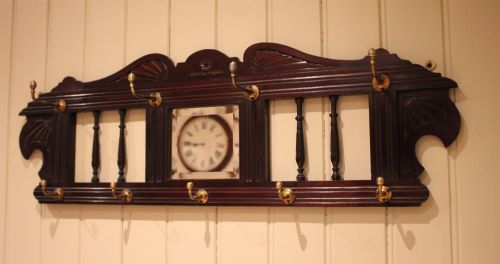
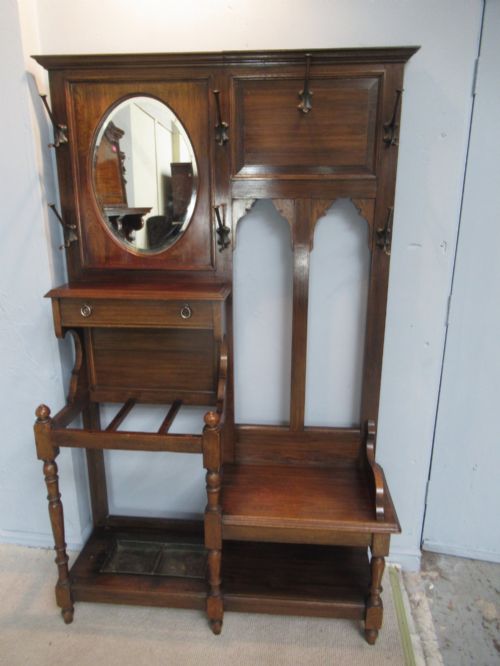
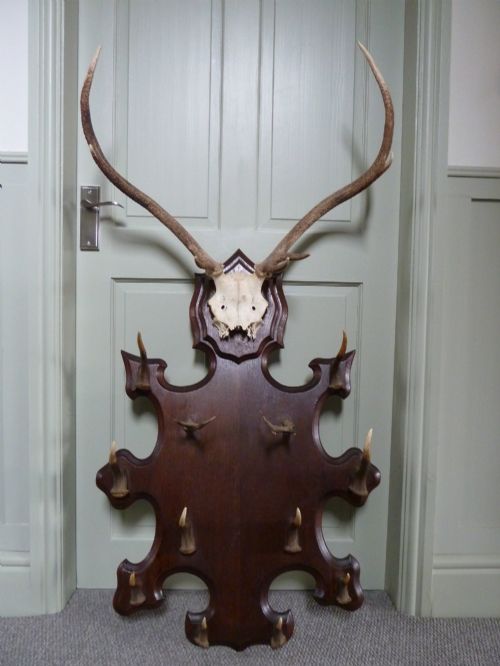
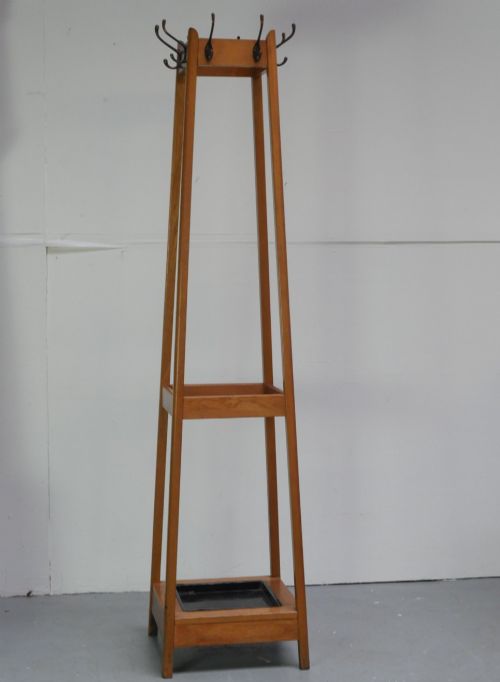
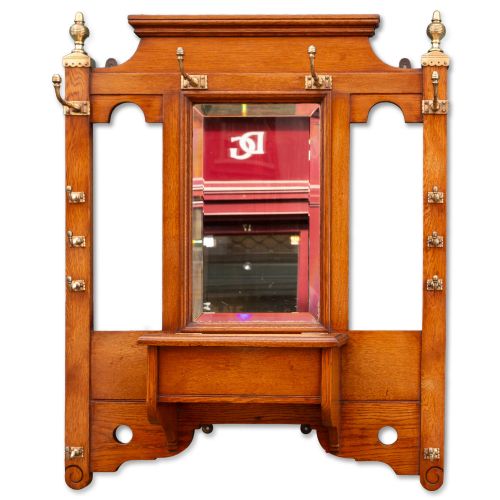
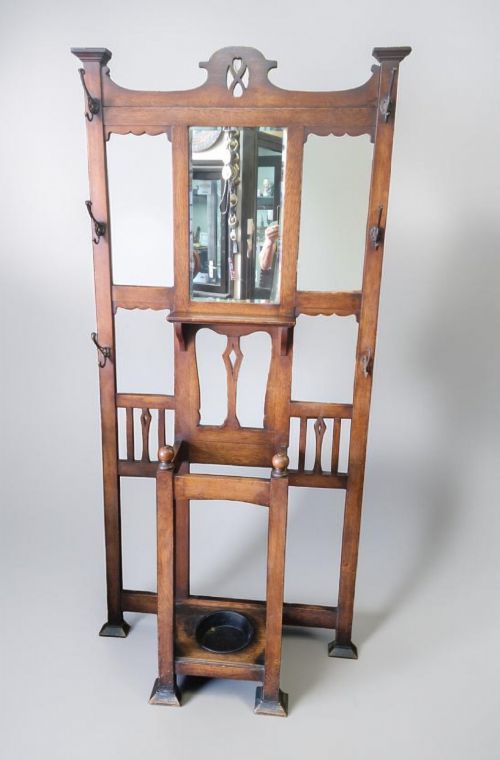
Vintage hall hooks encompass wall-mounted racks, standalone stands and individual fixings designed for entranceways, cloakrooms and hallways. These pieces manage everyday outerwear using timber boards, metal rails or mirror frames fitted with robust projections.
The selection here draws primarily from the nineteenth century, Victorian, Edwardian and Art Deco periods, capturing utilitarian items alongside domestic furniture. Common forms include oak hat and coat stands, mahogany wall racks with brass mountings and French metal luggage shelves.
Makers and manufacturers utilised regional hardwoods and metals suited to heavy domestic traffic, producing items ranging from simple wall strips to elaborate hall stands incorporating mirrors and umbrella trays.
How they were made
Carpenters and cabinetmakers constructed the backboards and frames using oak, mahogany, walnut, pine and beech, often pairing the timber with brass, bronze, iron or nickel-plated hooks. These materials provided the structural strength required to bear heavy winter garments and wet umbrellas.
Metal components were cast, forged or plated, then screwed directly into wooden backplates or mounted on walls. Joinery techniques varied from simple rebated panels in wall racks to mortise and tenon joints in floor-standing coat stands and hall trees.
Materials span brass, glass, oak, mahogany, ceramic, wood, walnut and beech across multiple historic periods.
What varies in quality
Quality rests in the weight of the metal and the selection of timber, distinguishing substantial brass or bronze fittings on solid oak or mahogany from lighter plated alternatives on softer woods. Substantial backplates and deeply cast hooks indicate robust construction intended for prolonged daily use.
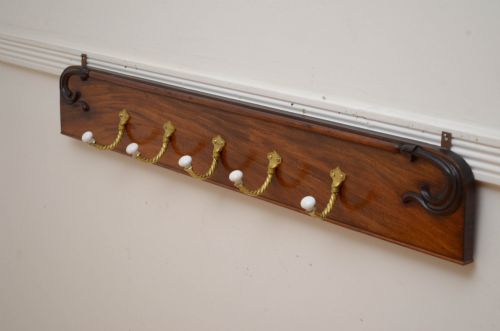
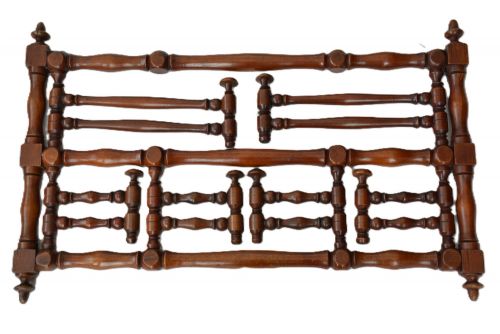
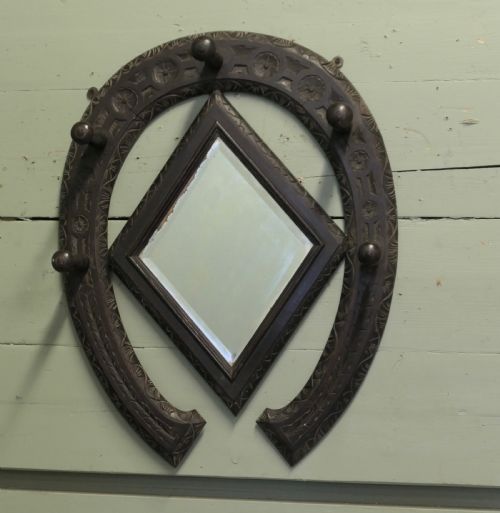
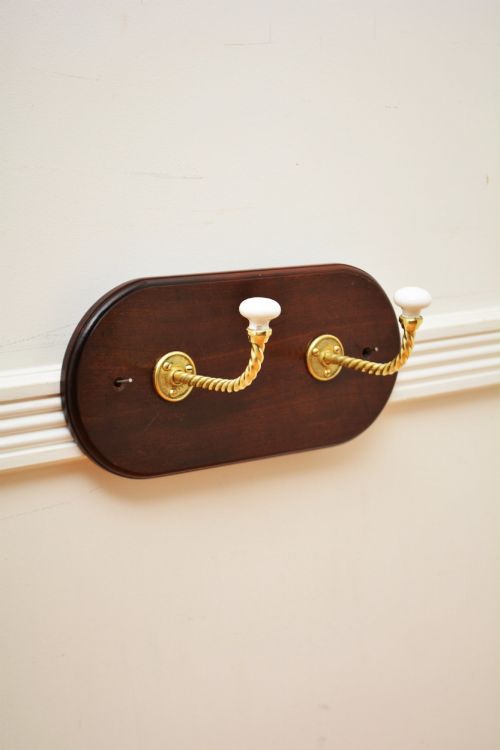
Design integration separates standard utility items from finer examples featuring bevelled mirror glass, turned wooden columns, twisted rope motifs or ceramic details. The crispness of cast metal ornament and the soundness of the wooden frame dictate the standing of each piece.
Jas. Shoolbred·Thonet
The Vintage Hall Hooks Glossary
- Hall Stand
- A piece of entranceway furniture combining coat hooks, a mirror, glove boxes and umbrella storage. These items anchor large hallway interiors.
- Portmanteau
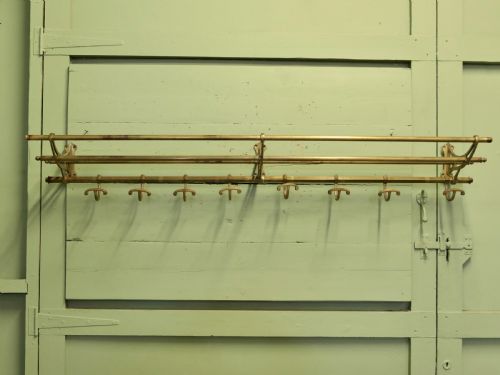
- A wall-mounted rack featuring a luggage shelf above a row of coat hooks. This format originates from travel equipment adapted for domestic cloakrooms.
- Bentwood
- Wood steamed and bent into curved shapes, commonly seen in nineteenth-century coat racks and stands. This technique produces lightweight yet resilient frames.
- Aesthetic Movement
- A late nineteenth-century design style prioritising visual beauty over narrative function. Pieces from this movement often employ ebonised wood and contrasting metal hooks.
- Hat Tree
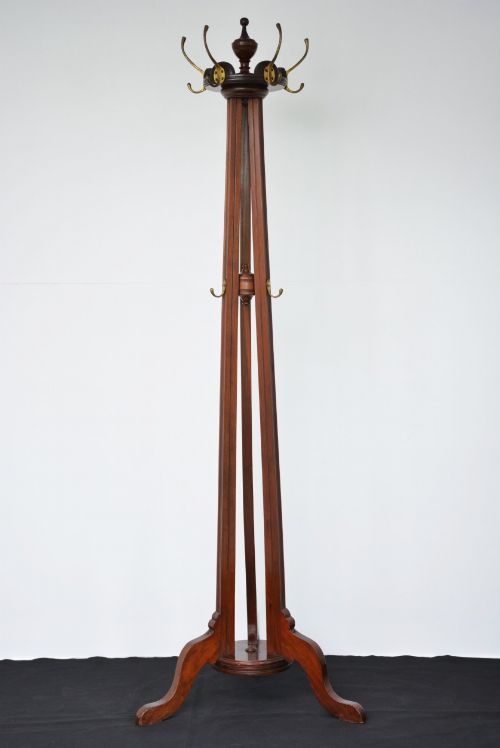
- A vertical stand with multiple branches for hanging hats and coats. These freestanding items suit spacious hallways.
Vintage Hall Hooks: Frequently Asked Questions
How do I mount a wall rack securely?
Wall racks require solid fixing into wall studs or masonry using appropriate screws to support the weight of heavy coats and hats.
Matching the fixing method to the weight of the timber backboard ensures the hardware remains secure under daily load.
What is the difference between a hall stand and a coat rack?
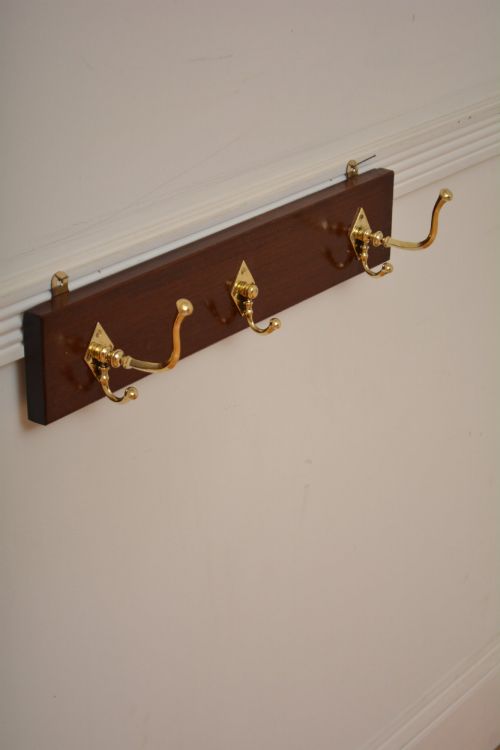
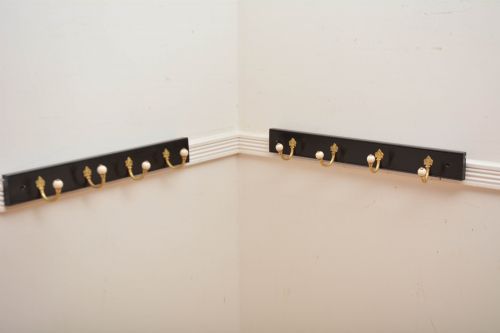
A coat rack attaches directly to the wall as a board with fixed hooks, while a hall stand is a freestanding piece of furniture that often includes a mirror, umbrella stands and storage compartments.
Floor-standing pieces require dedicated floor space, whereas wall-mounted racks suit narrow corridors.
How do I clean brass and wood parts?
Wood surfaces benefit from occasional waxing with traditional beeswax to nourish the grain and protect the finish against moisture.
Brass hooks can be dusted regularly, avoiding harsh chemical polishes that strip away aged patination.
What periods do these pieces represent?
The pieces span from the mid-nineteenth century through the Victorian, Edwardian, Arts and Crafts, and Art Deco eras up to the 1930s.
Design details such as turned wood, bevelled mirrors and geometric metalwork help identify the specific era of manufacture.