
Vintage Gold Pendant Fitting
These vintage gold pendant fitting options illuminate spaces with enduring brass, bronze, and crystal elegance.
Vintage Gold Pendant Fitting
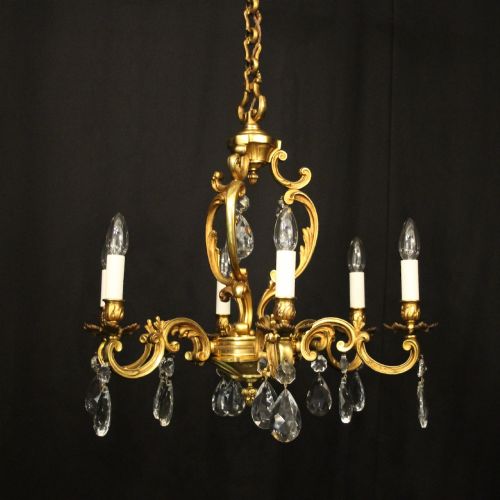
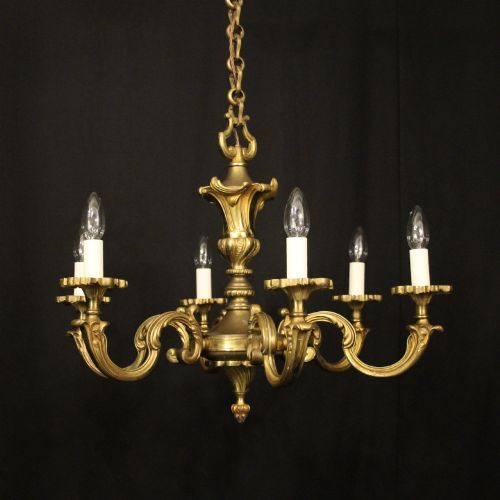
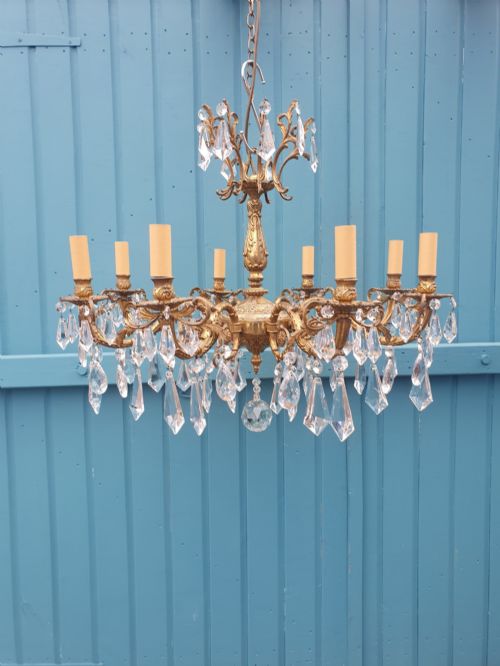
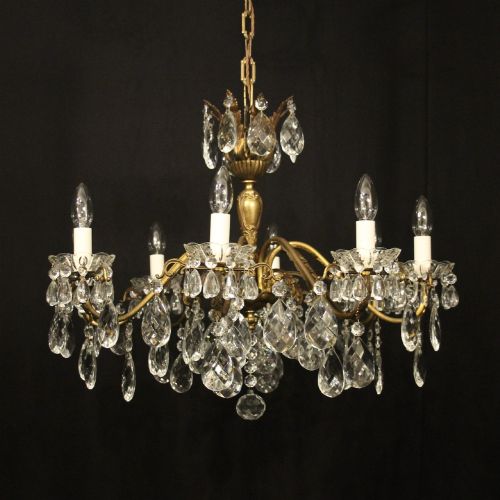
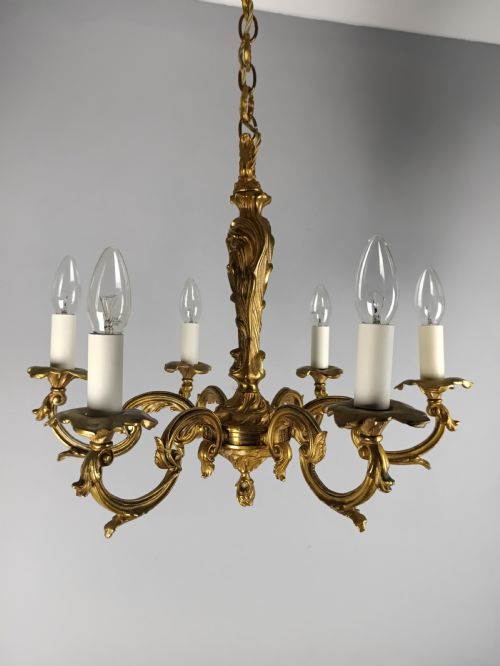
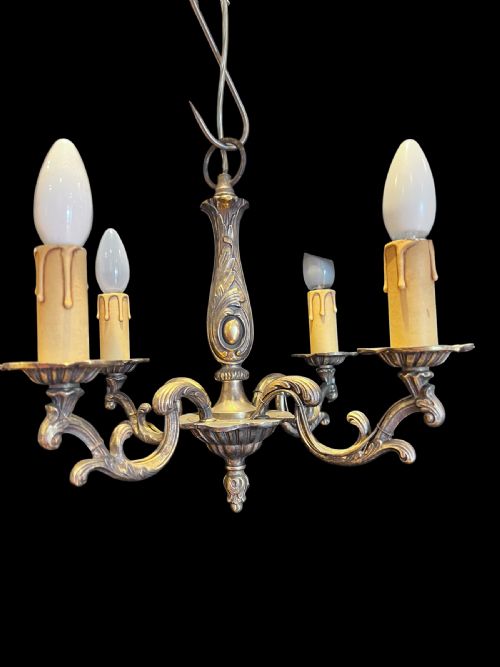
When a buyer searches for a vintage gold pendant fitting, they encounter overhead illumination fixtures predominantly cast in brass, bronze, and gilded metals dating from the nineteenth and early twentieth centuries. These pieces encompass multi-light chandeliers, hall lanterns, and ceiling lights styled with French Rococo, Empire, and Neoclassical influences.
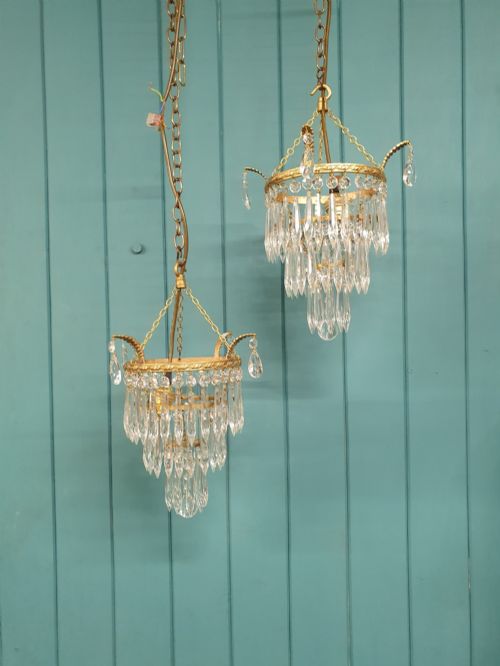
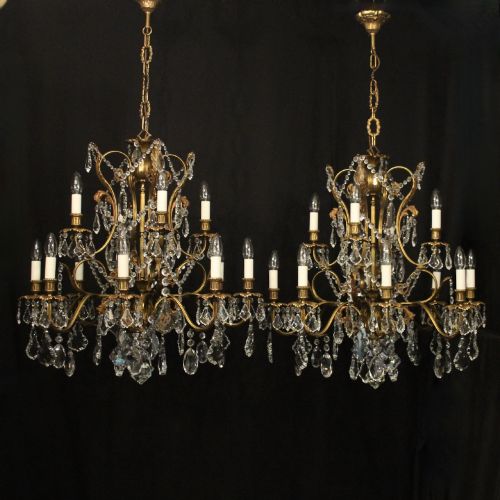
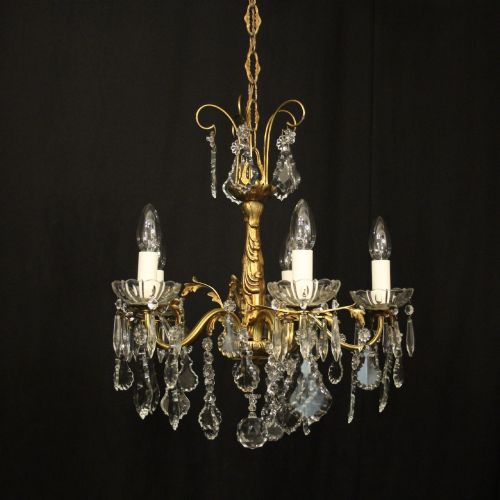
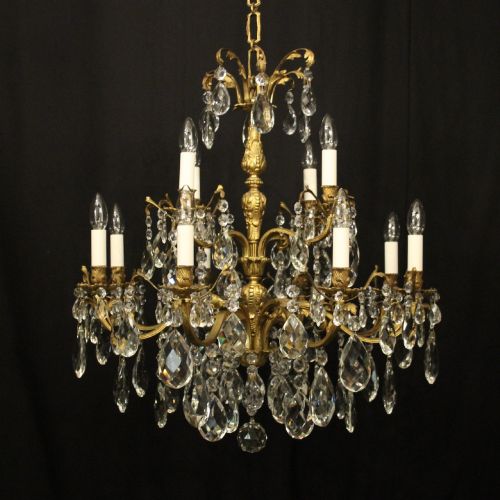
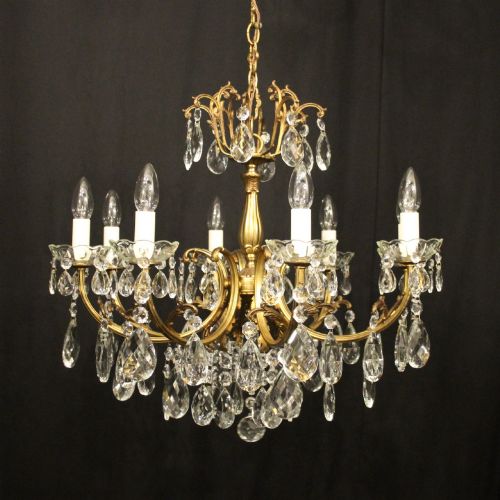
The most common examples on this page comprise French and Italian multi-arm chandeliers decorated with cut glass and crystal drops, often featuring gilt bronze or polished brass finishes. Such fixtures range from compact single-light lanterns to large multi-bulb configurations spanning various early twentieth-century periods.
Materials and construction methods
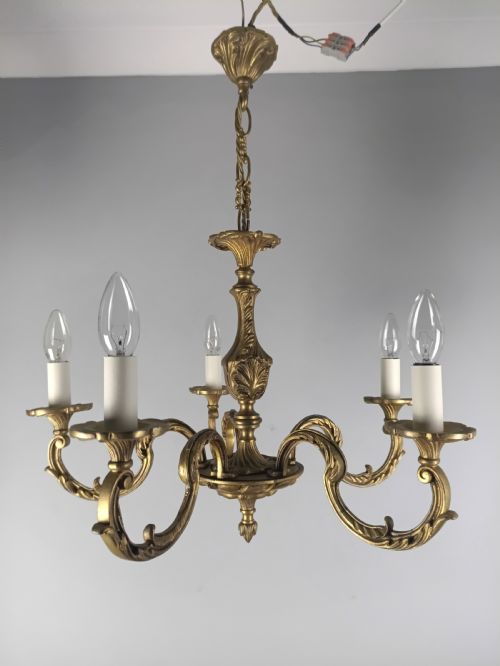
Makers utilised cast brass, bronze, and gesso over wood to form the structural framework of these fixtures, applying gilt layers to achieve a golden surface finish. Structural arms and mounts are frequently joined through traditional mechanical fasteners and casting techniques typical of the period.
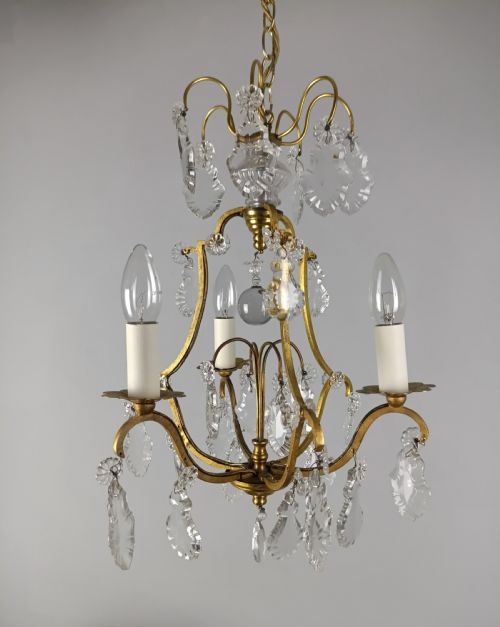
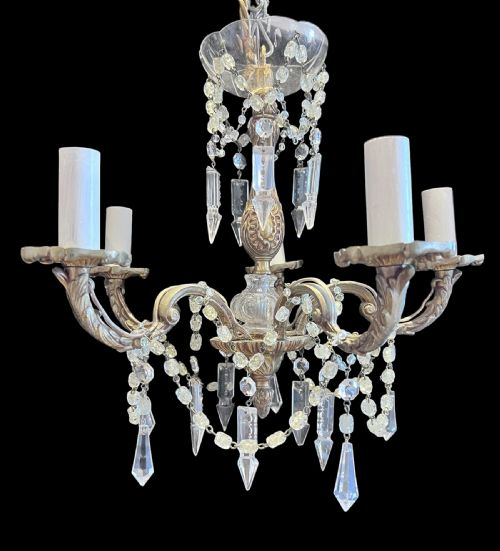
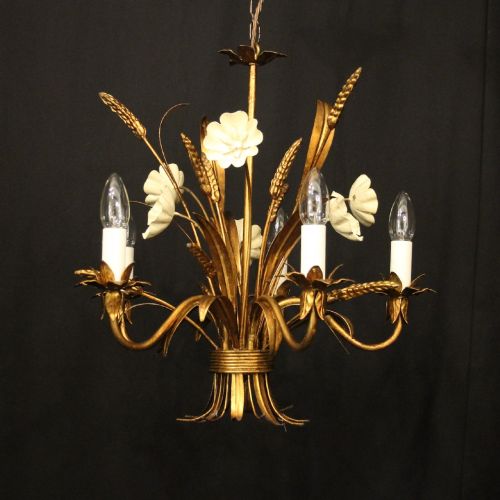
Cut glass and crystal components, including spikes, beads, and teardrops, are integrated using wire loops or metal pins to suspend them from the central frame. Tolewear elements and ceramic flowers also appear in selected examples, painted and fixed directly to the metallic armature.
Flying cherubs occasionally join the crystal spikes to hold up the lights.
Factors that distinguish quality
The refinement of the casting and the depth of the gilding set apart superior examples from simpler production. Fine fixtures display sharply detailed ornamentation, such as lion masks or cast cherubs, rather than soft or smoothed metallic surfaces.
The integration and clarity of the crystal elements heavily influence the overall standard of a piece. Hand-cut glass components with crisp facets reflect light more effectively than pressed glass alternatives, whilst robust structural framing ensures secure suspension of heavier multi-light configurations.
The Vintage Gold Pendant Fitting Glossary
- Gilt bronze
- An alloy treated with a gold or golden metallic finish to simulate solid gold. This technique was frequently utilised on high-end French chandeliers.
- Spike chandelier
- A specific fixture design featuring upward-pointing crystal spikes arranged around a central stem. These pieces often date from the early twentieth century.
- Tent and waterfall
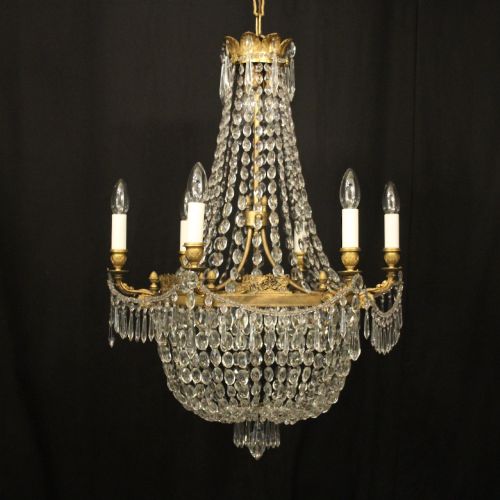
- A configuration where strings of crystals form an upper tent shape above a cascading lower section of drops. This style draws heavily from French Empire traditions.
- Tolewear
- Painted sheet metal fashioned into decorative motifs such as floral elements and foliage. It adds colour and texture to the metallic framework.
- Hall lantern
- An enclosed ceiling fixture designed for entranceways and corridors. Examples often feature glazed panels held within a gilded or brass frame.
Vintage Gold Pendant Fitting: Frequently Asked Questions
What periods do these fittings span?
The inventory spans the late nineteenth century through to the early twentieth century, including Edwardian examples and pieces dated around 1900 to 1930.
Buyers will find diverse stylistic influences represented across these decades, ranging from ornate French Rococo to streamlined early twentieth-century designs.
How are these fixtures mounted?
Most pieces suspend from ceilings via chains or direct rods connected to a matching ceiling canopy. Weight varies considerably depending on the quantity of crystal drops and metallic arms.
Larger chandeliers require secure anchorage into ceiling joists to support their substantial bronze and brass structures safely.
What materials predominate in these designs?
Brass, gilt bronze, and gilded metal form the structural core of the lighting options listed here. Crystal and cut glass elements are widely utilised for decorative drops and spikes.
Selected items also incorporate ceramic flowers, polychrome finishes, and gesso over wood bases to enhance their visual character.
How do I identify French styles?
French pieces frequently display neoclassical lyre motifs, empire tent configurations, or elaborate rococo scrollwork cast in bronze or brass. Many incorporate amber or clear crystal teardrops hung from gilded frames.
Italian alternatives often lean towards Florentine polychrome finishes and leafy crystal arrangements.