

Vintage Gold Opal Jewellery
Vintage gold opal jewellery brings together the luminous fire of opals and the rich warmth of gold across decades of design.
Vintage Gold Opal Jewellery
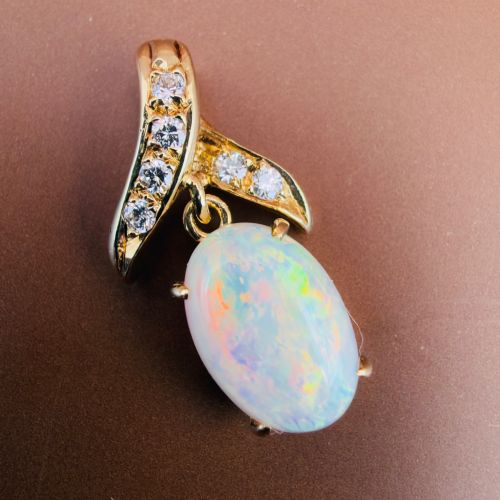
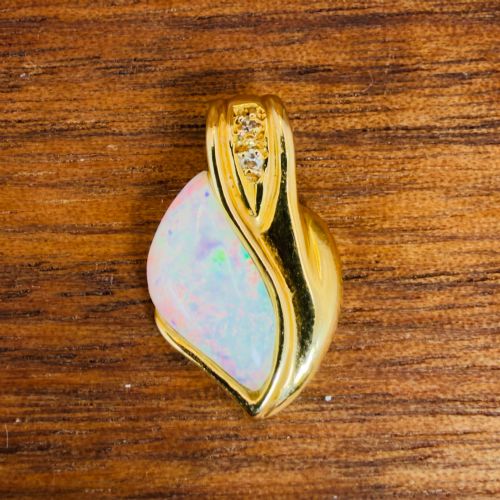
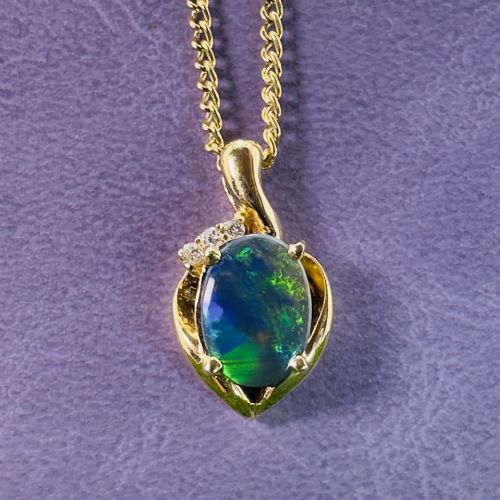
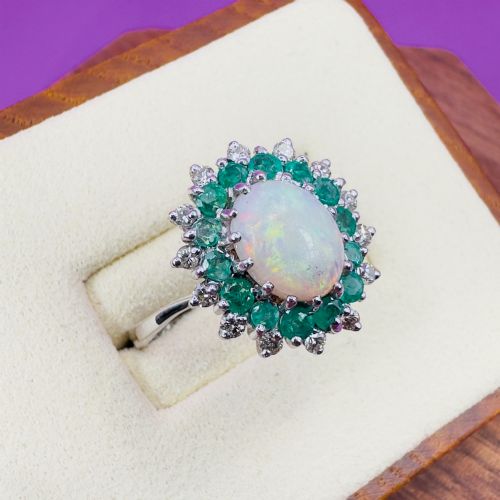
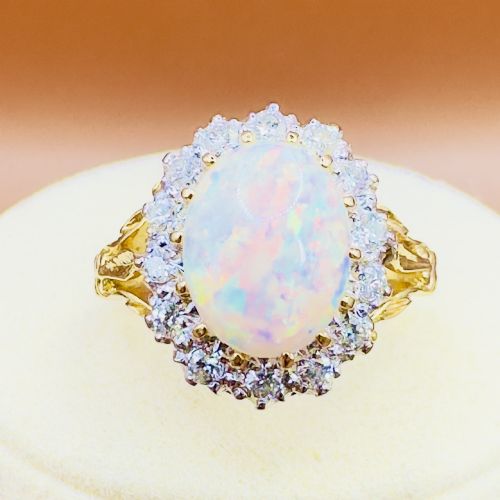
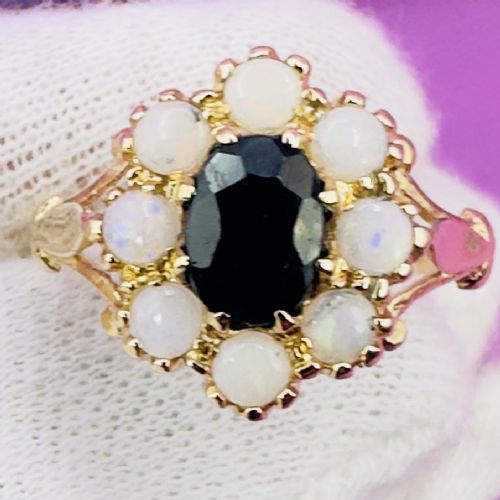
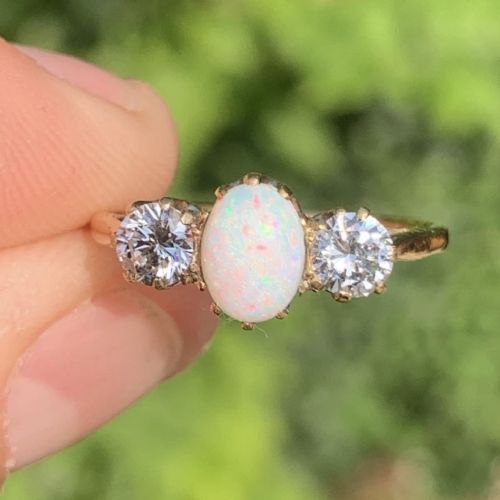
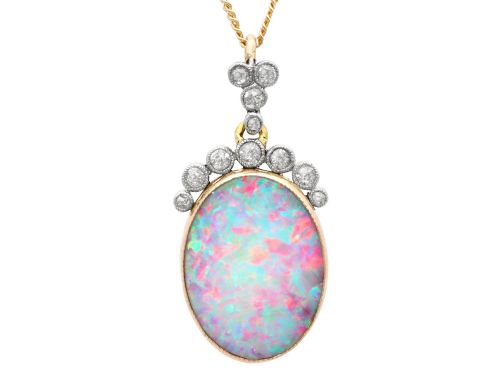
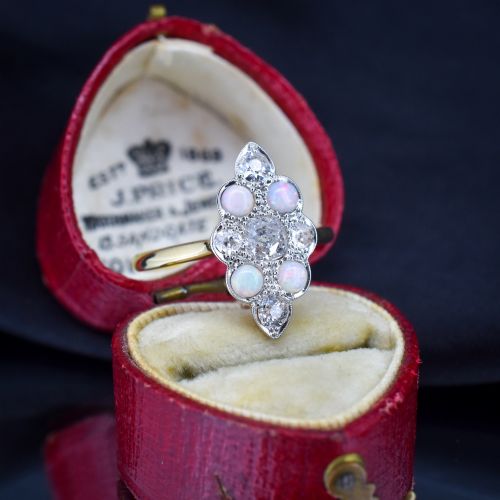
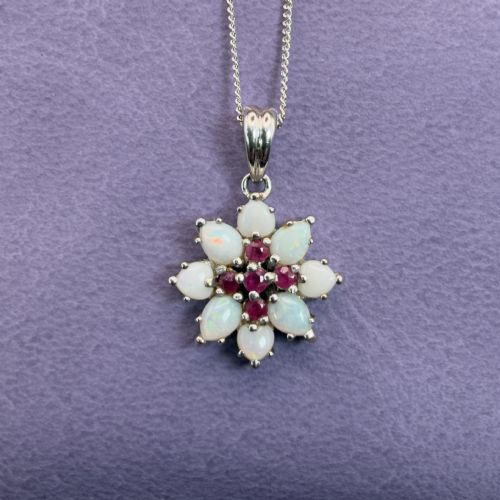
Vintage gold opal jewellery encompasses rings, earrings, pendants, and brooches that span the Victorian, Edwardian, Art Deco, and mid-century periods. These pieces showcase natural opals paired with diamonds, rubies, and pearls set into yellow or white gold.
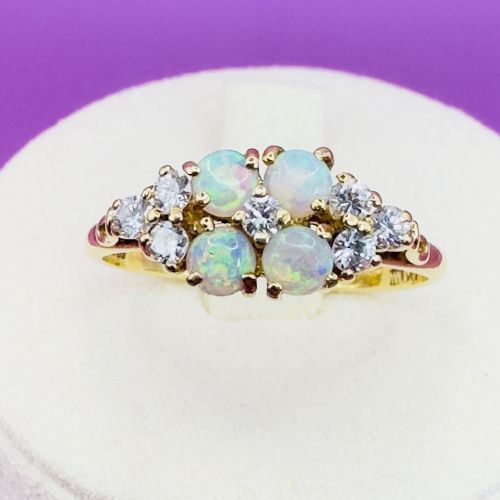
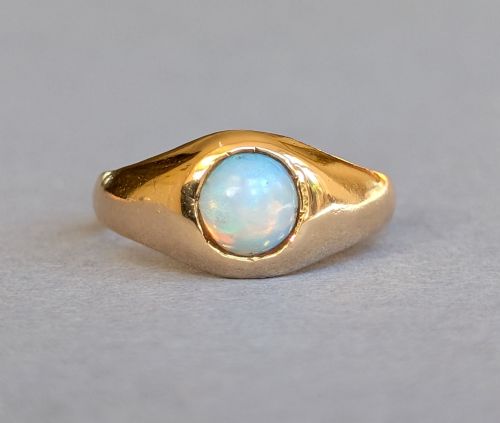
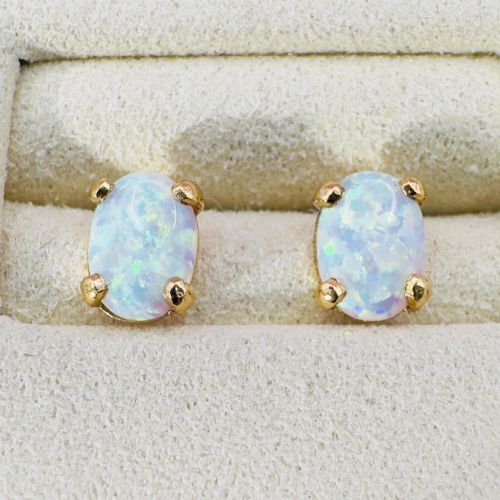
The most common formations on this page are classic boat rings, cluster rings, and drop earrings from the early twentieth century and the 1950s. Makers frequently combined opals with smaller accent stones to highlight the play of colour inherent in each gem.
Buyers seek these items for their distinct historical character and the varied optical properties of the stones. Whether selecting a solitaire ring or an intricate filigree pendant, each piece represents specific decorative movements of the past two centuries.
Materials and Construction Techniques
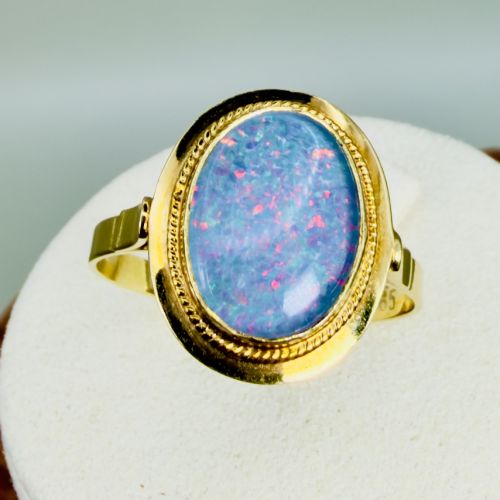
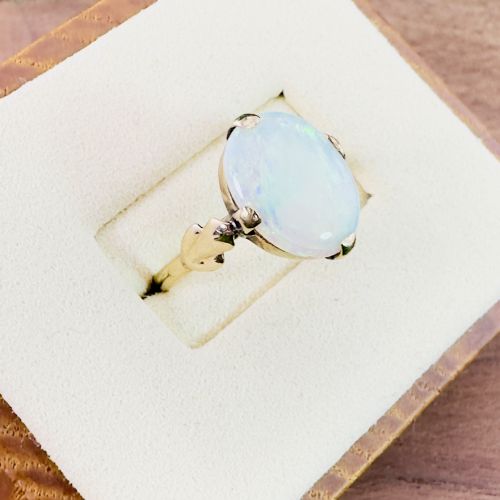
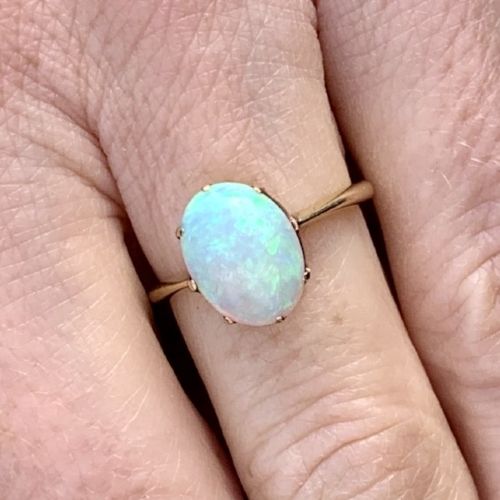
Craftsmen utilised 9ct and 18ct gold, both yellow and white, alongside platinum to form the structural mounts for these stones. Opals were shaped into cabochons, ovals, and rounds to maximise their internal fire before being secured in bezels, claws, or cluster settings.
Victorian and Edwardian pieces often incorporate delicate claw settings and boat-shaped galleries to hold multiple stones in alignment. Mid-century examples frequently employ heavier casting techniques for bold cocktail rings and detailed pendant necklaces.
Vintage Gold Opal Jewellery Retail Price Guide 2026
Typical asking prices for vintage gold opal jewellery among the pieces listed under this phrase on Sellingantiques today, from the lower quarter to the upper quarter. They describe what is for sale here now, not the wider market.
Several pieces preserve Chester and Birmingham assay office hallmarks from the early 1900s, quietly confirming their exact provincial roots.
Distinctions in Quality and Execution
Quality rests primarily on the optical performance and stability of the opal, alongside the weight and purity of the gold setting. Stones displaying a vibrant, full spectrum of play-of-colour across the surface command greater appreciation than muted examples.
The precision of the metalwork also defines the standard of a piece. Hand-finished filigree, secure stone seating, and well-matched diamond accents indicate higher manufacturing effort by the original workshop.
Knoll & Pregizer
The Vintage Gold Opal Jewellery Glossary
- Cabochon
- A gemstone with a smooth, rounded, and polished top surface rather than a faceted geometric cut. This style is standard for displaying the shifting colours of opals.
- Boat ring
- A ring setting shaped like the hull of a boat, typically featuring a slightly curved row of graduated stones. This design was popular during the Edwardian and Victorian eras.
- Doublet
- A composite gemstone made of two layers, usually comprising a thin slice of natural opal backed by a dark material to enhance the perceived body colour. This method creates depth in stones that might otherwise appear pale.
- Play-of-colour
- The optical phenomenon where a gemstone displays flashes of changing spectral colours as it moves under a light source. This occurs due to the internal diffraction of light within microscopic silica spheres.
Vintage Gold Opal Jewellery: Frequently Asked Questions
How do I care for vintage opal jewellery?
Opals contain water within their structure and possess a moderate hardness compared to diamonds. Protect them from sudden temperature changes, harsh chemicals, and ultrasonic cleaners to maintain their integrity.
Store these pieces separately in soft pouches to prevent scratching from harder gems. Gentle cleaning with a damp cloth is sufficient for regular maintenance.
Are these pieces made with solid opals?
The inventory contains a mix of solid natural opals and doublets. Listings specify whether a stone is a solid cabochon or a doublet.
Solid stones feature natural opal through their depth, while doublets use a top layer of opal bonded to a backing material.
What periods do these items represent?
The selection spans from the nineteenth century through the Victorian and Edwardian eras, passing into Art Deco and mid-century modern designs. Each period brings distinct metal colours and mounting styles.
Victorian and Edwardian pieces often feature intricate yellow gold work, while mid-century items frequently utilise heavier mounts and varied stone cuts.