
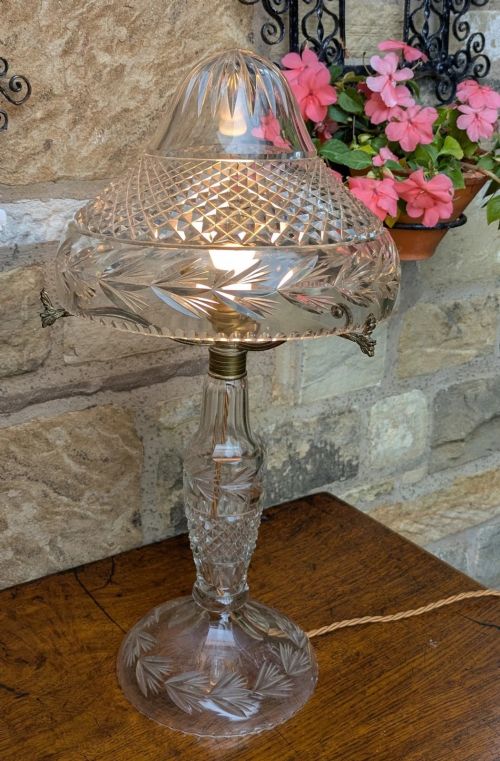


Vintage Glass Boudoir Light
These vintage glass boudoir light pieces bring delicate illumination and period character to dressing rooms and intimate spaces.
Vintage Glass Boudoir Light
A vintage glass boudoir light encompasses small-scale table lamps, chandeliers, and wall lights designed for intimate spaces. The selection includes table lamps and wall lights from the Victorian, Edwardian, and Art Deco periods, spanning the decades from the late nineteenth century into the nineteen thirties.
Mushroom lamps and twin bulb configurations appear frequently among the table lamps. These pieces combine heavy cut crystal or frosted glass shades with bases formed from brass, bronze, and wrought iron.
French workshops feature prominently, supplying distinct Art Deco and Art Nouveau lighting designs. Smaller fittings utilise amber frosted glass and glass beads alongside nickel and brass frameworks.
How they were made
Makers shaped heavy glass through cutting and moulding processes to create lead crystal and frosted components. Cut glass crystal shades and lamp bodies rely on precise facets that refract light across the room.
Metalwork frames utilise cast brass, bronze, and wrought iron to support the glass elements. Specific designs incorporate applied glass cabochons and metal shades created by specialist glass houses.
Several pieces feature mushroom shades that give the impression of glowing forest fungi.
What varies in quality
Quality rests on the depth of the glass cutting and the weight of the crystal. Finely faceted lead crystal produces sharper light refraction than simpler moulded glass.
The sophistication of the metal mountings distinguishes standard production from exceptional work. Cast bronze bases and signed glass shades demonstrate superior craftsmanship compared to basic brass fittings.
Georges Leleu·Stuart Crystal·Muller Bros·Degue
The Vintage Glass Boudoir Light Glossary
- Boudoir light
- A small decorative light fitting intended for a dressing room or bedroom. These pieces provide soft, ambient illumination rather than task lighting.
- Cabochon
- A polished, convex piece of glass or gemstone without facets. These decorative elements are set directly into metal lamp bases.
- Lead crystal
- Glass containing metal oxide that increases weight and brilliance. This material allows for deep, sharp cutting.
- Mushroom lamp
- A lamp featuring a rounded, domed glass shade resembling a mushroom cap. This silhouette is typical of the nineteen thirties.
Vintage Glass Boudoir Light: Frequently Asked Questions
Where should I place a boudoir light?
These compact lamps suit small surfaces such as bedside tables and dressing chests. Their gentle output provides atmospheric lighting rather than bright illumination.
Position them where the glass elements can catch natural daylight during the day. They add decorative character even when unlit.
How do I identify an Art Deco lamp?
Art Deco lighting relies on geometric forms, nickel frames, and moulded glass shades. Pieces from this era often feature stepped bases and stylized motifs.
Compare the metal finish and silhouette against Edwardian or Victorian examples. The transition from organic curves to sharp lines defines the period.
What is cut crystal?
Cut crystal is glass shaped by hand using abrasive wheels to grind decorative facets into the surface. This technique enhances the refractive quality of the material.
Heavier weight and sharp, precise edges distinguish genuine cut crystal from moulded alternatives. The cuts scatter light in distinct patterns.
Are these lights wired for modern use?
Older lighting fixtures often require rewiring to meet contemporary electrical standards. A qualified electrician can update internal components safely.
Check the existing flex and plug before connecting the piece to a power source. Preservation of original metalwork should guide the restoration process.