




Vintage Glass Bead Fixture
A vintage glass bead fixture brings extraordinary sparkle and texture to a room, casting intricate patterns of light through assembled crystal and cut glass.
Vintage Glass Bead Fixture
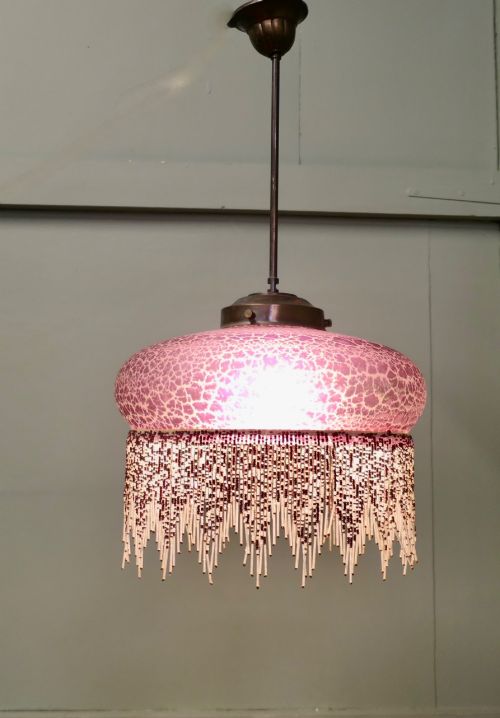
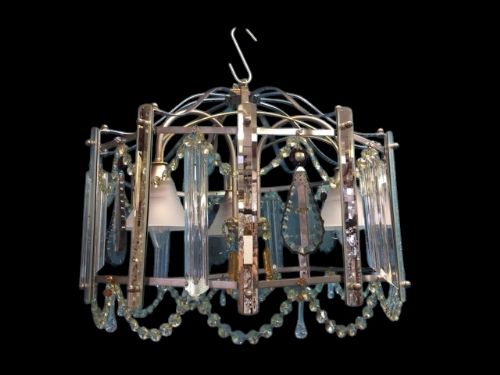
When searching for a vintage glass bead fixture, buyers encounter a diverse selection of lighting forms originating from the nineteenth century through the 1930s. These pieces encompass chandeliers, pendant lights, ceiling lights, and lampshades designed to diffuse illumination through suspended elements.
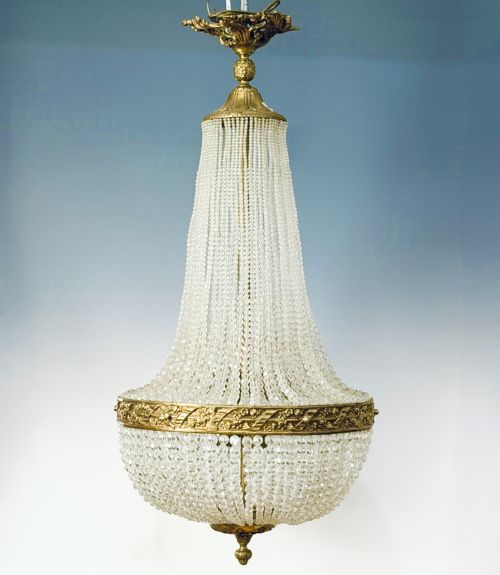
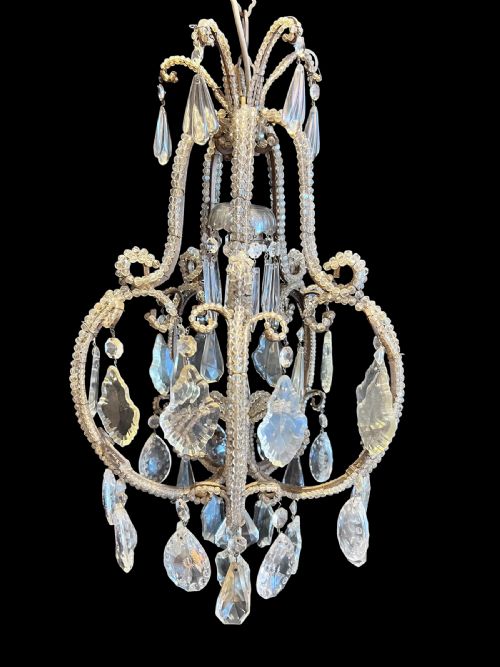
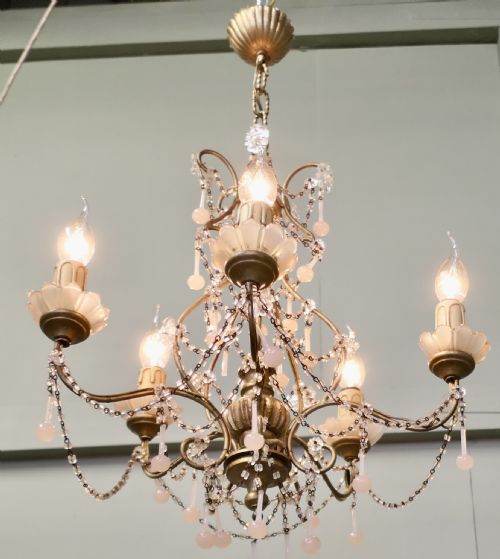
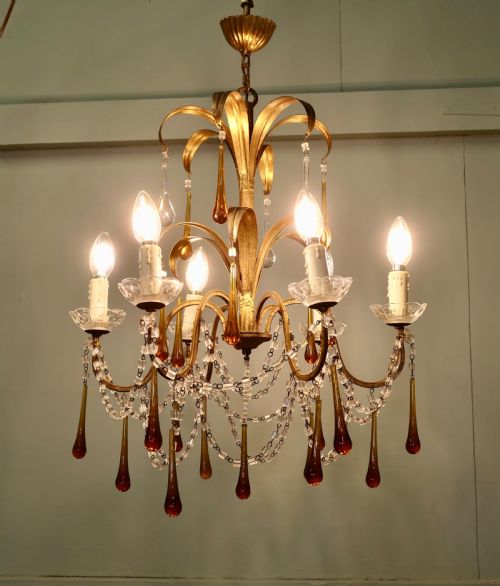
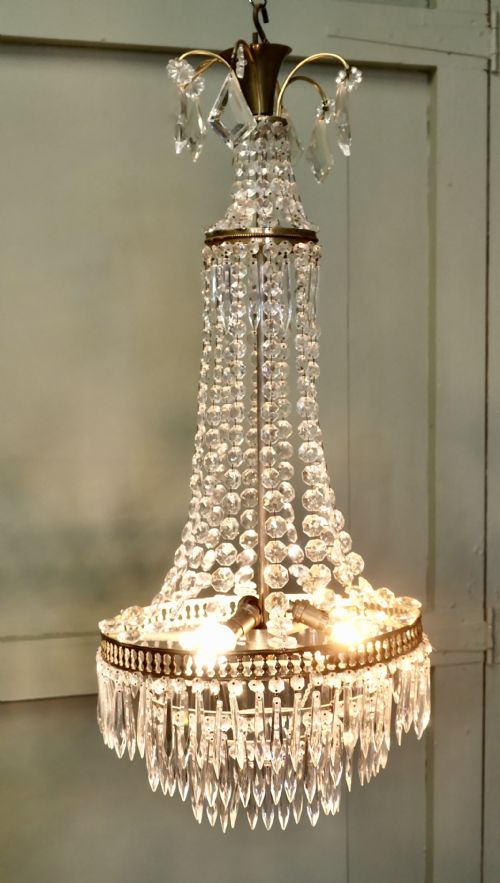
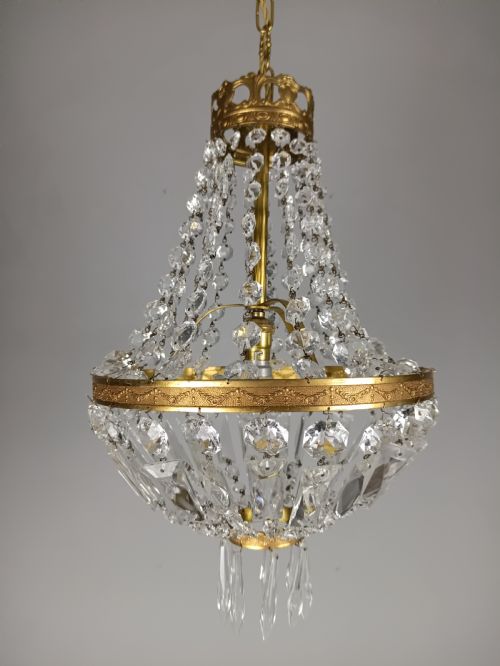
The most common versions on this page are Edwardian and 1920s creations, including French Empire style tent and waterfall chandeliers, Italian Florentine gilt frames, and compact bag chandeliers. Such items utilise brass, gilt metal, iron, and bronze frameworks to support complex assemblies of glass beads, crystals, and prisms.
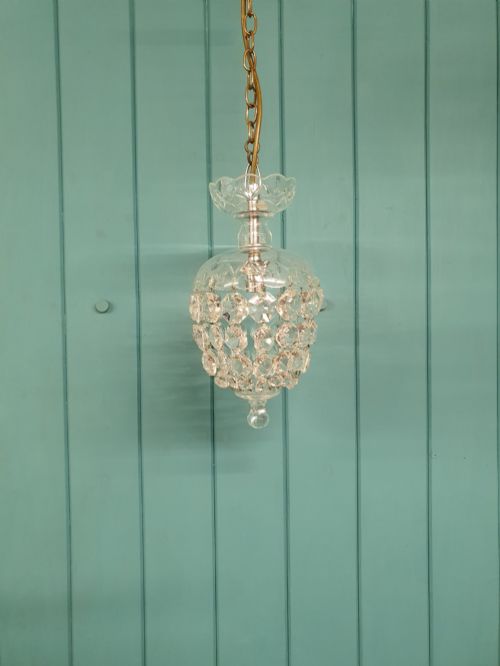
Originating predominantly from French and Italian workshops alongside British Edwardian makers, these fixtures range from intimate dome top designs measuring six inches to large eighteen light centrepieces. Each object reflects the prevailing decorative tastes of its era, moving from ornate rococo flourishes to streamlined art deco geometries.
Materials and construction
Makers constructed the primary framework of a vintage glass bead fixture using cast or spun brass, gilt bronze, iron, and gilt metal, often forming baskets, tents, or multi-branched arms. These metallic structures provided the necessary rigidity to support dense curtains and swags of hanging glass elements.
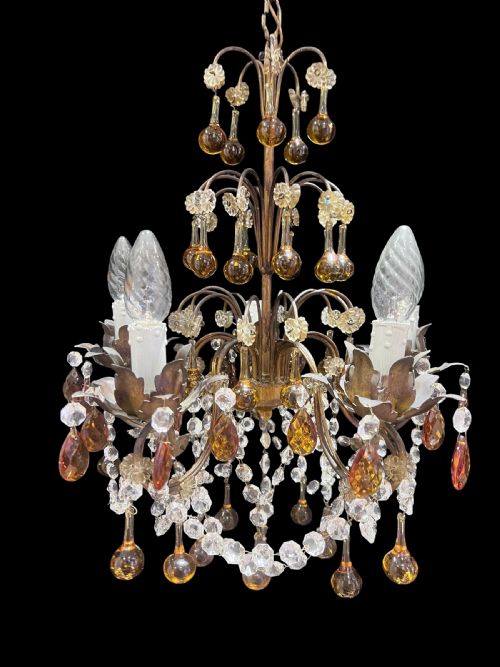
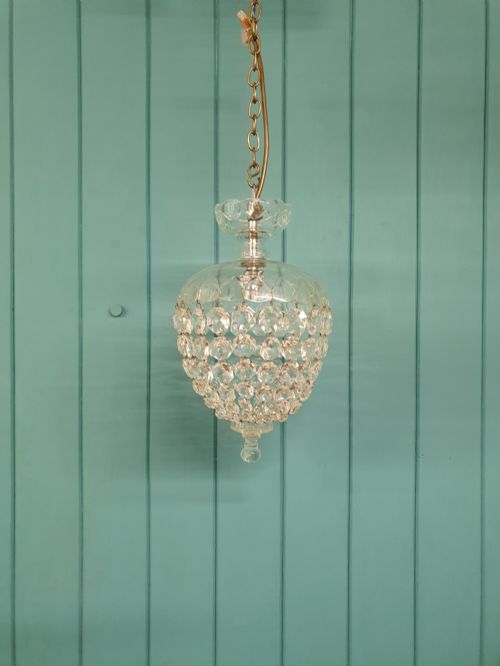
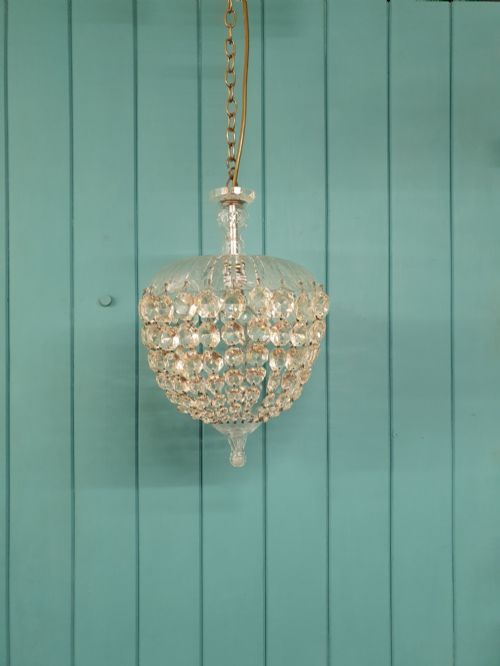
The decorative impact relies on glass, crystal, and cut glass components, threaded onto wire or pinned together to form beads, teardrops, prisms, and thematic shapes like grapes and flowers. Skilled artisans wired these delicate elements onto frames, creating layered drapery that catches and refracts illumination from internal light sources.
Vintage Glass Bead Fixture Retail Price Guide 2026
Typical asking prices for vintage glass bead fixture among the pieces listed under this phrase on Sellingantiques today, from the lower quarter to the upper quarter. They describe what is for sale here now, not the wider market.
Materials documented across the pieces include brass, gilt bronze, chrome, iron, and various forms of cut glass and crystal.
Assessing quality and craftsmanship
Quality in a vintage glass bead fixture is defined by the density, cut, and clarity of the glass elements rather than simply the overall size. Superior pieces employ heavily cut crystal or amber and coloured glass that refracts light sharply, whereas lesser examples utilise plain, pressed glass beads with softer edges.
The intricacy of the metal armature also separates standard production from exceptional work, seen in finely chased gilt bronze, elaborate wirework frames, and substantial cast brass branches. The coherence of the design, such as the balanced draping of a tent and waterfall configuration or integrated beaded arms, dictates the visual success of the piece.
Wedgwood
The Vintage Glass Bead Fixture Glossary
- Tent and waterfall
- A chandelier configuration featuring an upper dome or tent of glass beads sloping down to a wider tier, paired with cascading streams of crystal drops below.
- Bag chandelier
- A lighting form characterised by a flat-backed or basket-shaped lower section constructed from closely hung vertical strings of glass beads.
- Gilt bronze
- An alloy of copper and zinc finished with a fine layer of gold applied by mercury amalgamation or electroplating, providing a rich metallic lustre.
- Toleware
- Painted tin or metalware utilised in decorative light fixtures, often coloured to imitate bronze or paired with contrasting crystal drops.
- Prism
- A cut glass element designed to refract white light into its spectral colours, suspended from the arms or rim of a chandelier.
Vintage Glass Bead Fixture: Frequently Asked Questions
How do I clean a vintage glass bead fixture?
Maintenance requires careful hand-cleaning of individual glass beads and crystals using a mild soapy solution while they remain attached to the frame, or by removing them piece by piece.
Avoid immersing wired metal frames in liquid to protect the original brass, gilt bronze, or iron finishes from corrosion and moisture damage.
Were these fixtures electrified originally?
Many examples from the Edwardian era and the 1920s were manufactured or subsequently adapted for electricity, transitioning from earlier candle or gas power.
Buyers should inspect the internal wiring to ensure contemporary safety standards while preserving the historic components of the outer frame.
What rooms suit a bag chandelier?
Bag chandeliers feature a flush or close-fitting profile that makes them ideal for spaces with lower ceilings, such as hallways, bedrooms, or intimate dining areas.
Their concentrated glass bead construction directs light downward while creating a subtle decorative focal point overhead.
How do I tell Edwardian pieces from 1930s ones?
Edwardian lighting often incorporates softer brass tones and traditional French or English floral motifs, reflecting late nineteenth-century revival styles.
In contrast, 1930s examples frequently embrace art deco geometry or Italian Florentine gilt work with bolder lines and coloured crystal additions.