

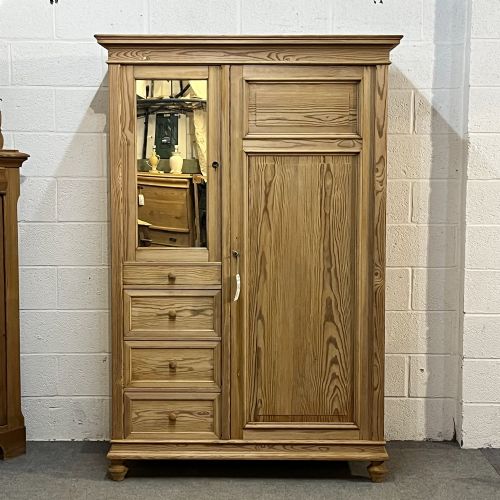
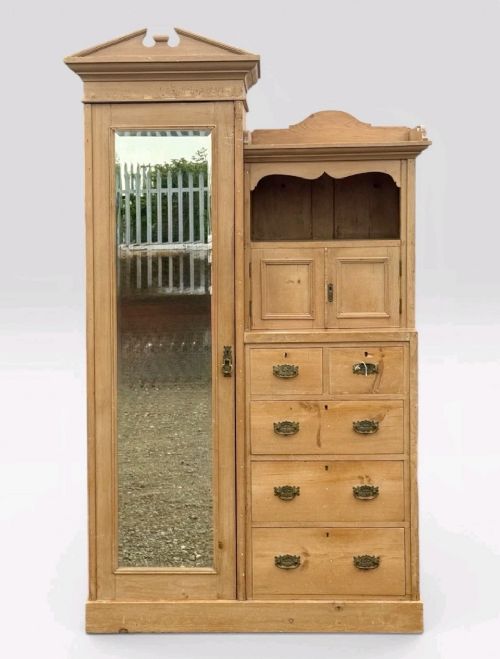


Vintage Gents Wardrobe
A vintage gents wardrobe offers sturdy, compartmentalised storage for tailoring and everyday garments, combining period craftsmanship with practical proportions.
Vintage Gents Wardrobe
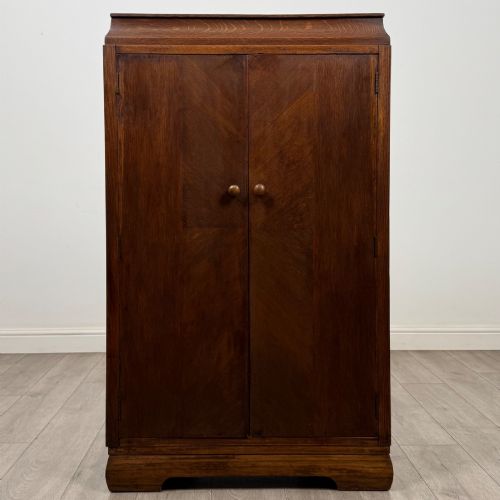
A vintage gents wardrobe provides structured garment storage designed specifically for men's attire across various historical periods, including the Victorian era, Edwardian period, and the 1930s. Buyers searching for a vintage gents wardrobe will encounter single, double, and triple configurations, alongside compactums, tallboys, and linen presses.
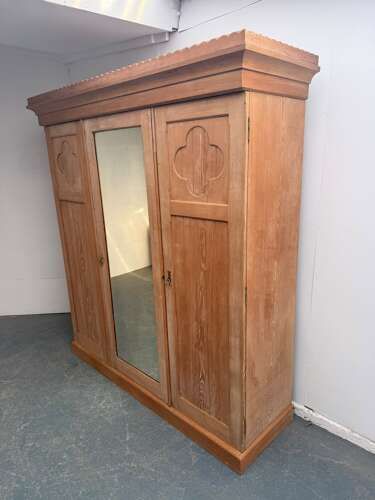
The pieces listed on this page span several distinct design movements, including Art Deco, Arts and Crafts, Art Nouveau, and Georgian styles. Common formats range from stripped pine country pieces to finely veneered walnut and mahogany items, reflecting diverse domestic interiors from the nineteenth and twentieth centuries.
Makers and retailers varied from regional cabinetmakers to prominent London firms such as Heals, whose labelled oak pieces appear alongside utilitarian and rustic storage solutions. These items serve modern bedrooms and dressing rooms by offering partitioned hanging space, drawers, and shelving within a single footprint.
Materials and construction methods
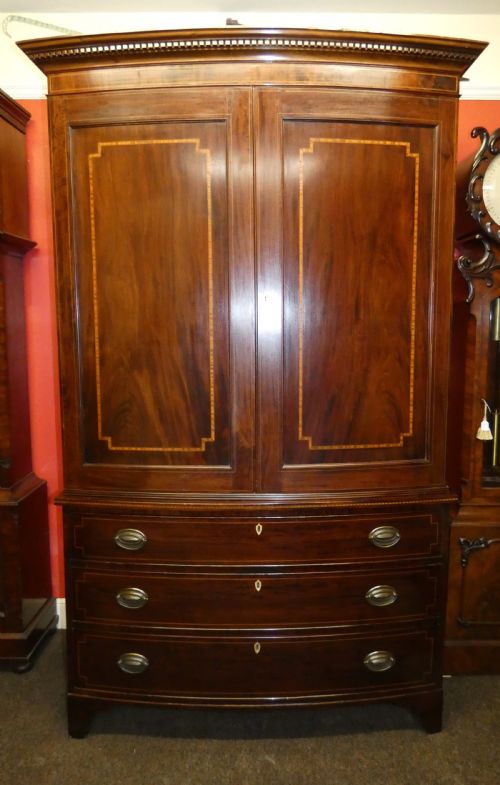
Construction relies upon traditional cabinet timbers such as mahogany, walnut, oak, ash, and pine, often finished with decorative veneers like birds-eye maple and satinwood. Solid wood framing provides structural integrity for large doors and internal drawer assemblies.
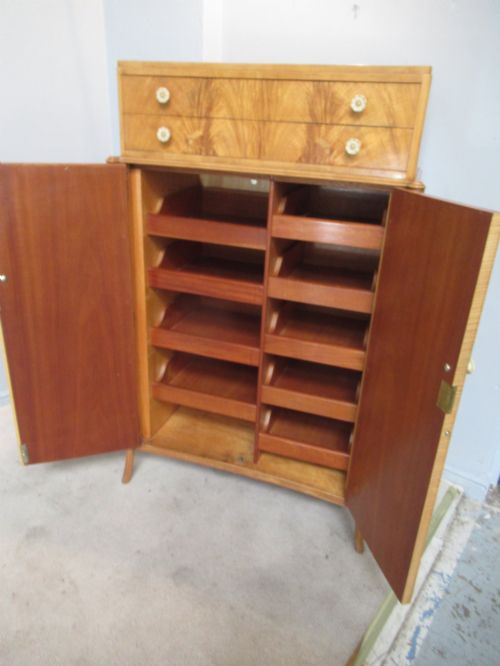
Surface details frequently incorporate brass hardware, mirrored door panels, and inlaid wood marquetry, particularly on Edwardian and Art Deco examples. Interiors are organised with wooden shelving, sliding trays, and hanging rails tailored to period tailoring.
Vintage Gents Wardrobe Retail Price Guide 2026
Typical asking prices for vintage gents wardrobe among the pieces listed under this phrase on Sellingantiques today, from the lower quarter to the upper quarter. They describe what is for sale here now, not the wider market.
Several wardrobes remain ready for action, offering the option to either wax their timber or paint it to taste.
Distinguishing quality in construction and finish
The hierarchy of quality rests upon timber selection and internal configuration, moving from utilitarian pine storage to refined satinwood, mahogany, and figured walnut veneers. Superior examples display balanced grain matching, precise inlay work, and robust internal drawer construction.
Hardware and mechanisms also differentiate the range, with original brass handles, functional locks, and intact mirror glass indicating higher grade production. Maker signatures, such as paper labels from firms like Heals, distinguish bespoke or branded workshops from anonymous production.
Heals of London
The Vintage Gents Wardrobe Glossary
- Compactum
- A multi-section wardrobe combining hanging space, drawers, and shelving within one carcass. This format is frequently encountered in 1930s and Edwardian examples.
- Linen Press
- A tall storage piece featuring upper sliding trays or shelves enclosed by doors, positioned above a chest of drawers. These items often utilise mahogany or pine.
- Veneer
- A thin layer of decorative hardwood applied to a secondary wood foundation. Birds-eye maple and walnut veneers define several Art Deco pieces.
Vintage Gents Wardrobe: Frequently Asked Questions
What is the difference between a compactum and a standard wardrobe?
A compactum integrates multiple storage compartments, including internal drawers, sliding trays, and dedicated hanging space, all within a single carcass. Standard wardrobes primarily focus on full-length hanging capacity behind one or more doors.
Compactums offer a more comprehensive organisational layout for folded garments and accessories alongside suits, making them practical for smaller bedrooms.
How do I identify an Edwardian gents wardrobe?
Edwardian examples typically date from the early twentieth century and often feature lighter timbers such as satinwood, ash, or inlaid mahogany. They frequently incorporate bevelled mirror doors and delicate stringing.
These pieces reflect the transition away from heavy Victorian dark finishes toward brighter, cleaner domestic aesthetics.
Can I fit modern coat hangers inside these wardrobes?
Many vintage gents wardrobes have shallower internal depths than modern equivalents because period tailoring was narrower. Hanging rails may run front-to-back rather than side-to-side on older single or compactum designs.
Buyers should check internal depth measurements to ensure standard modern clothes hangers will fit inside without jamming the doors.
How do I care for polished wood surfaces?
Maintain polished mahogany, walnut, and oak surfaces by applying beeswax periodically to nourish the timber and preserve the finish. Avoid placing antique wooden furniture in direct sunlight or near heat sources to prevent veneer lifting.
Gentle dusting with a soft, dry cloth prevents micro-scratches on polished antique finishes.