


Vintage Gemstone Bar Pin
A vintage gemstone bar pin brings together slender precious metal shafts and colourful gems from the Georgian, Victorian, Edwardian and Art Deco eras.
Vintage Gemstone Bar Pin
A vintage gemstone bar pin takes the form of an elongated metal rod set with precious and semi-precious stones, designed originally to fasten clothing. These pieces span from the Georgian and Victorian periods through Edwardian workshops and into the Art Deco and Mid-Century decades.
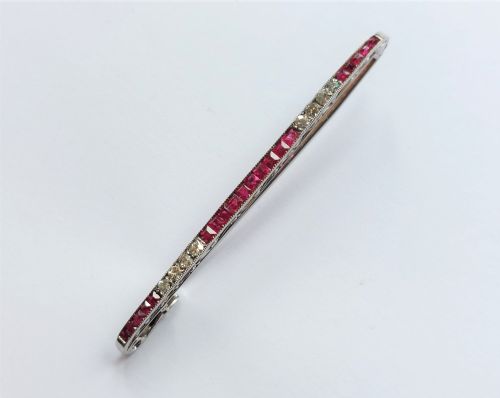
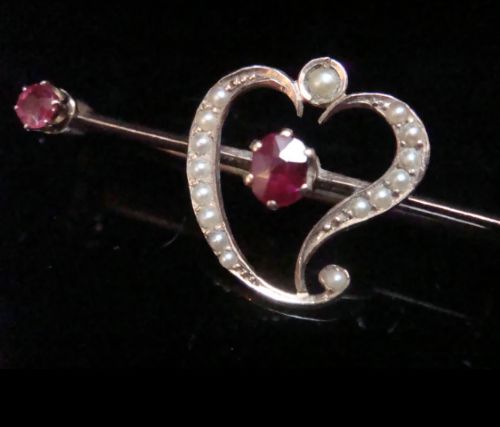
The selections available range from delicate Edwardian gold hearts set with rubies and pearls to linear Art Deco diamond and ruby designs. Alongside formal bar brooches, the selection includes related configurations such as crescent, cluster and insect motifs.
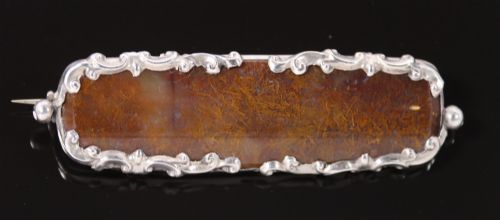
Makers utilised a variety of stones including sapphires, emeralds, aquamarines, amethysts, peridots, garnets, moonstones, opals and moss agate. This variety reflects changing tastes across the nineteenth and twentieth centuries.
Materials and construction
Goldsmiths worked with standard foundational metals including nine carat, fifteen carat and eighteen carat yellow, rose and white gold, alongside platinum and silver. Stones were hand-set into these precious mounts, often supported by delicate wirework and millegrain edging during the Edwardian years.
Gemstones such as diamonds, rubies, sapphires and emeralds were cut in period-appropriate styles to catch the light along the narrow bar. Pearls and seed pearls were frequently integrated as accents flanking central coloured gems or forming distinct floral and heart shapes.
The listings span multiple historical periods, featuring metals from silver and nine carat gold up to eighteen carat white gold and platinum.
Assessing quality and finish
The distinction between standard examples and finer items rests upon the precision of the metalwork and the quality of the selected gems. Heavier gold weights, such as fifteen or eighteen carat, combined with well-matched natural stones elevate a piece.
Superior items demonstrate careful stone-setting where prongs or bezels secure each gem evenly without excess solder on the reverse. The original pin mechanism and clasp must also operate securely, maintaining the structural integrity of the slender bar.
The Vintage Gemstone Bar Pin Glossary
- Bar brooch
- An elongated pin shaped as a narrow horizontal rod, often enhanced with central gem clusters or small decorative motifs. This form dominated everyday jewellery wear for over a century.
- Millegrain
- A decorative technique involving a row of tiny raised metal beads along the edge of a setting. It creates a soft, textured border typical of Edwardian and Art Deco fine jewellery.
- Seed pearl
- A very small natural or cultured pearl, often drilled and threaded onto tiny wires. These tiny pearls frequently outline hearts or accent coloured gemstones in nineteenth-century designs.
- Collet setting
- A metal collar that wraps securely around the girdle of a gemstone to hold it in place. It represents a traditional method of securing stones before modern claw settings became widespread.
- Crescent brooch
- A curved, moon-shaped pin design often set with graduated gemstones or pearls. This symbolic form enjoyed particular popularity during the Victorian and Edwardian periods.
Vintage Gemstone Bar Pin: Frequently Asked Questions
How do I wear a vintage bar pin safely?
Pin the piece through tightly woven fabrics like wool, tweed or heavy silk rather than delicate knits to prevent thread pulls. Fasten the safety catch securely behind the lapel or collar.
For added security on valuable items, consider using a small pin stopper or protector on the sharp end behind the garment.
How do I tell an Edwardian pin from an Art Deco one?
Edwardian pins favour yellow gold, platinum-topped silver, floral motifs, pearls and soft millegrain detailing. They project an airy, delicate aesthetic.
Art Deco examples lean towards white gold and platinum with geometric lines, sharp angles and calibrated ruby or diamond settings.
Were these pins used differently in the past?
Originally, these pieces secured cravats, lace collars, shawls and lapels on formal garments. They functioned as both practical fastenings and decorative statements for day and evening wear.
Today, collectors repurpose them as modern lapel ornaments, hat badges or closures for cardigans and scarves.
How do I clean my gemstone bar pin?
Wipe metal and hard stones gently with a soft, damp microfibre cloth to remove surface oils. Avoid soaking pieces that contain pearls or fragile organic gems.
Keep harsh chemical cleaners away from antique settings, as they can damage delicate foils or loosen older adhesive bonds.