


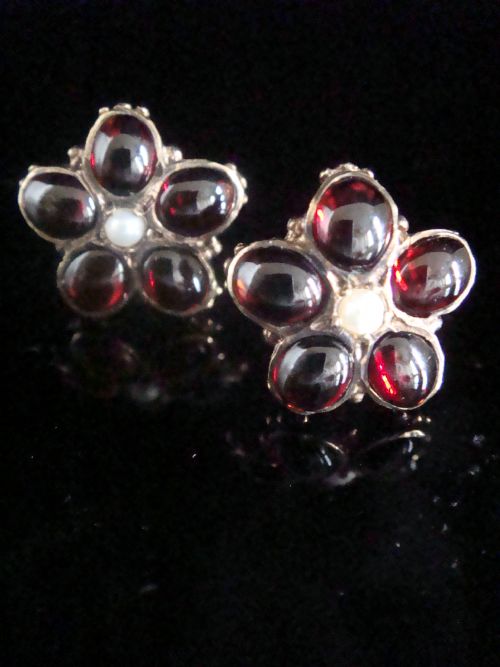
Vintage Garnet Stud Earrings
These vintage garnet stud earrings bring deep red stones and gold settings together, offering a classic look for everyday wear.
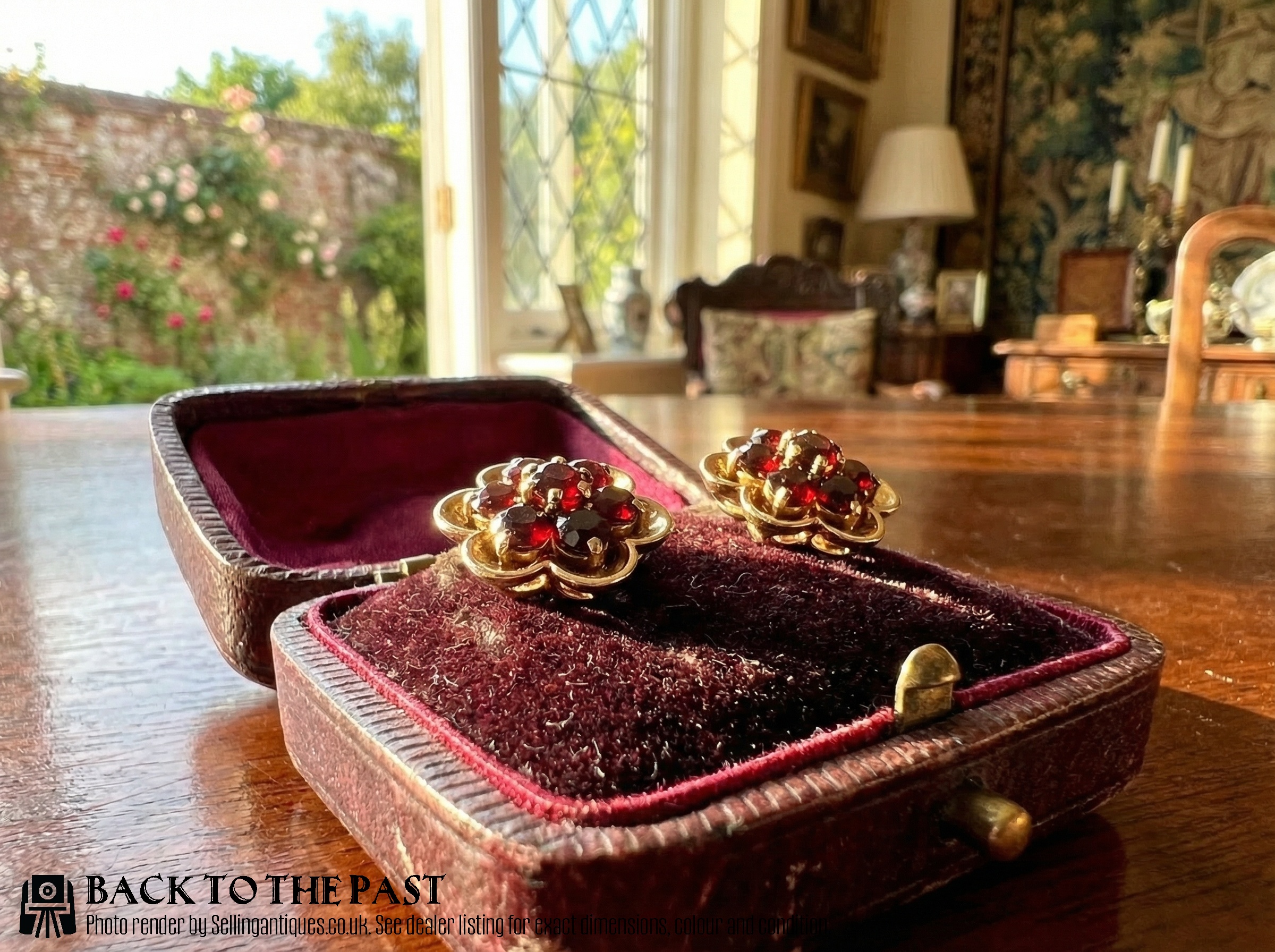
Vintage Garnet Stud Earrings
Vintage garnet stud earrings encompass pieces ranging from Victorian designs through to items from the 1950s and 1960s. These earrings are primarily worn close to the lobe, though drop and cluster variations also appear across the selection.
The most common examples on this page date from the mid-twentieth century, specifically the 1950s and 1960s, often set in nine-carat gold with pear or round cut stones. Buyers seeking older pieces will also encounter late nineteenth-century Victorian and Edwardian examples featuring complex cluster configurations.
Styles range from simple single-stone settings to intricate Austro-Hungarian silver gilt halo arrangements and seed pearl surrounds. Each era brings distinct characteristics to the basic stud format, shifting from floral motifs to clean geometric lines.
Materials and construction methods
Garnets form the central visual element of these earrings, cut into round, oval, pear, and cabochon shapes. These deep red stones are frequently paired with contrasting materials such as seed pearls, rose-cut diamonds, and sparkling diamond accents.
Metalwork utilises nine-carat gold, fourteen-carat gold, eighteen-carat gold, and silver gilt to hold the stones securely. Settings include filigree details, cluster arrangements, and halo formations that reflect the prevailing techniques of their respective periods.
Listings span multiple decades, incorporating Victorian, Edwardian, 1950, 1960, and late twentieth-century periods.
Assessing quality in garnet jewellery
Quality in these earrings rests upon the depth and clarity of the garnet stones alongside the precision of the metalwork. Hand-finished filigree and well-matched stone groupings elevate the overall standard of a pair.
The choice of surrounding materials also influences the piece, with diamond accents and higher-carat gold settings marking out more elaborate examples from simpler everyday wear from the 1950s and 1960s.
The Vintage Garnet Stud Earrings Glossary
- Garnet
- A silicate mineral prized for its deep red colour, frequently utilised in antique and vintage jewellery. It serves as the primary gemstone across the pieces listed here.
- Stud
- An earring design featuring a decorative front that sits directly on the earlobe without dropping below it. Many mid-century and Victorian examples use this secure mounting style.
- Cluster
- An arrangement where a central stone is surrounded by a ring of smaller stones, such as pearls or diamonds. This technique maximises visual impact and sparkle.
- Silver Gilt
- Silver that has been coated with a thin layer of gold. This material appears in Austro-Hungarian pieces to provide a rich decorative finish.
- Cabochon
- A gemstone shaped and polished with a smooth, rounded surface rather than faceted edges. This cut highlights the rich lustre of the garnet.
Vintage Garnet Stud Earrings: Frequently Asked Questions
Are all vintage garnet stud earrings made of solid gold?
The pieces listed utilise various metals, including nine-carat, fourteen-carat, and eighteen-carat gold. Some older or regional pieces also employ silver gilt to achieve their distinct appearance.
Buyers should examine the specific metal details provided for each pair, as compositions change between Victorian items and mid-century examples.
How do I identify Victorian garnet earrings?
Victorian earrings often feature heavy cluster settings, rose-cut diamonds, or seed pearl surrounds. The craftsmanship reflects nineteenth-century preferences for ornate floral and halo designs.
In contrast, pieces from the 1950s and 1960s generally present cleaner lines and simpler gold mounts.
Can I wear these everyday?
Garnet is a durable stone suitable for regular wear, though older Victorian and Edwardian settings require careful handling. Securing the backs properly ensures the earrings remain safe during daily use.
Storing them separately prevents scratching against other items in a collection.