


Vintage French Horology Dial
Vintage french horology dial options span carriage clocks and pocket watches featuring enamel and brass from the nineteenth century onward.
Vintage French Horology Dial
Vintage french horology dial items on this page primarily encompass carriage clocks, pocket watches, and turret clock faces originating from nineteenth-century France. Buyers encounter robust brass travel timepieces alongside mantel clocks and mystery globe clocks.
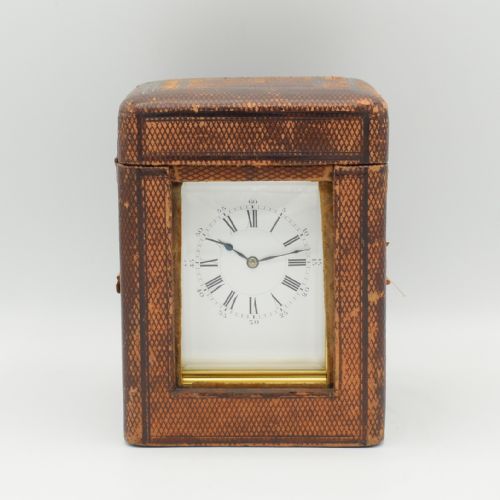
Carriage clocks dominate the selection, appearing in gorge cases, oval shapes, and miniature formats. Many retain travel cases and striking or repeating mechanisms dating from eighteen-fifty to nineteen-ten.
How they were made
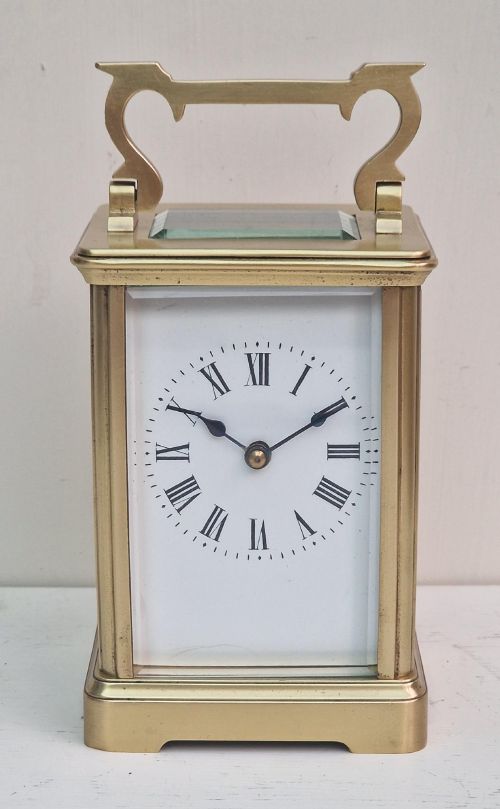
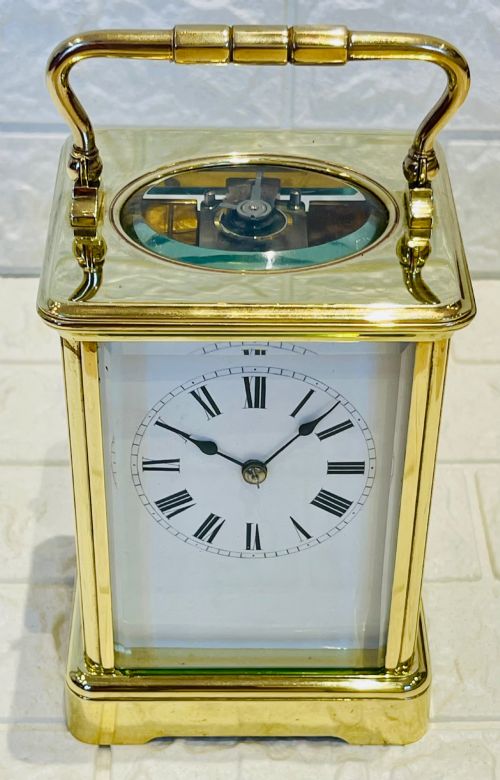
Makers utilised heavy brass, gilt brass, and ormolu to form the structural cases of these timepieces, often pairing them with glass panels to reveal the movement. Enamel surfaces prominently on dials and decorative watch backs.
Internal components incorporate steel and delicate escapements, whilst select pieces feature leather outer travel cases and tortoiseshell bodies. Artisans applied precision metalworking techniques to house eight-day movements and striking complications.
Materials across these listings span brass, gilt brass, enamel, glass, steel, ormolu, tortoiseshell, and leather.
What varies in quality
Quality separates standard production timepieces from elite masterworks by makers like Henri Jacot, Paul Garnier, and Drocourt through the refinement of the platform escapement and complication density. Superior examples integrate striking, repeating, or alarm functions within harmonious proportions.
The crispness of the gilt brass casting and the legibility of the enamel dial dictate visual merit. Exceptional specimens maintain their original leather travel cases and intact signed movements that evidence precise nineteenth-century engineering.
Henri Jacot·T Martin and Co·Latshea and Sons·Gontard and Bolviller·Mappin and Webb·Bishop Bournemouth·Drocourt·Paul Garnier·Leroy Paris·James Grohe·Le Roy et Fils·Lamy and Lacroix
The Vintage French Horology Dial Glossary
- Carriage clock
- A portable spring-driven timepiece designed for travel, typically housed in a brass case with glass panels. These objects emerged in nineteenth-century France for wealthy travellers.
- Escapement
- The mechanical linkage that controls the unwinding of the clock spring by delivering regular impulses to the balance wheel. Platform escapements sit visibly atop the movement in finer examples.
- Gorge case
- A distinct rectangular brass carriage clock case style featuring stepped mouldings at the top and base. This architectural framing marks many mid-nineteenth-century French pieces.
- Repeating movement
- A clock mechanism that chimes the hours and quarters upon demand when a push-button is depressed. Such complications elevate the mechanical sophistication of horological pieces.
- Turret clock face
- A large exterior dial designed for a tower or architectural mounting, usually executed in painted or fired enamel on copper or iron.
Vintage French Horology Dial: Frequently Asked Questions
What is a carriage clock?
A carriage clock is a portable spring-driven timepiece built for travel during the nineteenth century. These clocks utilise brass frames and glass windows to protect the movement.
Travellers placed them in leather cases to transport them across Europe. They remain popular desk and mantel objects today.
How do repeating mechanisms work?
Repeating mechanisms allow the clock to chime the time on demand when the owner presses a button. This complex addition let users check the hour in total darkness.
Such work requires skilled hand-assembly by horological makers.
How do I date these clocks?
Dating relies on stylistic clues like case shapes, maker signatures, and escapement designs. Mid-nineteenth-century pieces often feature gorge cases and early platform escapements.
Later Victorian examples introduce varied enamel work and simpler striking trains.
Are travel cases original?
Many carriage clocks retain their matching leather travel cases from the nineteenth century. These protective outer boxes show authentic wear from period journeys.
Finding a clock with its original case adds historical context to the piece.