


Vintage French Gold Ring
When buying a vintage french gold ring, you are acquiring a piece that carries decades of craftsmanship from periods spanning the Victorian era to the mid-century.
Vintage French Gold Ring
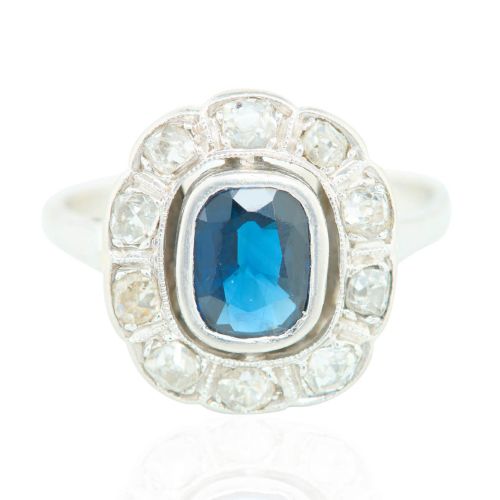
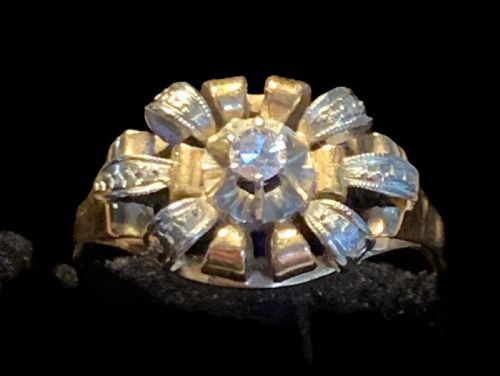
A vintage french gold ring encompasses a diverse range of styles, from Edwardian cluster designs to bold Art Deco and retro tank shapes. Buyers searching this phrase typically encounter engagement rings, dress rings, and statement pieces originating from France.
The inventory on this page heavily reflects distinct aesthetic movements, particularly the geometric lines of the 1920s and 1930s alongside earlier Edwardian motifs. These items frequently incorporate precious gemstones alongside precious metals, maintaining a distinct continental character.
How they were made
Goldsmiths utilised 18ct yellow gold, 18ct white gold, and platinum to build durable settings for diamonds, sapphires, rubies, and pearls. Metalwork techniques combined traditional casting with detailed hand-finishing, visible in pavé and cluster arrangements.
Stones were secured using precise claw, bezel, or flush settings tailored to the specific demands of old cut diamonds and calibré-cut gemstones. The integration of platinum alongside gold allowed artisans to create finer, more secure structural elements.
Listings feature items spanning the Victorian era through the 1960s, constructed predominantly in 18ct gold and platinum.
What varies in quality
Quality differences rest in the precision of the gemstone cuts and the complexity of the metalwork. Pieces featuring natural, unheated stones or old cut diamonds placed within intricate geometric mountings represent the upper tier of the range.
The overall harmony of the design and the preservation of original maker marks or French assay stamps also influence the distinction between standard production items and exceptional examples.
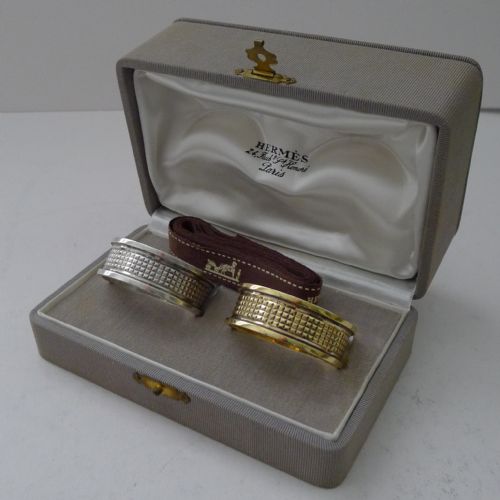
Hermes, Paris
The Vintage French Gold Ring Glossary
- Navette ring
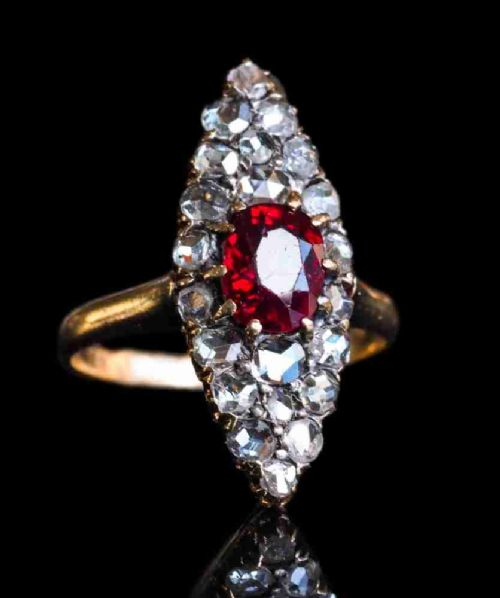
- A ring featuring a pointed, boat-shaped silhouette that stretches lengthwise along the finger. This style was popular during the Victorian and Edwardian periods.
- Tank ring
- A bold, chunky ring style developed during the 1930s and 1940s, often characterised by stepped planes and heavy geometric volume resembling military vehicles.
- Target ring
- A circular cluster ring featuring a central gemstone surrounded by one or more concentric rings of contrasting stones, creating a bullseye visual effect.
- Old cut diamond
- A precursor to the modern brilliant cut, typically featuring a smaller table, higher crown, and a large culet facet created by hand.
Vintage French Gold Ring: Frequently Asked Questions
What defines a vintage French ring?
These pieces originate from French workshops and span historical eras like the Edwardian period, Art Deco, and the mid-century. They often incorporate local design sensibilities alongside hallmarks denoting metal purity.
Craftsmanship in these items frequently displays meticulous attention to stone setting, utilising platinum and various tones of gold to highlight central diamonds or coloured gems.
How do I identify an Art Deco ring?
Art Deco designs rely heavily on strict geometric shapes, symmetry, and stylised motifs. You will frequently see white gold or platinum paired with calibré-cut sapphires, rubies, or emeralds.
The period favoured streamlined elegance, moving away from the softer, flowing lines of earlier Edwardian or Victorian jewellery.
What is a tank ring?
Tank rings emerged around the 1930s and 1940s, drawing visual inspiration from military machinery with robust, volumetric forms. They typically feature stepped gold shoulders and pavé-set diamonds.
These statement pieces are prized for their heavy architectural presence and distinct mid-century character.
How should I care for vintage gold jewellery?
Maintain your jewellery by storing individual pieces separately to prevent scratching between stones and metals. Regular gentle cleaning with warm soapy water helps preserve the brilliance of old cut diamonds.
Avoid exposing pearls and delicate gemstones to harsh chemical cleaners or ultrasonic baths to protect their natural surface.