


Vintage Folding Steps
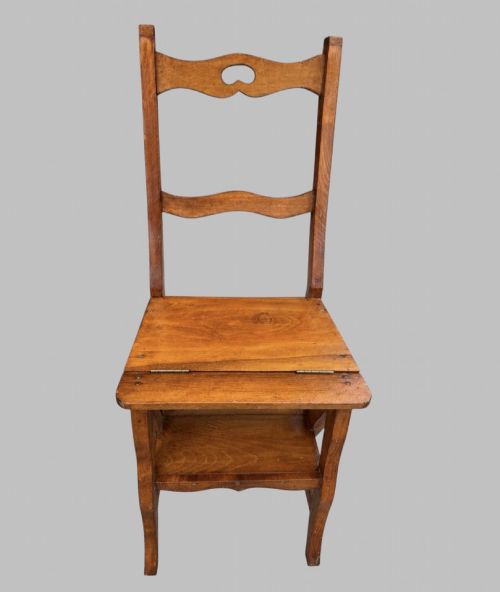
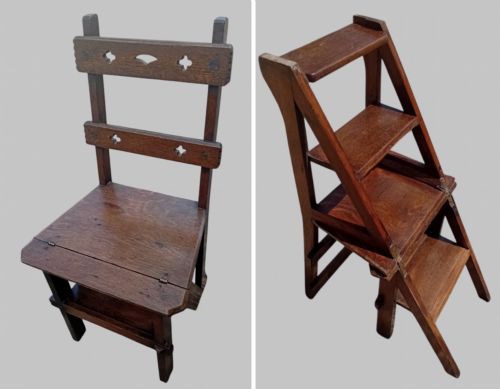
These vintage folding steps offer practical elevation and ingenious metamorphic design, moving effortlessly from sturdy timber ladders to chairs.
Vintage Folding Steps
Vintage folding steps encompass sturdy library ladders, metamorphic library chairs, and A-frame step ladders designed for domestic, railway, and utility use. You are most likely to encounter nineteenth-century oak examples alongside practical pine and fruitwood pieces.
The form bridges utilitarian function and domestic furniture, particularly through metamorphic designs that transform from a set of steps into a chair. Styles range from Georgian and Victorian to Arts and Crafts, Industrial, and Rustic Country.
Origins vary from domestic libraries and high-ceilinged lofts to railway workshops, reflecting the diverse practical demands placed on wooden steps over the centuries. These pieces combine straightforward utility with clever mechanical folding mechanisms.
How they were made
Construction relies heavily on robust timbers such as oak, pine, and fruitwood, selected for their structural strength and ability to bear weight safely. Joinery is straightforward and functional, designed to withstand regular climbing and folding.
Many pieces incorporate metal iron or brass hinges, brackets, and locking mechanisms to facilitate smooth folding action without compromising rigidity. Leather inserts occasionally appear on metamorphic library chair treads, adding a traditional touch to the step surface.
Surface finishes vary from plain polished wood to painted or rustic country treatments, depending on whether the steps served a formal library or an industrial workspace.
The listings feature pieces spanning the Georgian period, the nineteenth century, and early twentieth-century Edwardian, Arts and Crafts, and industrial styles.
What varies in quality
Quality rests primarily on the cleverness of the metamorphic engineering and the stability of the timber frame when fully extended. Pieces that transition seamlessly between a chair and a ladder demonstrate superior mechanical design.
The choice of materials also divides simple utility items from finer domestic furnishings, with dense hardwoods like oak and fruitwood offering greater longevity than soft pine. Original brass hardware and intact leather treads elevate the sophistication of library steps.
The Vintage Folding Steps Glossary
- Metamorphic
- Furniture designed to transform from one object into another, such as a chair that unfolds into a set of library steps. This clever dual-purpose design is typical in domestic pieces.
- A-frame
- A freestanding step ladder construction shaped like the capital letter A for stability. This design supports weight securely without needing a wall for lean.
- Library steps
- Purpose-built stairs designed to reach high bookshelves in private or institutional libraries. They often feature handrails or metamorphic seating options.
- Fruitwood
- Timber sourced from fruit-bearing trees, valued for its fine grain and warm tone. It provides a dense, durable surface for smaller domestic ladders.
Vintage Folding Steps: Frequently Asked Questions
How do metamorphic library chairs work?
These clever pieces of furniture pivot or fold on integrated hinges to transform a seated chair into a stable flight of steps.
Users simply flip the upper section over or slide the steps out from beneath the seat, revealing a sturdy ladder for reaching high shelves.
Were these steps used only in libraries?
While many fine examples served private libraries and Georgian or Victorian homes, others fulfilled utilitarian roles in railway stations, lofts, and workshops.
Industrial and railway variants prioritise robust utility over decorative woodwork, utilising sturdy pine and iron bracing.
How can I tell the period of wooden steps?
Dating relies on examining the wood type, construction methods, and hardware, such as handmade iron brackets versus later brass fittings.
Georgian and Victorian pieces tend to feature finer hardwoods like oak and fruitwood, while later twentieth-century iterations often adopt simpler utilitarian forms.