



Vintage Farm Art
Vintage farm art gathers oil paintings, watercolours, wooden models and furniture celebrating rural life from the nineteenth and twentieth centuries.
Vintage Farm Art
Vintage farm art brings together paintings, watercolours and physical objects depicting rural scenes, farmyard animals and agricultural landscapes. Buyers searching for vintage farm art generally encounter oil paintings on canvas and board, delicate watercolours, and occasional handmade wooden scale models or farm furniture.
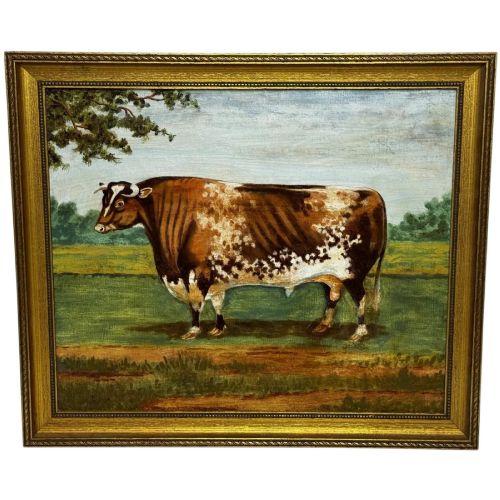
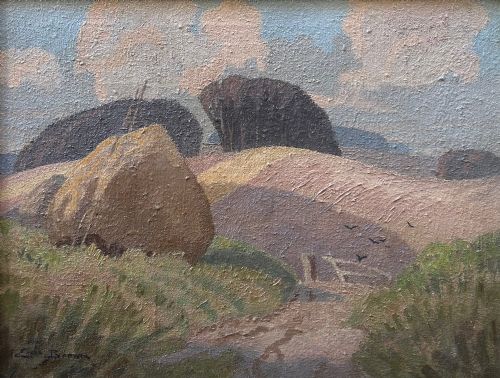
The material on this page spans the Victorian era through the mid-twentieth century, with strong representation from Edwardian and interwar decades. Works range from detailed animal portraits of shorthorn bulls and shire horses to broad Yorkshire landscapes and quiet farmstead views.
Most pieces capture the working agricultural world through British Realism, Impressionism, and traditional pastoral scenes. Alongside traditional wall art, collectors find utilitarian wooden items such as milking stools and refectory tables rooted in the same rural traditions.
How they were made
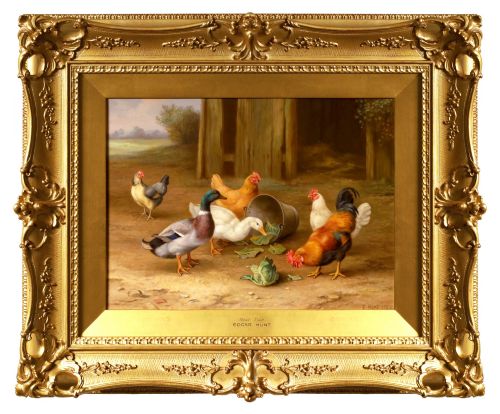
Artists painted primarily with oil paint on canvas, wood panels or boards, applying pigments to capture the light on haystacks, farmyards and grazing cattle. Others worked in watercolour on paper, producing lighter studies of harvesting scenes and rural tracks.
Physical objects from this category utilise timber such as oak and elm, shaped into functional furniture or carved into detailed scale models of farm carts and ploughs. Framing often involves heavy ebonised wood or gilt surrounds that complement the tonal palette of the period.
Vintage Farm Art Retail Price Guide 2026
Typical asking prices for vintage farm art among the pieces listed under this phrase on Sellingantiques today, from the lower quarter to the upper quarter. They describe what is for sale here now, not the wider market.
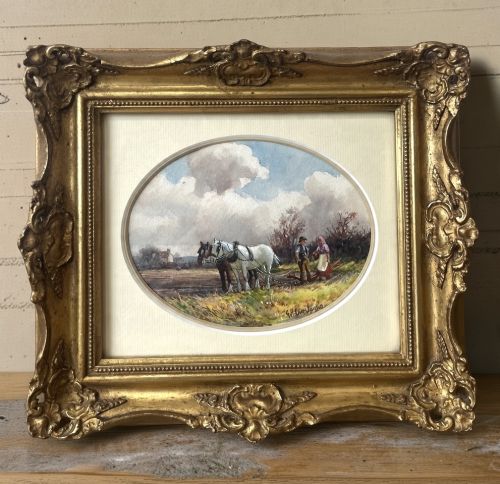
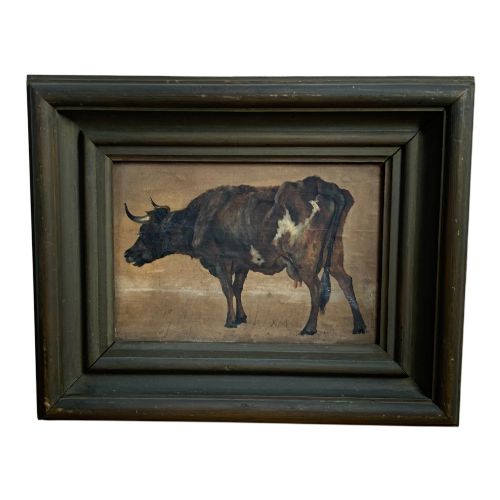
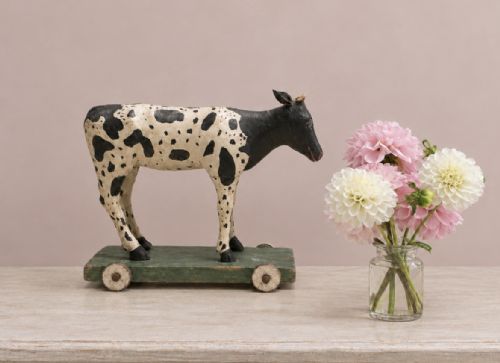
A pair of paper mache cows shares the pasture with oil-painted shorthorn bulls, farmhands, and heavy shire horses.
What varies in quality
Quality in these rural paintings rests upon the artist's command of light, texture and anatomical proportion, particularly in animal subjects like horses and cattle. Stronger works display confident brushwork and atmosphere, whereas weaker pieces rely on stiff composition or formulaic colour.
For three-dimensional items and furniture, quality is defined by the honesty of the materials, the integrity of the joinery, and the retention of genuine surface patination. Pieces showing careful hand-tooling stand apart from mass-produced or purely decorative items.
George Augustus Holmes·Edgar Hunt·Herbert Royle·William JB Jenkins·James William Booth·John Frederick Herring Jnr·Ernest Pile Bucknall·John Atkinson·Charles Vickers·Frederick W Jackson·Percival Glenfern·Claude Cardon·J.C. Grey·George Soper·Florence Hess·Arthur Winter Shaw·Owen Bowen·B Kaufmann·Rowland Henry Hill·Frederick J Knowles·Butler·Maurice Wiliquet
The Vintage Farm Art Glossary
- Oil on canvas
- Pigment mixed with drying oil applied to a stretched cloth support. This technique allows for rich texture and deep blending.
- Watercolour
- A paint consisting of pigment suspended in a water-soluble vehicle, typically worked on paper. It creates transparent washes of light.
- British Impressionism
- A painting style influenced by the French movement but adapted by British artists to capture local light and landscape. It emphasises loose brushstrokes and everyday rural subjects.
- Scale model
- A smaller physical representation of a larger object, such as a farm cart or plough. These were often handmade by craftsmen or hobbyists.
- Refectory table
- A long dining or kitchen table traditionally used in communal halls. Examples in this category utilise solid oak and elm.
Vintage Farm Art: Frequently Asked Questions
What periods do these rural artworks cover?
The works span from the nineteenth century through the Victorian and Edwardian periods up to the mid-twentieth century.
Most items date from the early nineteen-hundreds to the nineteen-fifties, capturing a changing British countryside.
How were these paintings and models used?
Paintings were created to decorate homes and record prized animals, working horses, and familiar rural landscapes.
Wooden models served as educational displays or careful miniature replicas of working agricultural equipment.
How do I live with vintage farm art?
These pieces suit traditional or rustic interiors, where their earthy tones and pastoral subjects complement natural wood and neutral walls.
Keep oil paintings and watercolours out of direct sunlight to protect the pigments from fading over time.
How can I tell different painting styles apart?
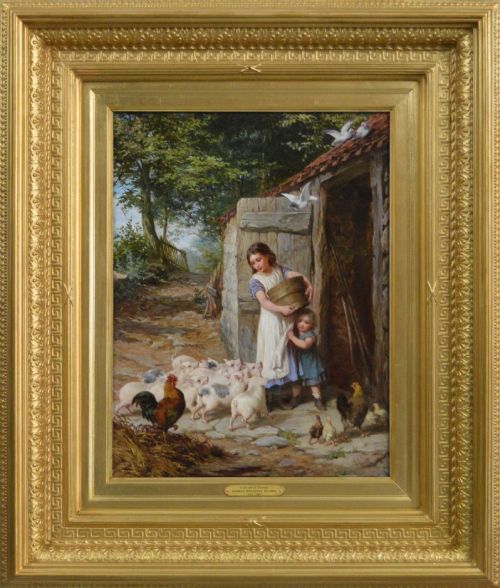
Victorian works often feature tight detail and narrative focus, particularly in animal and farmyard scenes.
Later Edwardian and impressionist pieces use looser brushwork to emphasise light, atmosphere, and open landscape views.