

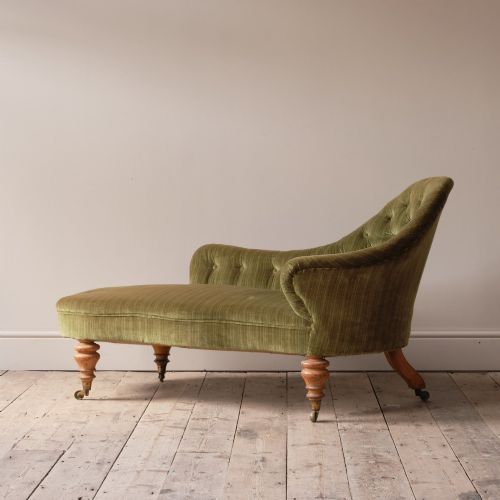
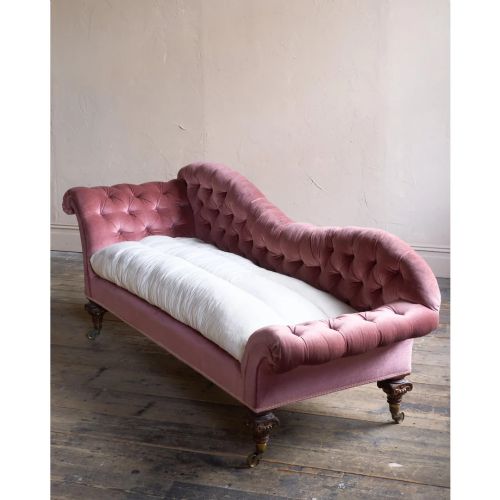
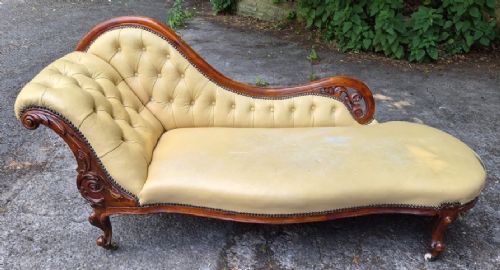
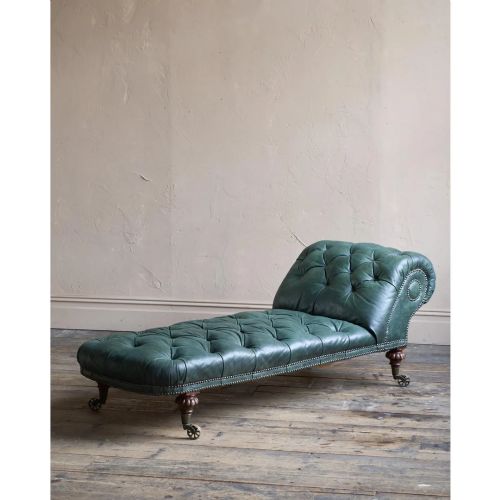


Vintage Fainting Sofa
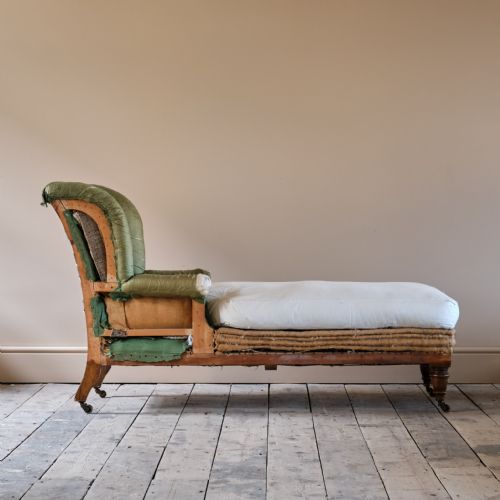
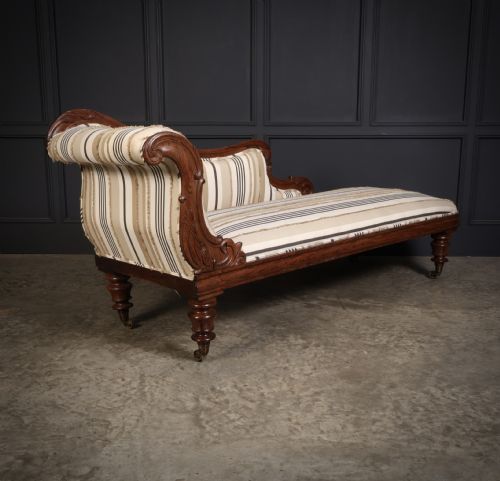
A vintage fainting sofa offers a reclining seat with a single raised end, designed for resting in semi-recumbent comfort.
Vintage Fainting Sofa
A vintage fainting sofa is an asymmetric daybed designed for reclining in a semi-recumbent posture, often referred to in listings as a chaise longue or day bed. These pieces appear across various periods from the Regency era through the Edwardian years and into the 1930s, spanning styles such as Victorian, William IV, and Arts and Crafts.
Buyers will encounter forms ranging from heavy rosewood and mahogany frames with carved details to lighter oak and upholstered day beds resting on turned legs with castors. Some examples feature specific architectural details like Ionic column legs, while others follow distinct design traditions such as the Howard style.
The origins of these pieces trace through 19th-century cabinet making and later 20th-century decorative interpretations, including surrealist day beds. They serve primarily as statement seating for a drawing room, study, or bedroom, combining the function of a chair with the length of a small bed.
How they were made
The structural framework relies on dense timbers such as mahogany, rosewood, and oak, shaped into carved wooden rails, turned legs, and curved scroll ends. Joinery is traditionally concealed, supporting the heavy cantilevered weight of the raised headrest.
Upholstery techniques involve deep buttoning, sprung interiors, and tensioned fabric webbing over hardwood frames. Materials span traditional leather, velvet, and various patterned upholstery fabrics, secured with brass tacks where appropriate to the period.
Vintage Fainting Sofa Retail Price Guide 2026
Typical asking prices for vintage fainting sofa among the pieces listed under this phrase on Sellingantiques today, from the lower quarter to the upper quarter. They describe what is for sale here now, not the wider market.
Listings for vintage fainting sofas span the nineteenth century through the 1930s, featuring woods such as mahogany, rosewood, and oak alongside brass and velvet.
What varies in quality
The standard of timber selection and the crispness of hand-carved mahogany or rosewood details separate standard production from superior cabinet work. Pieces associated with notable makers demonstrate finer proportions and more ambitious joinery in the scroll ends and structural rails.
The integrity of the internal springing and the execution of deep buttoning determine the quality of the upholstered portions. Finer examples retain robust internal webbing and dense stuffing that maintain the intended asymmetric silhouette without sagging.
Howard & Sons·Jas Shoolbred·William Birch·Hampton & Sons
The Vintage Fainting Sofa Glossary
- Chaise longue
- An upholstered sofa in the shape of a chair that is long enough to support the legs. It functions as a hybrid between a chair and a daybed.
- Daybed
- A form of furniture serving as a couch by day and a bed by night, often featuring a single raised end or backrest.
- Scroll end
- A curved wooden or upholstered terminal on a sofa or daybed resembling a rolled scroll. It provides support for the head or feet.
- Ionic column
- A classical architectural column featuring spiral scroll shapes on the capital, occasionally adapted as a decorative leg on 19th-century seating.
Vintage Fainting Sofa: Frequently Asked Questions
What is a vintage fainting sofa?
A vintage fainting sofa is an elongated seat with one raised end, designed for reclining without lying fully flat. These pieces combine the properties of a chair and a daybed.
They emerged in various forms across the nineteenth and early twentieth centuries, reflecting changing domestic fashions and the desire for comfortable lounging furniture.
How were fainting sofas used historically?
These pieces were placed in drawing rooms and boudoirs to allow individuals to rest in a semi-reclined position during the day. They provided a comfortable place to sit or recline while wearing restrictive period clothing.
Over time, they transitioned from functional medical and social furniture into decorative statement pieces for formal rooms.
How do I date a fainting sofa?
Dating relies on examining the timber, framing style, and upholstery techniques visible in the piece. Regency and William IV examples often feature heavy rosewood or mahogany with classical motifs, while Edwardian versions use lighter oak frames.
Makers' stamps, castors, and turned leg styles also help narrow down the period of manufacture between the early nineteenth and early twentieth centuries.
Where should I place a daybed?
A daybed works well in larger bedrooms, studies, or living rooms where it can float away from the walls to showcase its asymmetric profile. Because one end is raised, positioning it against a wall or angled in an open space allows the scroll end or backrest to act as a visual anchor.
Consider the traffic flow around the room, as the extended length requires adequate clearance to maintain balance in the interior layout.