


Vintage Escritoire Cabinet
These vintage escritoire cabinet pieces are refined writing furniture designed for private correspondence, offering concealed drawers and a drop front for a discreet workspace.
Vintage Escritoire Cabinet
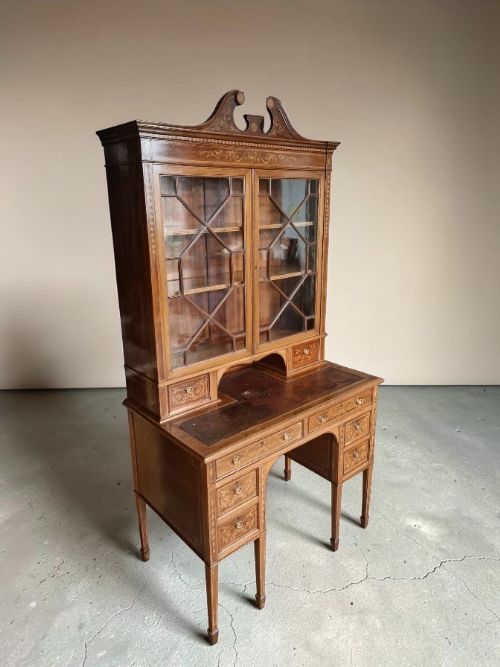
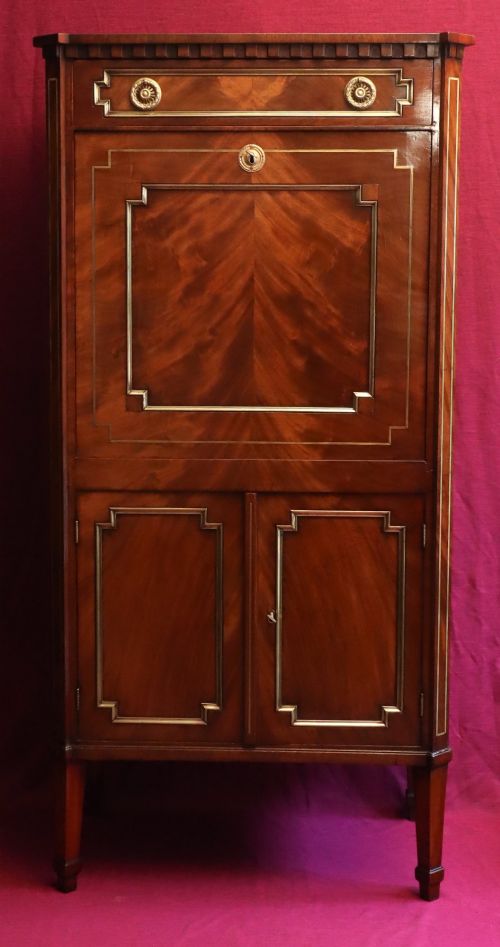
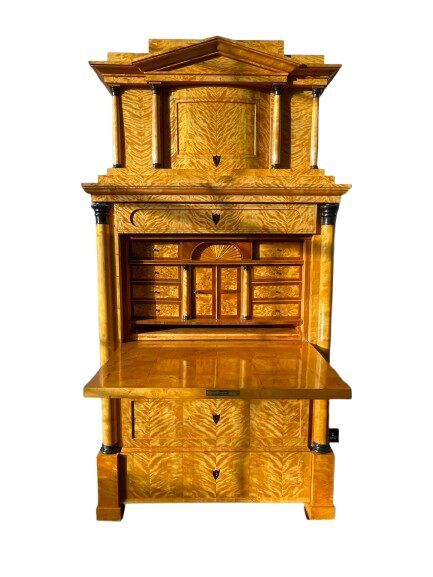
A vintage escritoire cabinet combines the utility of a writing desk with the enclosed storage of a tall cabinet, frequently featuring a fall front writing surface. The examples encountered here span centuries of design, encompassing walnut and mahogany forms alongside bureau bookcases.
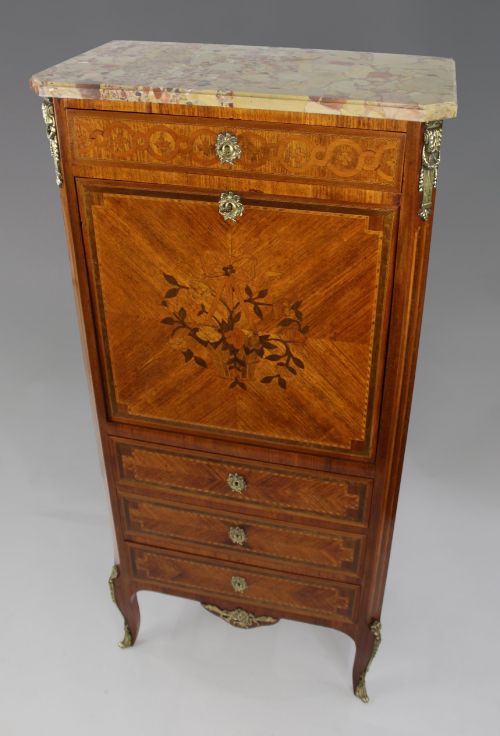
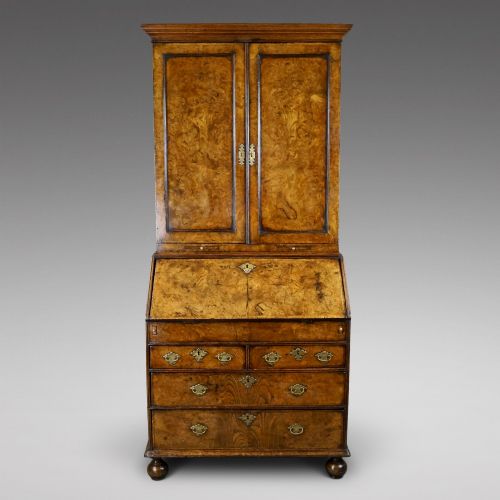
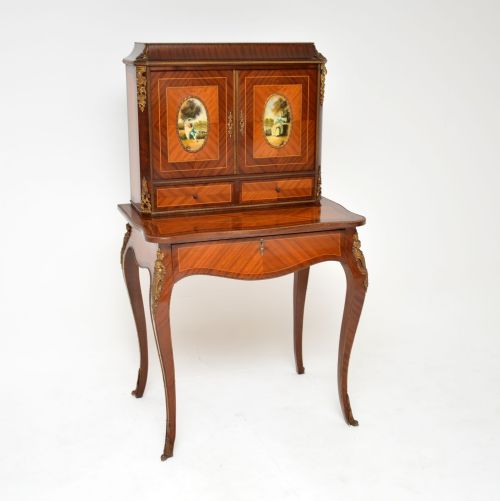
The selection ranges from early walnut pieces of the seventeenth and eighteenth centuries to nineteenth-century French marquetry and Victorian examples. Buyers frequently encounter French revival styles, including Louis XV and Rococo interpretations adorned with ormolu mounts and marquetry inlay.
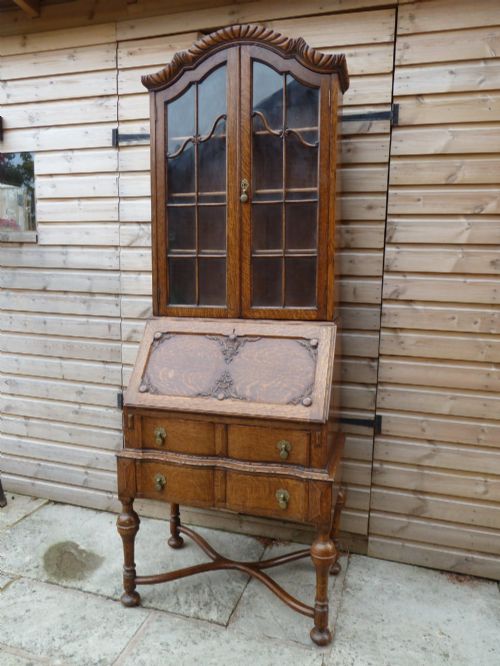
Cabinet forms also incorporate bureau bookcases and secretaire chest desks, providing upper shelving alongside the primary writing compartment. Oak, kingwood, rosewood and satinwood further broaden the material palette available within this category.
Materials and construction
Cabinet makers utilised dense hardwoods such as mahogany, walnut and rosewood as the foundational structure for these writing cabinets, frequently enhancing surfaces with burr elm or oyster veneer patterns. Marquetry inlay techniques incorporated various contrasting timbers to create intricate floral or geometric patterns across the fall front.
Listings feature woods including mahogany, walnut, kingwood, rosewood, oak and satinwood, alongside marble and ormolu elements.
Distinctions in quality
The standard of timber selection and veneer matching defines the visual appeal of an escritoire, with symmetrical grain patterns and intricate marquetry signifying superior craftsmanship. The precision of the internal pigeonholes and small drawers within the writing compartment indicates the maker's dedication to detail.
Hardware integration, such as the weight and chasing of ormolu mounts and the smooth operation of the fall front hinge mechanism, separates standard utilitarian pieces from high-status examples. The presence of original fitted components, such as marble tops and matching key escutcheons, preserves the integrity of the piece.
The Vintage Escritoire Cabinet Glossary
- Escritoire
- A writing cabinet featuring a fall-down front that conceals a collection of small drawers and pigeonholes. It provides a private, vertical workspace.
- Secretaire a abattant
- A tall writing cabinet with a vertical front flap that lowers to serve as a desk surface. This French form often includes internal compartments.
- Bureau bookcase
- A combination furniture form comprising a lower writing desk with a bureau flap and an upper glazed or panelled bookcase section. These units offer dual display and storage utility.
- Marquetry
- The art of applying decorative pieces of veneer to a structure to form intricate designs. Cabinet makers use various tinted woods to achieve pictorial or geometric motifs.
- Ormolu
- Gilded bronze mounts applied to furniture for decorative effect. It gained widespread use in French cabinet making during the eighteenth and nineteenth centuries.
- Oyster walnut
- Veneer cut transversely from small branches to produce circular or oval patterns resembling oyster shells. This technique appeared on seventeenth-century pieces.
Vintage Escritoire Cabinet: Frequently Asked Questions
How do I use an escritoire daily?
The drop front lowers to create a compact writing surface while keeping correspondence and stationery hidden away inside the fitted interior compartments.
Most models include lockable doors or drawers, allowing you to secure private documents when the desk is not in use.
Where should I place this cabinet?
These tall writing pieces suit studies, libraries or living rooms where vertical storage and a pull-down desk surface are beneficial.
Ensure adequate floor space in front of the cabinet so the fall front can lower fully without obstruction from other furniture.
How do I identify French revival pieces?
French revival cabinets often feature distinctive curved outlines, elaborate marquetry floral designs, and cast ormolu mounts framing the edges.
Materials like kingwood and rosewood, paired with original marble tops, frequently indicate nineteenth-century French influence in these listings.
What is an oyster walnut finish?
Oyster walnut refers to veneer sliced across smaller branches to create small, concentric ring patterns resembling oyster shells across the surface.
This technique is characteristic of seventeenth-century and William and Mary cabinet work, giving the wood a distinctive decorative texture.