

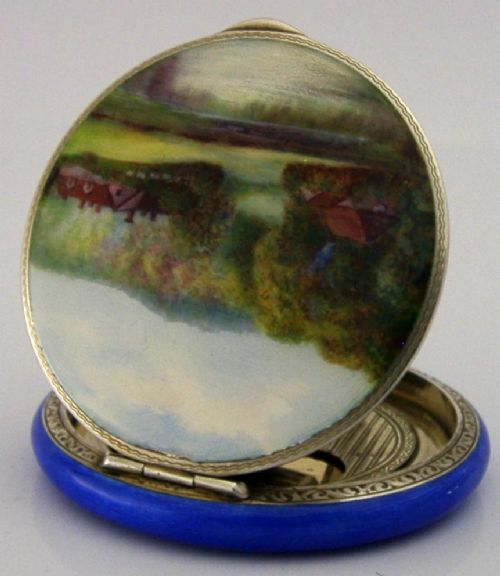


Vintage Enamel Makeup Case
These vintage enamel makeup case selections bring together pocket-sized Art Deco geometry and mid-century Italian craftsmanship.
Vintage Enamel Makeup Case
A vintage enamel makeup case is typically encountered here as a powder compact or combination compact designed for a lady's handbag. The most common examples span the 1920s and 1930s, heavily influenced by Art Deco design alongside mid-century Italian pieces.
These accessories served both practical and decorative functions for powder and cosmetics during the early and mid-twentieth century. Collectors will find variations ranging from simple chrome and enamel shells to elaborate sterling silver creations.
How they were made
Construction relies heavily on durable base metals such as brass and chrome, paired with applied enamel decoration. Many iterations incorporate sterling silver or gilt metal frameworks, often enhanced with hand-painted details or rich blue enamel finishes.
Interior architecture frequently includes functional elements such as delicate mesh screens and suede linings. Master makers combined metal stamping and casting with hand-finishing techniques to achieve precise geometric motifs and secure latches.
Vintage Enamel Makeup Case Retail Price Guide 2026
Typical asking prices for vintage enamel makeup case among the pieces listed under this phrase on Sellingantiques today, from the lower quarter to the upper quarter. They describe what is for sale here now, not the wider market.
The listings show pieces spanning the 1920s, 1930s, and 1950s, utilising materials such as sterling silver, chrome, brass, enamel, and suede.
What varies in quality
Quality differences often hinge upon the choice of precious materials, moving from plated chrome to solid sterling silver such as 800 silver or higher grades. The complexity of the enamel work and the presence of signed maker attributions also elevate the stature of a piece.
Artistic execution dictates distinction, particularly in hand-painted scenes or specialised components like integrated suede linings and original mesh inserts. Pieces bearing recognised maker signatures demonstrate superior refinement in both mechanical closure and visual design.
Evans·Giuliano Spinelli Florence·Richard Hudnut
The Vintage Enamel Makeup Case Glossary
- Compact case
- A small portable container fitted with a mirror, traditionally holding face powder or solid cosmetics. These objects were essential accessories for twentieth-century women.
- Art Deco
- A design style characterised by sleek geometric shapes, streamlined forms, and bold colours popular during the 1920s and 1930s. It heavily influences the majority of pieces found in this category.
- Enamel
- A glassy substance fused to metal through firing to produce a smooth, decorative surface. This technique provides vibrant colour decoration on compact lids.
- Sterling silver
- An alloy of silver containing ninety-two point five percent silver by mass. It appears in finer compact constructions alongside hallmarks.
- Mesh
- A flexible fabric formed from interconnected metal rings or links. It is frequently utilised for internal compartments or carrying straps in period accessories.
Vintage Enamel Makeup Case: Frequently Asked Questions
How were these compacts used?
These compacts were carried in ladies' handbags or evening purses for discreet grooming throughout the day and evening. Owners used the internal mirror and powder compartment to refresh their makeup.
Many designs also incorporated spaces for rouge, lipstick, or coins, functioning as versatile combination accessories for social outings.
How do I date a compact?
Dating relies heavily on stylistic markers such as Art Deco geometric motifs, materials like chrome and gilt metal, and specific manufacturing hallmarks. Periods typically span from the 1920s through the 1950s.
Maker signatures and stamped registry numbers found inside the case also help narrow down the exact decade of production.
How should I clean my compact?
Cleaning requires gentle care to protect delicate enamel surfaces and original interior mirrors or suede linings. A soft, dry cloth is usually sufficient to remove dust from the exterior metal and enamel.
Moisture and harsh chemical cleaners must be avoided entirely to prevent tarnishing the metal framework or degrading the adhesive holding internal components.