
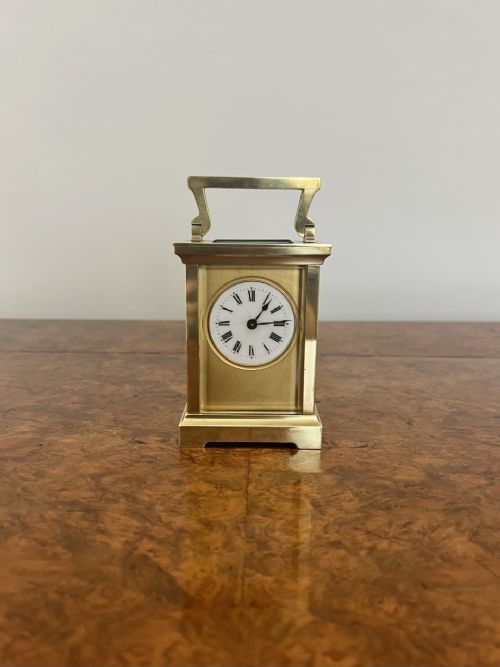


Vintage Enamel Carriage Clock
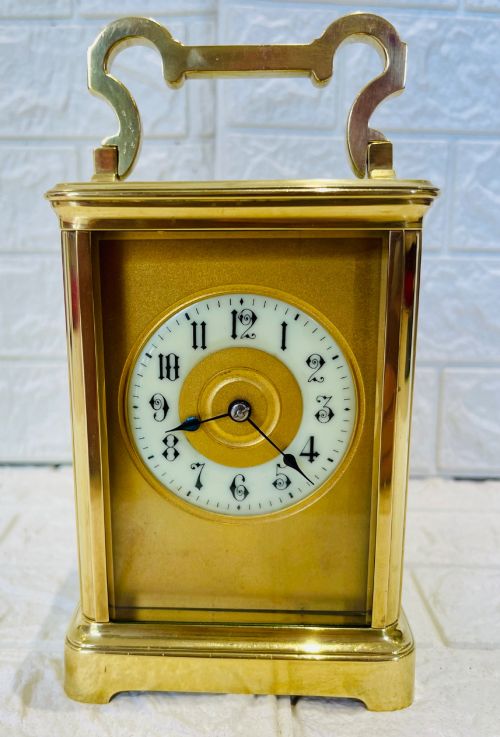
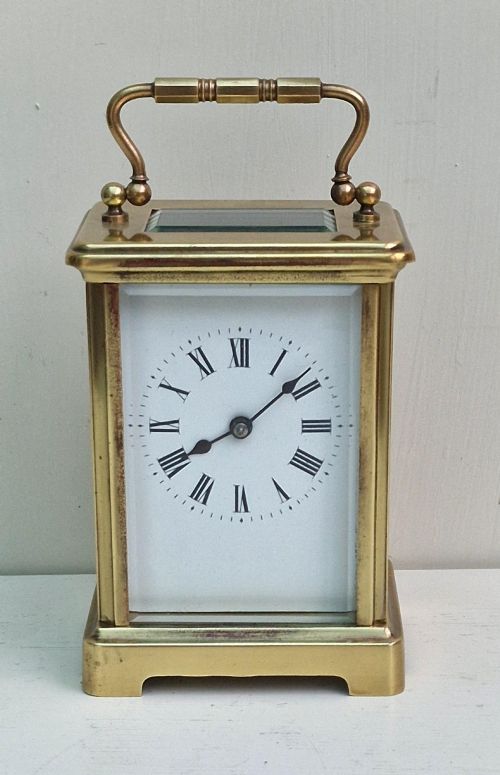
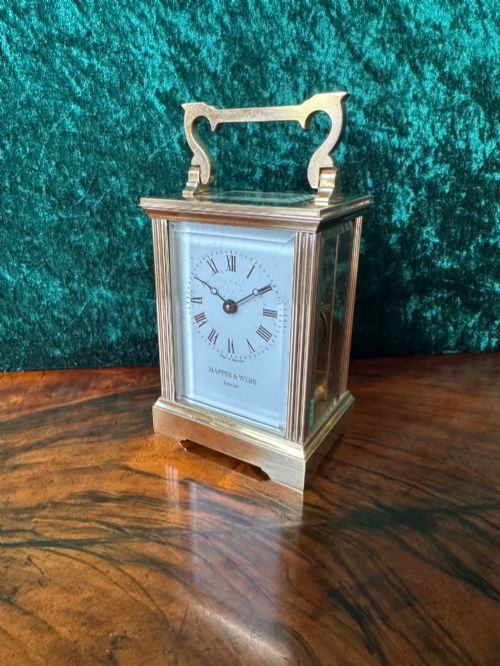
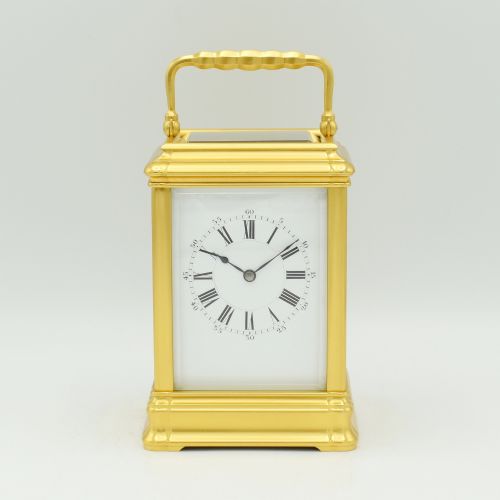
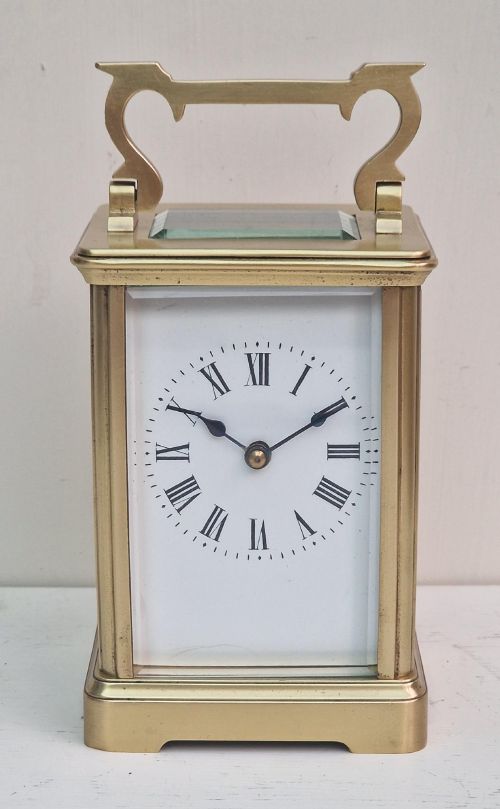
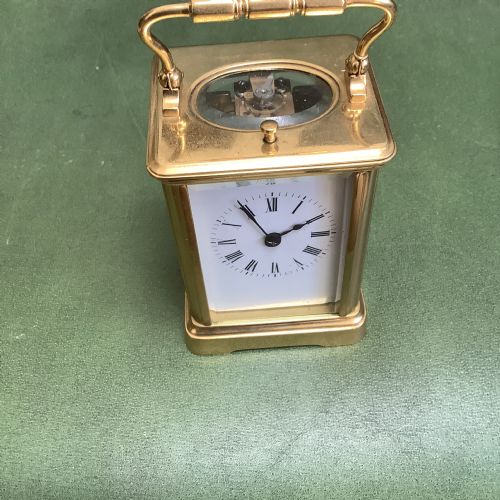
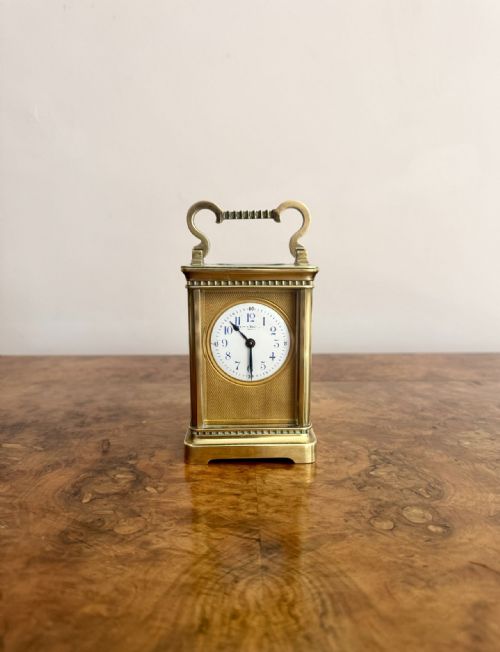
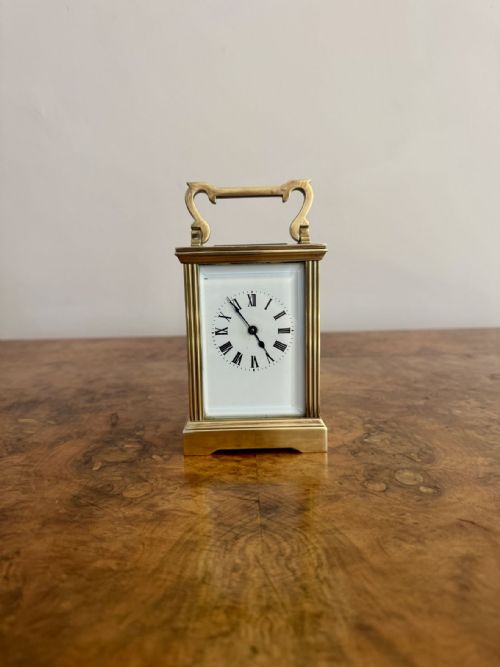
A vintage enamel carriage clock is a portable timepiece housed in glass and metal, prized for its mechanical intricacy and elegant proportions.
Vintage Enamel Carriage Clock
When searching for a vintage enamel carriage clock, you encounter portable mechanical timepieces produced across the nineteenth and twentieth centuries. These objects originate predominantly from French workshops and British retailers, spanning Victorian, Edwardian, and Belle Epoque periods.
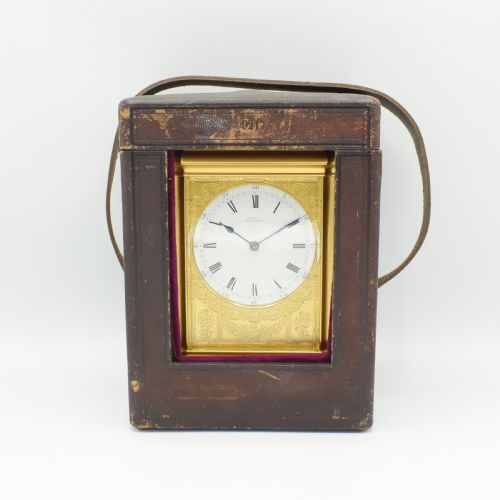
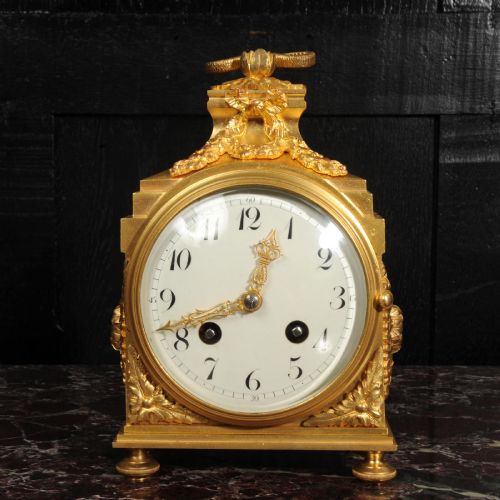
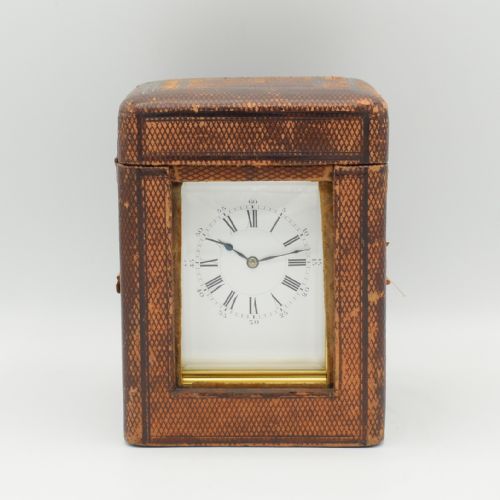
The pieces on this page take the form of carriage clocks and mantel clocks. You find standard rectangular brass cases alongside gorge cases, doucine cases, and miniature formats equipped with travel cases.
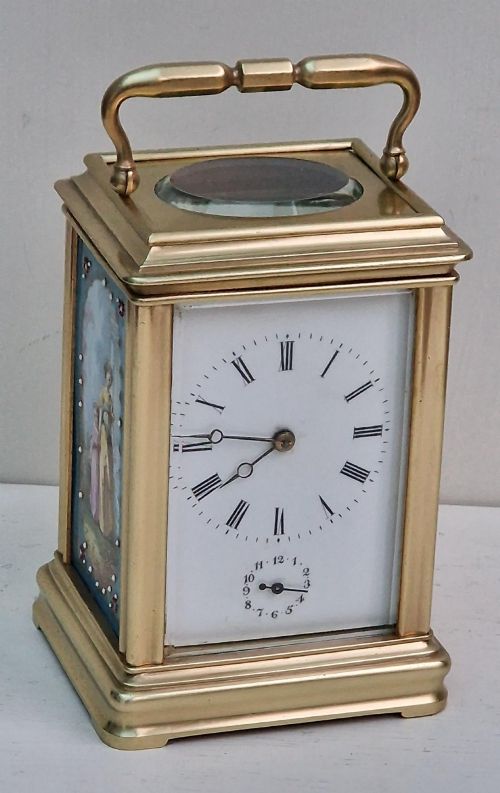
Enamel dials and panels feature frequently, sometimes paired with porcelain panels, hand-painted enamel scenes, or specific regional designs such as Delft enamel dials.
How they were made
Makers constructed the primary housing from brass, gilt brass, gilt bronze, or silver, combining structural metalwork with bevelled glass panes to reveal the internal movement. Many examples incorporate leather outer travel cases for protection.
Movements rely on mechanical gear trains, often featuring eight-day durations, Swiss movements, striking mechanisms, repeaters, alarms, and sweep seconds hands.
Materials recorded across the inventory include bevelled glass, leather travel cases, and hand-painted enamel dials alongside porcelain panels.
What varies in quality
Quality rests in the complexity of the movement and the finesse of the case construction. Simpler time-only models sit apart from repeaters, bell-strike clocks, and those featuring alarm complications.
The degree of hand-finishing defines the upper tier, seen in fully engraved gilt brass cases and detailed enamel paintings on dials or panels. Signed works by established makers carry distinct distinction compared to unsigned pieces.
Henri Jacot·Mappin and Web·Pickford of London·T. Martin and Co·Latshea and Sons Edinburgh
The Vintage Enamel Carriage Clock Glossary
- Carriage clock
- A portable mechanical clock originally designed for travel during the nineteenth century. These clocks typically feature a rectangular brass frame with glass panels and a swing handle on top.
- Gorge case
- A distinct rectangular brass carriage clock case style characterised by moulded tiered framing around the top and base. This architectural form is common among French nineteenth-century examples.
- Repeater
- A mechanical clock complication that sounds the hours and quarters upon pressing a button on the case. This mechanism allowed owners to check the time in the dark.
- Doucine case
- A carriage clock case featuring concave curved mouldings on the vertical sides. The profile tapers gracefully from top to bottom.
- Pendule d'Officier
- A French term for an officer's travelling clock, often denoting a compact military-style timepiece with a robust movement.
Vintage Enamel Carriage Clock: Frequently Asked Questions
How do I wind a carriage clock?
Most mechanical models utilise a matching key inserted into arbors on the backplate or dial face. Turn the key gently until resistance indicates the mainspring is fully tensioned.
Avoid over-winding to protect the internal brass gear train and escapement from undue stress.
Why does my clock have a repeat button?
The button on top activates a striking train to sound the most recent hour and quarter-hour audibly. This function allowed travellers to ascertain the time during the night without a light source.
Release the button fully after each press to let the rack and snail mechanism complete its cycle.
Can I travel with a vintage carriage clock?
These clocks were originally built for transit and often include fitted leather outer travel cases for protection. However, modern movement transport requires securing the pendulum or balance where applicable.
Gentle handling prevents accidental shifting of delicate glass panes and internal pivots.
What is the difference between a strike and a repeater?
A striking clock sounds the hours automatically on a bell or gong as the time passes. A repeater strikes the time on demand when you press the button on the case top.
Many French pieces combine both functions into an eight-day movement.