
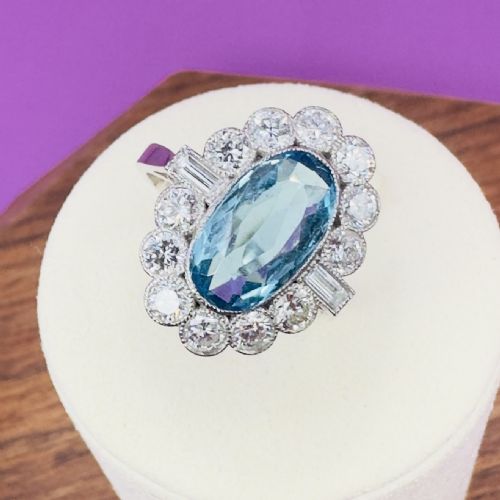


Vintage Elongated Ring
A vintage elongated ring sits high and narrow on the finger, drawing the eye along the hand with clusters of diamonds, rubies, and sapphires.
Vintage Elongated Ring
A vintage elongated ring stretches vertically along the finger, typically taking a marquise, oval, or slender rectangular form. The pieces seen most often on this page belong to the Art Deco period, alongside earlier Edwardian and Victorian examples.
Makers designed these dress rings and cluster rings to maximise finger coverage through geometric layouts of gemstones. Platinum and various carats of gold form the structural foundations for these distinctive profiles.
How they were made
Goldsmiths utilised platinum and white gold to construct delicate, intricate settings that could securely hold multiple small diamonds alongside larger central stones like aquamarine, ruby, and sapphire.
Stones were cut in oval, marquise, and fancy shapes, then arranged in complex cluster formations requiring precise hand-setting techniques common to early twentieth-century workshops.
Some of these finger-lengthening designs stretch so far they practically require their own postcode.
What varies in quality
Quality rests in the harmony of the geometric design and the crispness of the metalwork supporting the stones. Superior examples display balanced proportions where the central gems and surrounding melee diamonds integrate seamlessly without crowding.
The choice of premium metals like platinum or high-carat gold paired with well-matched sapphires, rubies, or aquamarines elevates a piece. Metalwork that retains sharp millgraining and secure prong placement demonstrates superior craftsmanship.
The Vintage Elongated Ring Glossary
- Elongated ring
- A ring designed with a vertical orientation that extends along the length of the finger. This layout flatters the hand by creating a slender profile.
- Cluster ring
- A ring featuring a central stone surrounded by a group of smaller gemstones. This arrangement was particularly popular for maximising sparkle in twentieth-century designs.
- Marquise cut
- A boat-shaped gemstone cut with pointed ends and curved sides. It provides maximum surface area for its weight and suits stretched vertical settings.
- Old mine cut
- An antique diamond cut with a square or cushion shape, high crown, and small table. These stones display a distinctive, soft candlelight sparkle.
- Platinum
- A dense, strong, and ductile white metal utilised extensively in fine jewellery. Its strength allowed jewellers to create ultra-fine settings for diamonds.
Vintage Elongated Ring: Frequently Asked Questions
How do I wear a vintage elongated ring?
These pieces function primarily as dress rings or cocktail rings, sitting prominently on the finger due to their vertical length. They pair well worn alone on the hand to let the geometric design take focus.
Because of their extended shape, consider how they sit alongside other bands if worn on adjacent fingers. Many choose the middle or index finger to give the design ample space.
What periods do these rings come from?
The selection spans the Edwardian era, the nineteen-twenties, nineteen-thirty, and nineteen-fifty. Art Deco pieces from the nineteen-thirties appear most frequently.
Earlier Edwardian examples feature delicate yellow gold and platinum combinations, while later decades favour crisp platinum and white gold mountings.
What stones are set in these rings?
Diamonds form the primary focus of these pieces, often paired with coloured gemstones. Aquamarine, ruby, sapphire, and emerald frequently appear alongside the diamonds.
Central stones range from large solitaire rubies to substantial aquamarines, bordered by intricate pavé or cluster diamond work.
How do I care for an antique ring?
Gentle cleaning with warm water, mild soap, and a soft brush maintains the sparkle of the gemstones. Avoid harsh chemical dips, particularly with softer coloured stones or delicate antique settings.
Periodic inspection by a jeweller ensures the tiny metal claws holding the cluster stones remain secure and intact.