



Vintage Drawing Room Seating
Vintage drawing room seating brings generous proportions and rich timber frames straight into modern interiors.
Vintage Drawing Room Seating
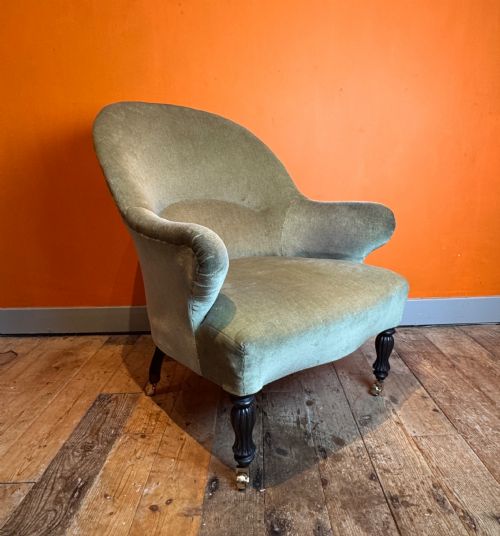
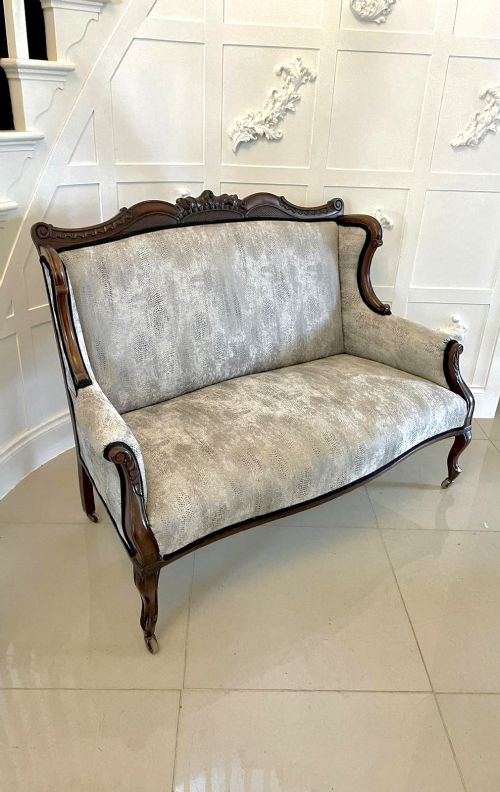
Vintage drawing room seating encompasses upholstered sofas, settees, salon chairs, and parlour suites designed for formal reception rooms. These pieces originate from various historical periods, including the Regency era, the Victorian epoch, and the Edwardian period. Buyers hunting for vintage drawing room seating encounter large two-seat settees, camel back sofas, show frame items, and elbow chairs.
The selections on this page lean heavily towards nineteenth-century and early twentieth-century examples in mahogany, rosewood, and walnut. Forms range from single armchairs to matched sets of parlour chairs intended for re-upholstery. Such seating provides substantial timber construction paired with traditional upholstery foundations.
Origins span English cabinet-making traditions alongside distinct stylistic revivals like Victorian Rococo Revival and French Provincial. Whether selecting an inlaid salon settee or a carved mahogany sofa, these items anchor a reception space with period character.
How they were made
Frames rely on dense timbers such as mahogany, rosewood, walnut, and general hardwoods that allow for deep carving and structural integrity. Show frames expose polished wood surrounds while supporting internal joinery. Brass hardware and delicate inlay work often accent the primary timber structures.
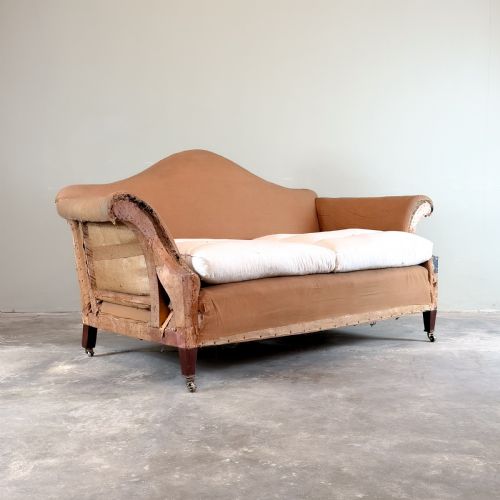
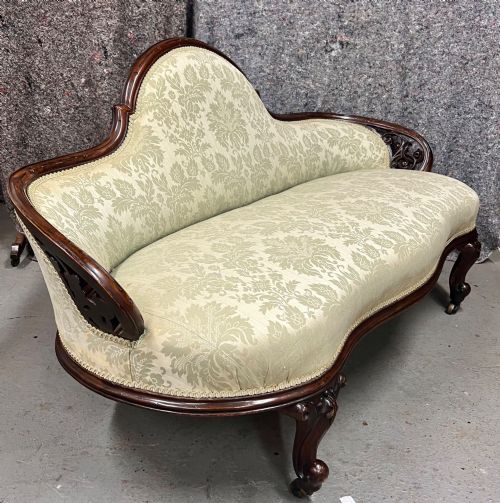
Traditional upholstery techniques utilise foundational materials like jute webbing, cotton stuffing, and fabric coverings. Button upholstery secures the padding while creating distinct geometric patterns across the backrests. Many pieces utilise damask textiles or arrive ready for re-upholstery with modern fabrics.
Vintage Drawing Room Seating Retail Price Guide 2026
Typical asking prices for vintage drawing room seating among the pieces listed under this phrase on Sellingantiques today, from the lower quarter to the upper quarter. They describe what is for sale here now, not the wider market.
Materials recorded across these seating options include mahogany, rosewood, walnut, brass, damask, jute, and cotton.
What varies in quality
The calibre of timber carving and the complexity of frame shaping dictate the standing of a piece. Fine examples display crisp hand-carved details along show frames and precise joinery in the underlying structure. Simpler models utilise plain rails with minimal embellishment.
The condition of the timber finish and the integrity of the show frame distinguish finer specimens from standard utility pieces. Intricate wood inlays and well-preserved polished surfaces indicate superior workshop output. Conversely, heavy wear to exposed wood or loose frame joints shifts a piece toward the simpler end of the range.
The Vintage Drawing Room Seating Glossary
- Show frame
- A wooden structural framework left exposed around the upholstered elements of a seat. This design highlights the carved timber work of the maker.
- Camel back
- A sofa backrest profile featuring a graceful undulating curve that rises toward the centre. This silhouette became popular during the Edwardian period.
- Parlour suite
- A matched set of seating furniture, typically comprising a settee and multiple matching chairs. These suites furnished formal reception rooms in Victorian and Edwardian homes.
- Damask
- A reversible figured fabric traditionally woven from silk, wool, or cotton. It provides a patterned textile surface frequently utilised on formal upholstery.
- Elbow chair
- An armchair featuring low arms designed to support the elbows. These seats often served in studies, bedrooms, and drawing rooms.
Vintage Drawing Room Seating: Frequently Asked Questions
What is vintage drawing room seating?
Vintage drawing room seating includes sofas, settees, and armchairs built during the nineteenth and early twentieth centuries for formal reception spaces.
These pieces combine exposed timber frames with traditional upholstery methods to create durable and decorative furniture.
How were these sofas used?
Drawing room seating was utilised by hosts and guests for conversation, entertaining, and formal gatherings in the main reception rooms of a home.
Individual elbow chairs and parlour suites provided flexible seating arrangements around the perimeter of the room.
How do I live with antique seats?
Integrating these pieces into modern spaces involves placing them as focal points in living rooms, studies, or large bedrooms.
Because many older pieces retain traditional foundations or require new textile coverings, owners often pair sturdy historical frames with contemporary interior colour schemes.
How do I tell periods apart?
Periods are distinguished by shifts in timber choice, carving styles, and overall furniture silhouettes. Regency pieces show classical restraint, whereas Victorian items often feature heavier carved mahogany and show frames.
Edwardian furniture frequently incorporates lighter inlaid mahogany and simpler upholstered profiles.