

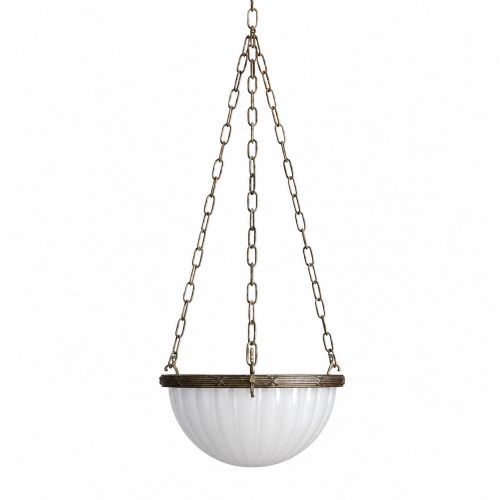


Vintage Dome Ceiling Light
A vintage dome ceiling light brings focused illumination and character to a room, spanning Edwardian elegance through to robust industrial forms.
Vintage Dome Ceiling Light
A vintage dome ceiling light covers a range of pendant and ceiling fixtures defined by their curved profiles, drawing on Edwardian, Art Deco and mid-century design traditions. When you search for a vintage dome ceiling light, you encounter pieces designed to hang centrally, directing illumination downwards into the space.
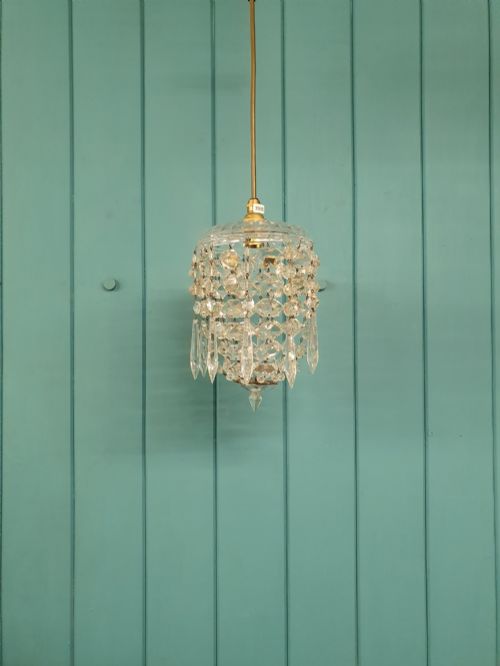
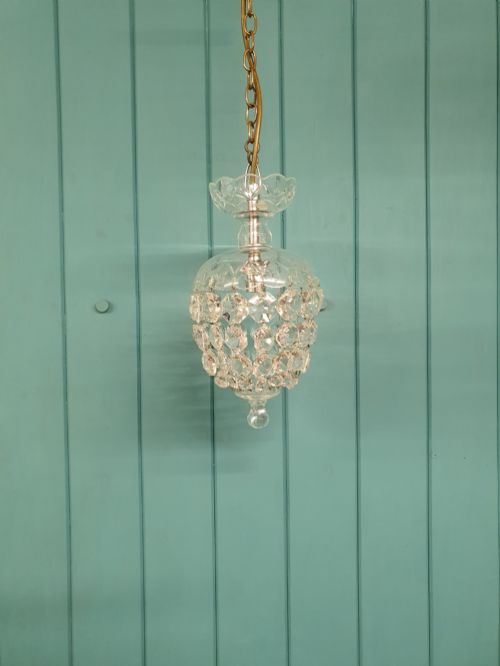
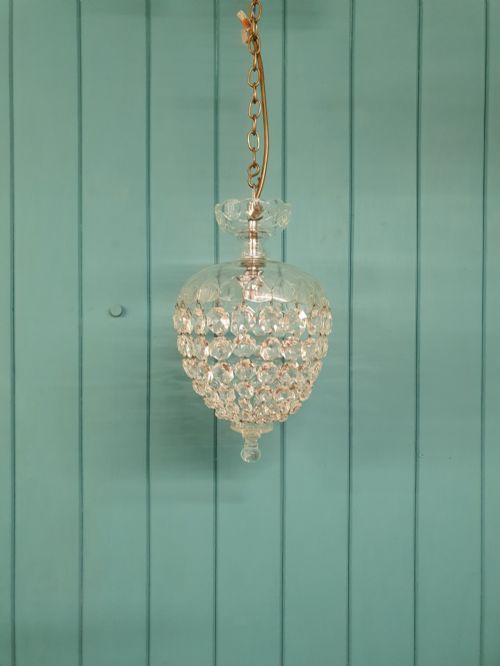
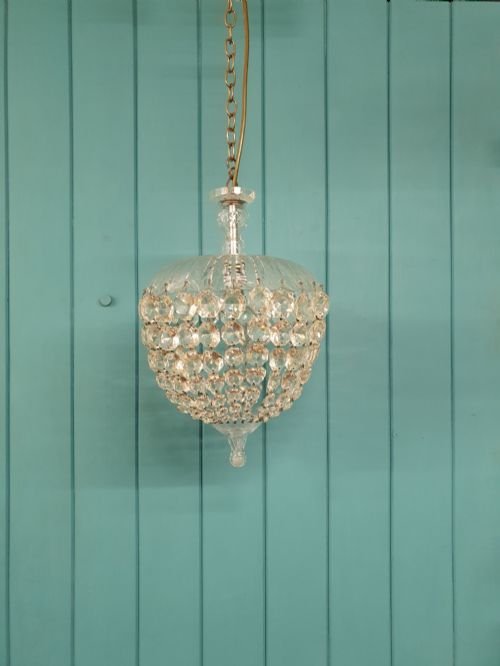
The selection here encompasses compact cut glass chandeliers, robust factory pendants in vitreous enamel, and French architectural downlighters from the early decades of the twentieth century. These variations reflect the shifting domestic and commercial lighting needs across different decades.
Most examples hail from the Edwardian period or the 1920s and 1930s, offering distinct material personalities from pressed glass to polished brass and copper. Choosing the right form depends on the scale of the room and whether the intended atmosphere leans towards industrial utility or decorative refinement.
How they were made
Makers utilised heavy brass, copper and steel to construct the structural hardware, often pairing these metals with moulded, frosted or cut glass domes. Metal components were spun, cast or hammered into shape to house the electrical fittings securely.
Glass shades were frequently mould-blown or wheel-cut, creating surfaces that diffused light evenly or cast intricate patterns across walls and ceilings. Vitreous enamel finishes on industrial pendants were fused to steel at high temperatures to provide a durable, wipe-clean surface for workshops and kitchens.
Vintage Dome Ceiling Light Retail Price Guide 2026
Typical asking prices for vintage dome ceiling light among the pieces listed under this phrase on Sellingantiques today, from the lower quarter to the upper quarter. They describe what is for sale here now, not the wider market.
The listings feature pieces spanning the Edwardian era through to the 1940s, utilising brass, glass, copper, steel and vitreous enamel.
What varies in quality
The distinction between standard utility lighting and finer decorative pieces lies in the depth of the metalwork and the clarity of the glass. Superior examples feature heavier gauge brass or copper with crisp casting details rather than thin, pressed sheet metal.
Hand-cut crystal and deeply etched Art Deco shades demonstrate a higher level of artisanal skill than simple moulded glass. Original patination and intact structural components also elevate a piece, showing how well it has survived decades of use.
The Vintage Dome Ceiling Light Glossary
- Dome top chandelier
- A hanging light fixture featuring a rounded or hemispherical upper shade, often suspended by chains or a rigid rod.
- Vitreous enamel
- A material made by fusing powdered glass to a substrate by firing, yielding a hard, glossy and corrosion-resistant coating.
- Pendant light
- A solitary light fixture that hangs from the ceiling by a cord, chain or metal pipe.
- Downlighter
- A light fixture directed downwards to concentrate illumination onto a specific surface or task area below.
Vintage Dome Ceiling Light: Frequently Asked Questions
How do I hang a heavy dome light?
Heavier metal and glass fixtures require secure attachment to a ceiling joist using appropriate steel hooks and brackets capable of supporting the dead weight.
Professional installation by a qualified electrician is strongly recommended to ensure the wiring meets current safety standards and the mount is secure.
Can I use modern bulbs in these lights?
Most vintage fixtures accept standard modern LED or incandescent screw-in and bayonet bulbs, provided the wattage does not exceed the limit of the original ceramic or brass holder.
Checking the interior of the socket helps confirm the maximum recommended bulb size before fitting a new lamp.
How do I clean frosted glass domes?
Gentle washing with warm soapy water and a soft cloth removes everyday dust and grease without scratching the delicate frosted or etched surface.
Harsh chemical abrasives should be avoided entirely to preserve the original texture and finish of the antique glass.
What rooms suit industrial pendant lights?
Enamel factory pendants and copper lanterns work particularly well in kitchens, hallways or dining areas where task lighting and robust character are desired.
Their downward-directed beam creates a functional pool of light over islands, tables or workbenches.