
Vintage Dining Seats
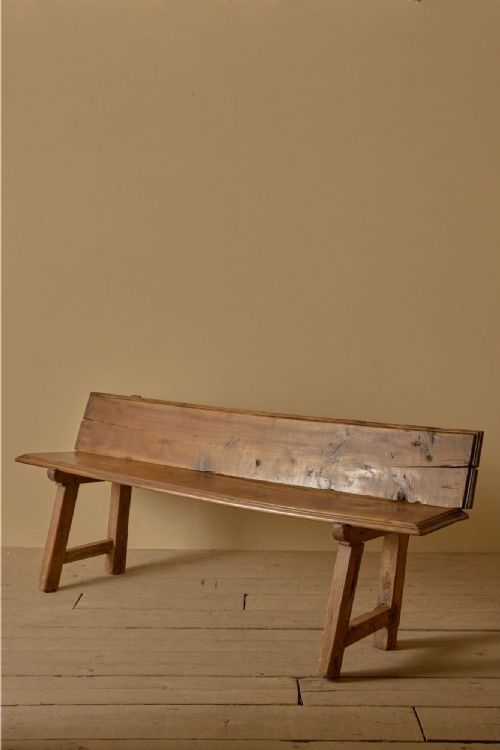
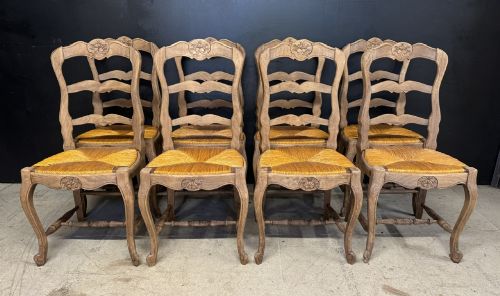
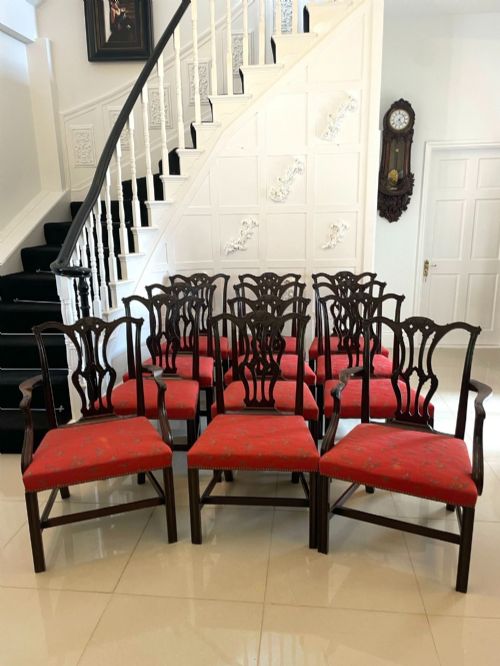
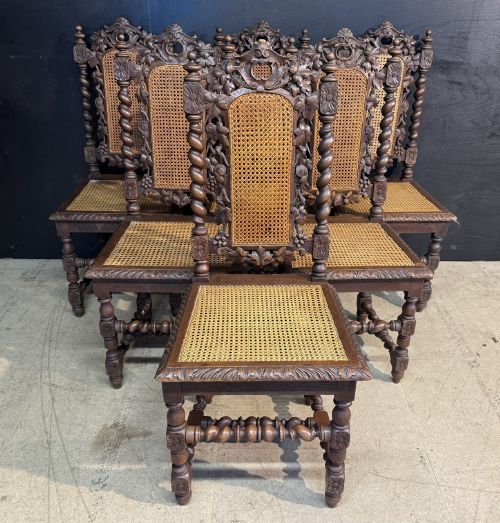
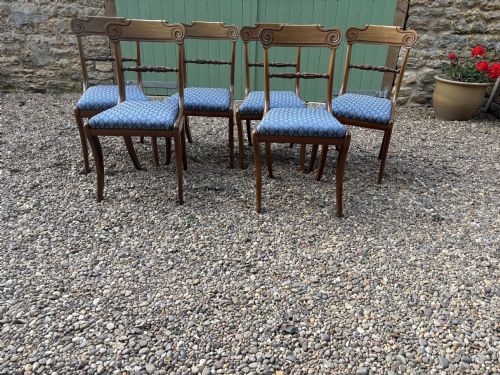
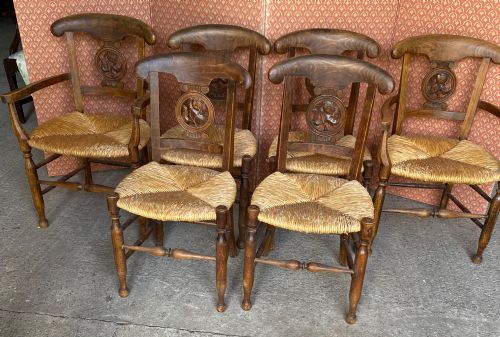
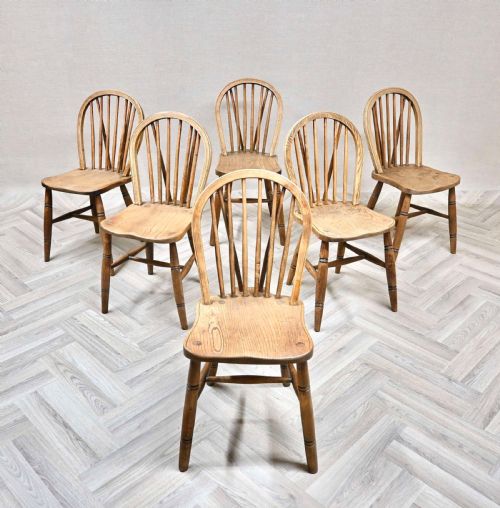
These vintage dining seats span sturdy oak country benches to carved mahogany sets, chosen to ground a room in practical history.
Vintage Dining Seats
Vintage dining seats encompass everything from single side chairs to large sets of twelve, originating across the nineteenth and twentieth centuries. When searching for vintage dining seats, buyers encounter styles ranging from plain Windsor kitchen chairs to formal Regency and Victorian mahogany designs.
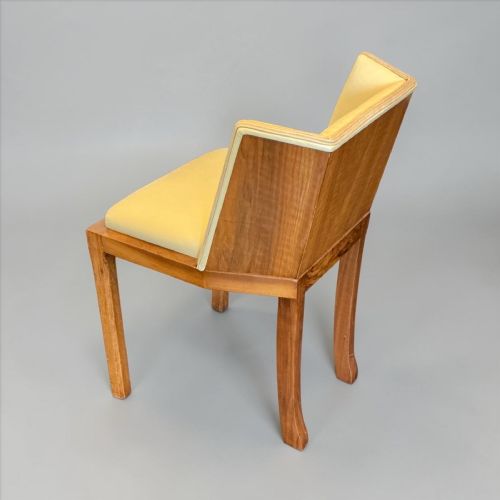
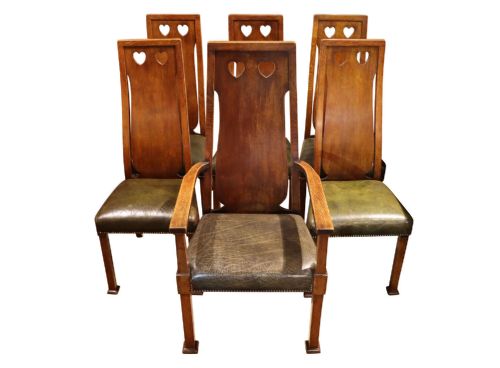
The selections include benches, armchairs, and dining stools alongside standard chairs. Walnut, oak, and mahogany appear frequently, shaping forms influenced by Georgian, Edwardian, and Arts and Crafts movements.
Materials and construction
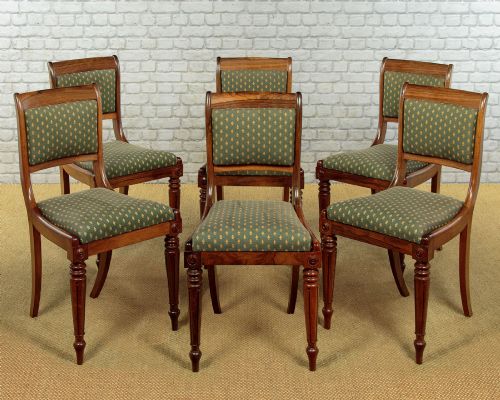
Timbers such as mahogany, oak, walnut, beech, and elm form the structural frames of these seats. Joinery relies on traditional methods, including pegged joints and turned components, supported by materials like rush, cane, leather, and fabric for the seating pads.
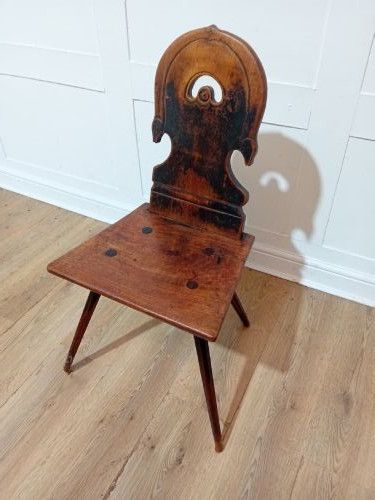
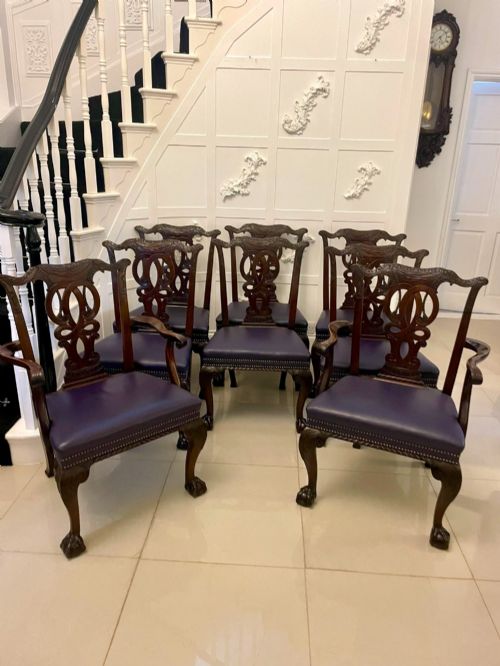
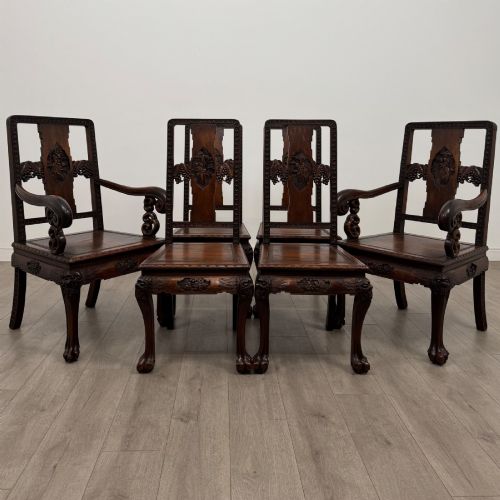
Brass inlays, carved splats, and turned legs add decorative detail to the wooden structures. Garden pieces incorporate iron, while vernacular country chairs utilise local woods formed into spindles and solid seats.
Chapel pews that flip over allow a congregation to turn their backs on the sermon when the seating arrangement demands it.
Distinctions in quality
Quality rests in the crispness of the carving, the selection of timber grain, and the integrity of the original joints. Sets that maintain uniform colour and matching timber across every chair command greater interest than mismatched groupings.
The refinement of the proportions and the weight of the timber separate standard utility pieces from finer examples produced for formal dining rooms.
Goodyers London·William Morris·Rossetti
The Vintage Dining Seats Glossary
- Carver
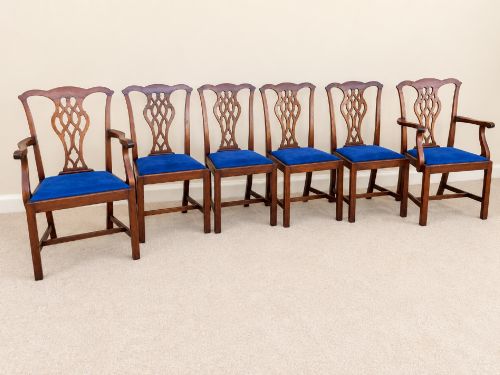
- An armchair designed to sit at the head of a dining table, usually matching a set of side chairs.
- Splat
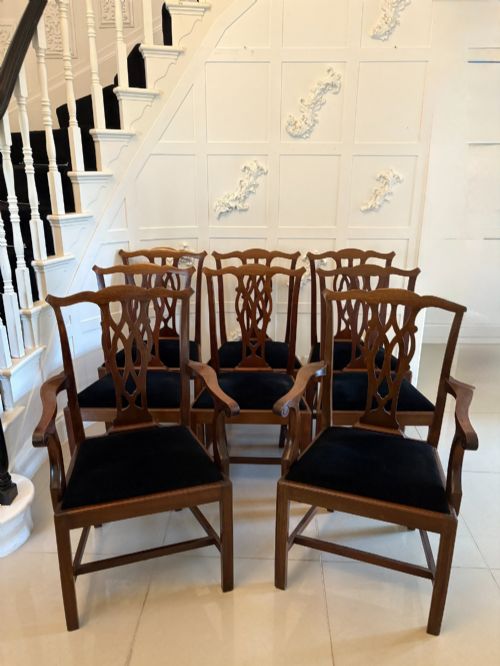
- The vertical wooden strip down the centre of a chair back, often pierced or carved in styles like the Chippendale pattern.
- Windsor
- A traditional wooden chair built with a solid saddle-shaped seat into which the legs and spindle back are wedged.
- Shield back
- A chair back shaped like a shield, popular in late eighteenth-century and revival dining seats.
- Side chair
- A chair without arms, built primarily for use around a dining table.
Vintage Dining Seats: Frequently Asked Questions
How do I match chairs to a table?
Consider the wood tone and the period style of the table when selecting seating. Mixing painted or rush-seated country chairs with a polished mahogany table creates a more collected look.
Ensure the seat height allows comfortable clearance beneath the table apron for diners.
Are large sets harder to find?
Complete sets of eight, ten, or twelve chairs are less common than pairs or sets of four and six. Many larger groups were split up over time.
Matching larger sets require careful attention to minor variations in timber grain and turning.
How do I care for antique wood seats?
Keep wooden seats away from direct heat sources and strong sunlight to prevent the timber from drying out and splitting. Apply a suitable wax polish periodically to nourish the surface.
Check joints regularly for movement, particularly on chairs subjected to daily use.
What is the difference between a side chair and an armchair?
Side chairs lack armrests and are designed to maximise seating capacity around a dining table. Armchairs, or carvers, feature arms and typically sit at either end of the table.
Carvers share the stylistic details of the matching side chairs but offer a wider seating proportion.