

Vintage Desk
A vintage desk brings solid timber and traditional craftsmanship to a workspace, offering sturdy drawers and leather writing surfaces that modern alternatives lack.
Vintage Desk
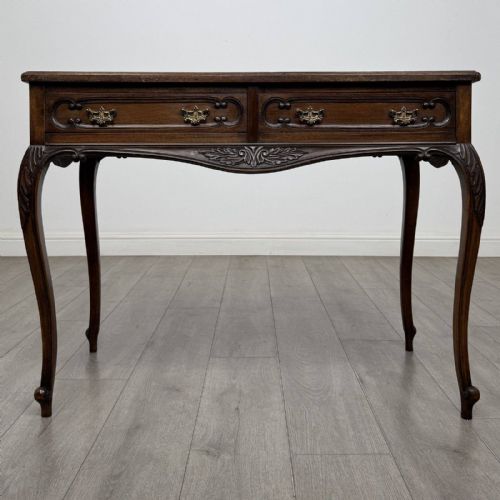
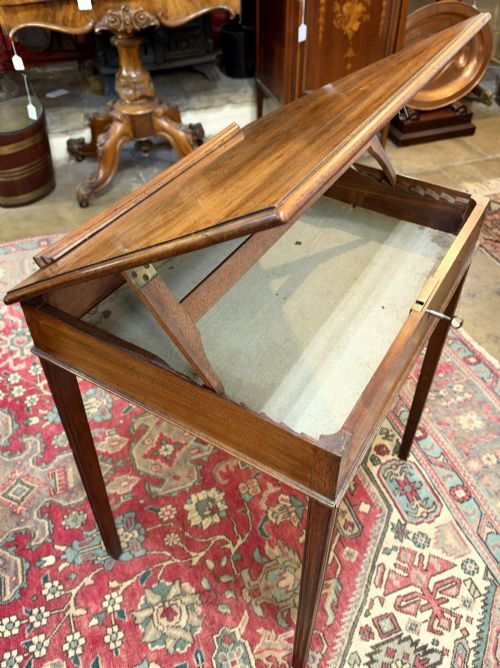
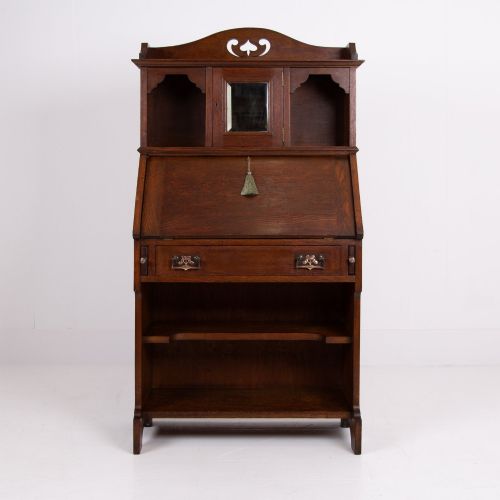
A vintage desk serves as a functional workspace built in past centuries, spanning robust styles from the Victorian and Edwardian eras. Buyers searching for a vintage desk typically encounter heavy timber forms, ranging from twin pedestal writing tables to compact oak bureaux.
The selection includes freestanding mahogany pieces, oak partners desks, and lighter writing tables designed for home offices. These items provide character and practical surface area through fitted interiors and multiple drawers.
Originating across the nineteenth and early twentieth centuries, these writing surfaces display regional cabinetmaking traditions using dense hardwoods. Each piece reflects the functional requirements of historical studies and home offices.
How they were made
Cabinetmakers utilised solid timbers such as mahogany, oak, and burr walnut, often pairing them with brass hardware and hand-tooled leather writing surfaces. Construction relied on traditional joinery methods that ensured long-term durability for heavy daily use.
Secondary materials like glass, iron, and fabric appear on associated accessories and interior compartments. Surfaces were polished to highlight natural grain patterns, while specialised pieces incorporated hand-painted bronze or satinwood inlay details.
Vintage Desk Retail Price Guide 2026
Typical asking prices for vintage desk among the pieces listed under this phrase on Sellingantiques today, from the lower quarter to the upper quarter. They describe what is for sale here now, not the wider market.
Listings feature mahogany, oak, and burr walnut desks spanning the Victorian, Edwardian, and Georgian periods.
What varies in quality
Quality rests in the selection of timber figures, such as burr walnut or figured oak, and the precision of the underlying joinery. Superior examples maintain original hardware, intact leather inserts, and internal drawer linings that demonstrate careful workshop execution.
The division between standard utility pieces and finer productions involves the subtlety of carved details, the smoothness of drawer action, and the integrity of structural frames. Maker attribution also separates standard commercial outputs from bespoke cabinetmaker commissions.
W Walker and Sons London·E Gomme
The Vintage Desk Glossary
- Pedestal desk
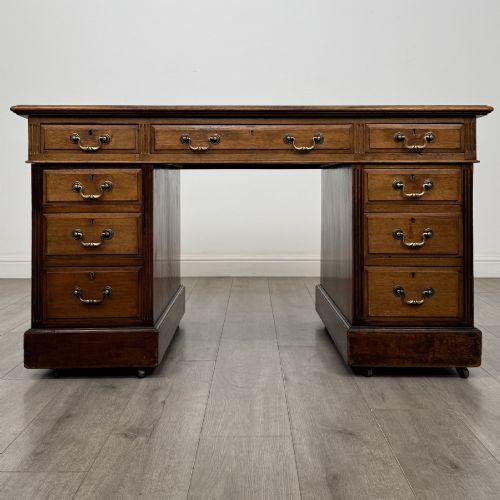
- A heavy writing table supported by two banks of drawers flanking a central kneehole space. These large pieces often feature inset leather surfaces.
- Bureau
- A sloping flap desk that opens to reveal a fitted interior of small drawers and pigeonholes. Edwardian and Georgian examples in oak and mahogany demonstrate this compact form.
- Partners desk
- A double-sided writing table designed for two people to work opposite one another. These large formats incorporate banks of drawers on both faces.
- Secretaire
- A cabinet or bookcase incorporating a pull-down writing drawer that conceals internal compartments. This form conceals functional workspace within formal cabinetry.
- Campaign writing box
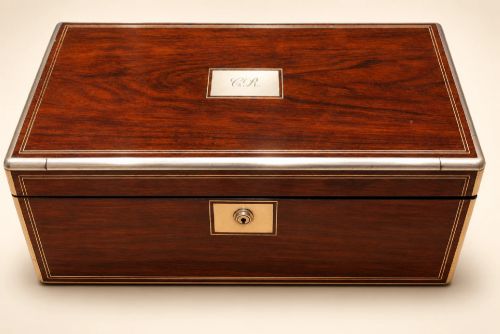
- A portable wooden box with brass corners designed for travel and field writing. These pieces fold out to create a sloped writing surface.
Vintage Desk: Frequently Asked Questions
How do I clean a leather desk top?
Wipe the leather gently with a slightly damp cloth to remove dust, avoiding harsh chemical cleaners that damage old surfaces.
Apply a suitable leather balm afterwards to maintain flexibility and preserve the historic finish.
What is a partners desk?
A partners desk is a large workspace featuring drawers and cupboards accessible from both sides of the furniture.
This design allowed two individuals to sit opposite each other while managing paperwork in shared offices.
How do I date an oak desk?
Examine the construction methods, drawer linings, and hardware styles to determine the likely period of manufacture.
Victorian and Edwardian pieces show machine assistance, while earlier 18th-century examples display hand-cut joinery.
Can I use a antique bureau daily?
These drop-front writing surfaces provide sturdy pull-down flaps supported by wooden brackets or internal runners.
Users should avoid placing excessive weight on the open writing slope to protect historical hinges.