

Vintage Desk Seating
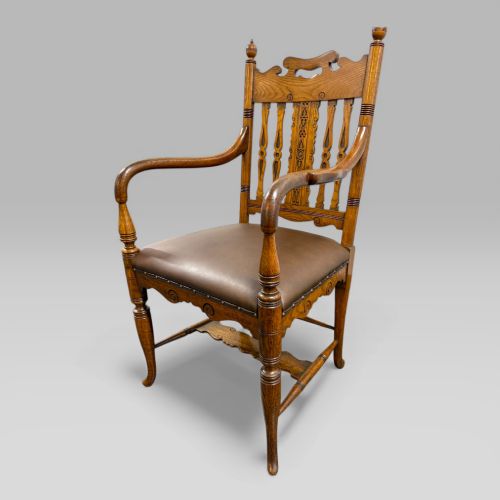
Vintage desk seating spans sturdy oak office chairs, leather library armchairs, and elm Windsor seats designed for practical daily work.
Vintage Desk Seating
Vintage desk seating brings together a wide variety of forms intended for study, writing, and administrative tasks across multiple centuries. Buyers looking at this selection will find standard desk chairs, swivel office models, and library armchairs originating from diverse British and continental periods.
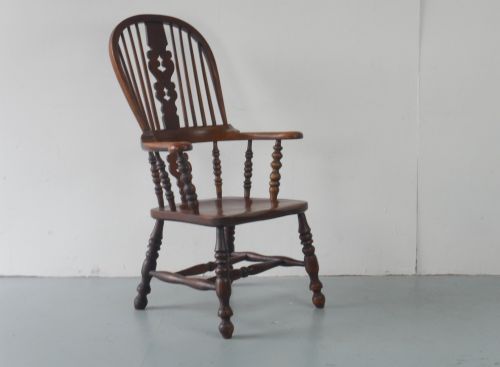
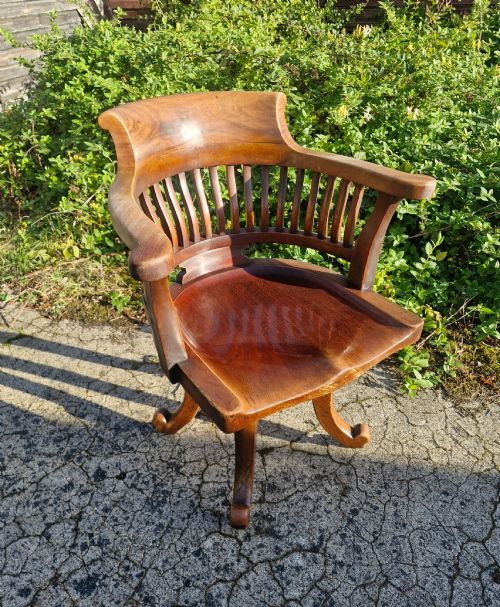
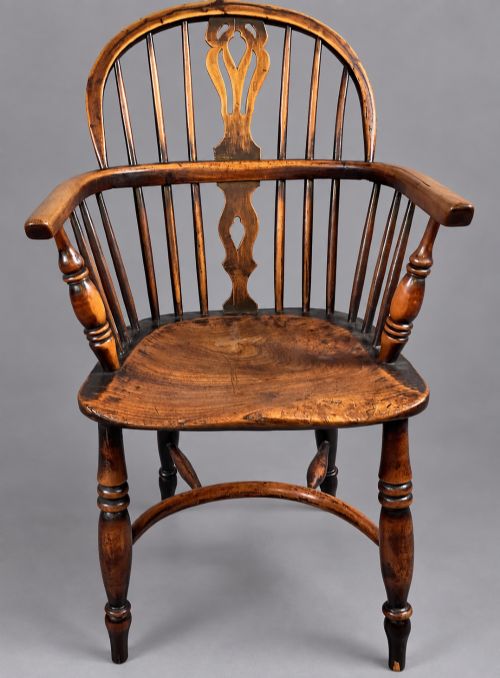
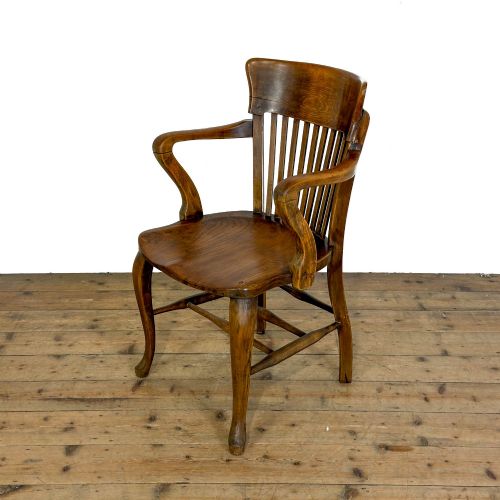
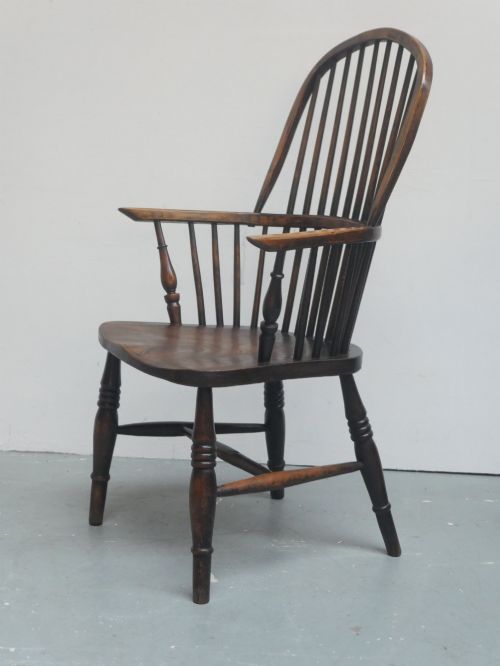
The most common pieces on this page are nineteenth-century and early twentieth-century wooden chairs, particularly elm and ash Windsor variants alongside revolving oak office designs. These seating options reflect the practical evolution of domestic and commercial workspaces.
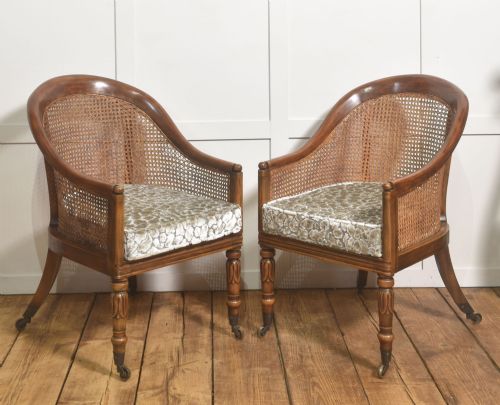
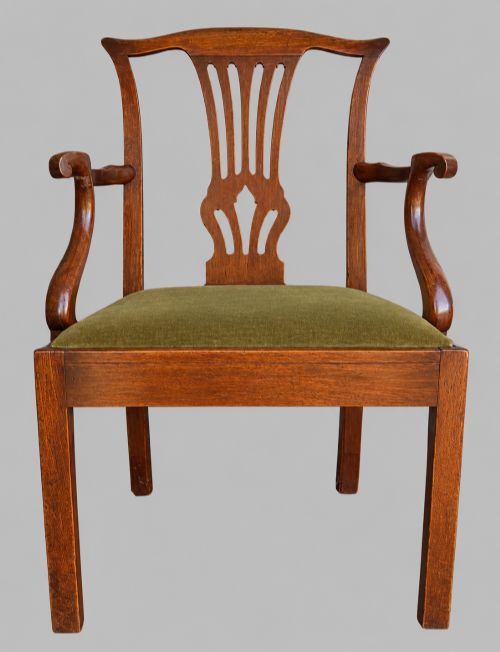
The selection also includes mahogany Gainsborough chairs and occasional seating adapted for writing tables, showing the crossover between formal domestic furniture and functional work seats.
Materials and Construction
Construction relies heavily on traditional timber framing, utilising dense hardwoods such as mahogany, oak, elm, and beech to ensure structural integrity under daily use. Cabinetmakers shaped solid planks and turned spindles to build supportive frames for writing and office tasks.
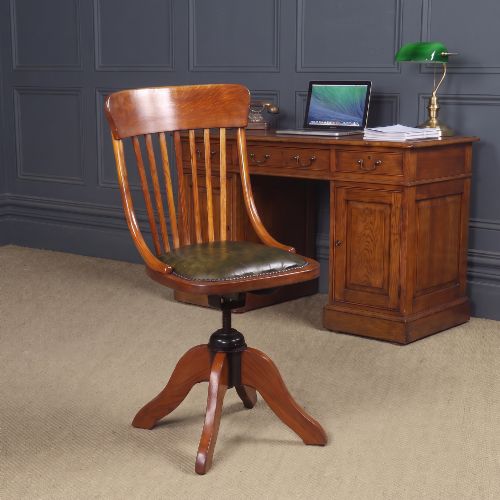
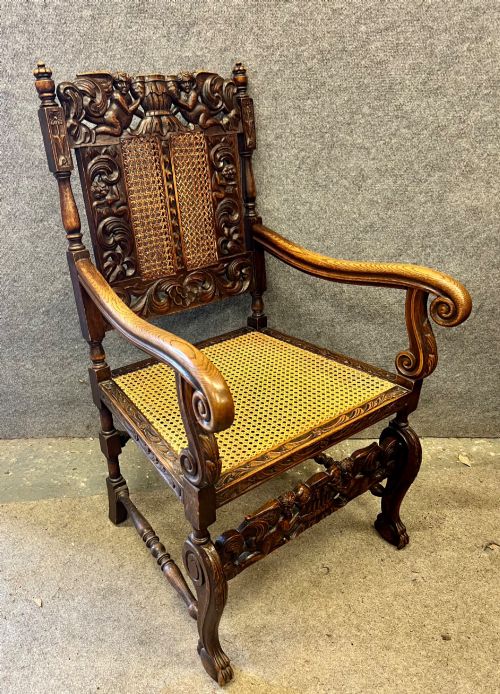
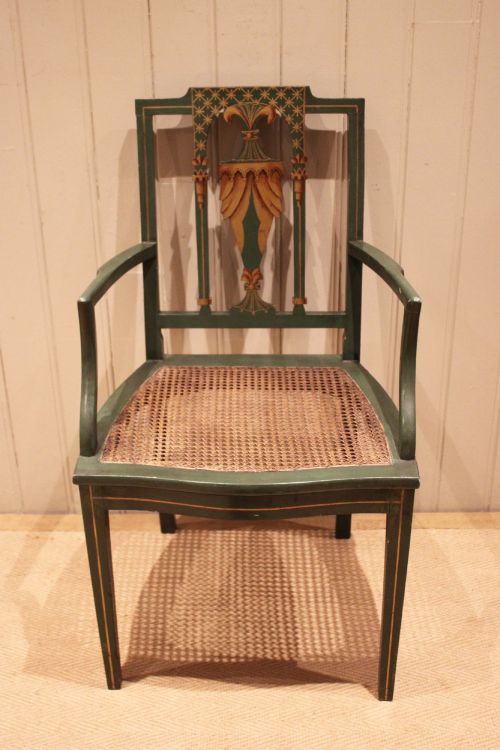
Many examples incorporate supple leather upholstery, brass castors, and cane seating panels to add comfort and mobility. These secondary materials are integrated directly into the wooden framework using traditional joinery and brass fixings.
Listings feature eighteenth-century mahogany, Victorian oak, and regional elm timbers built into functional workspace seating.
Craftsmanship and Proportion
The distinction between standard utility seating and finer examples lies in the precision of the joinery and the selection of timber figure. Superior pieces exhibit well-balanced proportions, carefully turned spindles, and seamless integration of moving swivel mechanisms or brass castors.
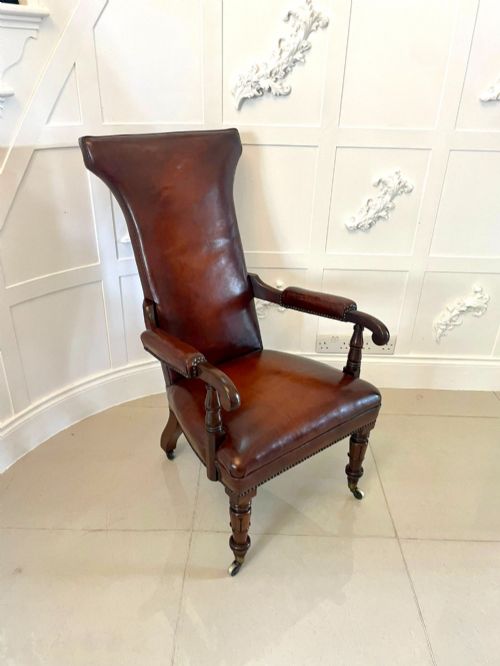
Finer library and Gainsborough chairs separate themselves through hand-carved details, premium hide upholstery, and heavy framing that maintains stability through decades of use.
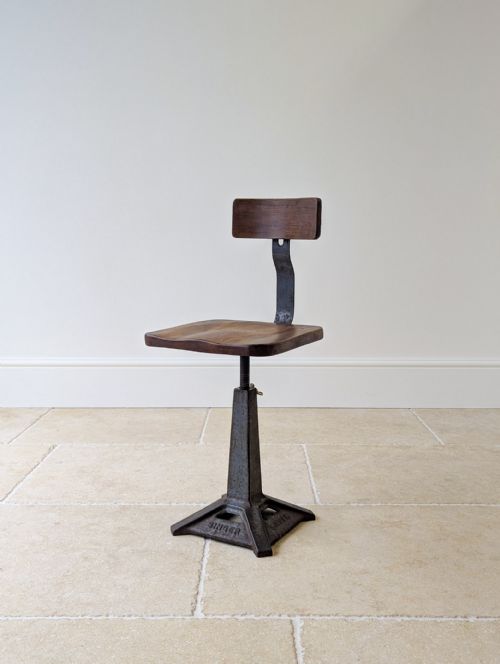
Singer
The Vintage Desk Seating Glossary
- Windsor chair
- A wooden chair built with a heavy solid seat into which the legs and back spindles are separately bored and wedged. This traditional construction method provides immense durability.
- Gainsborough chair
- A wide, upholstered armchair with open padded arms, standing on four legs, typically dating from the eighteenth century. They were originally designed for writing desks and libraries.
- Smokers bow
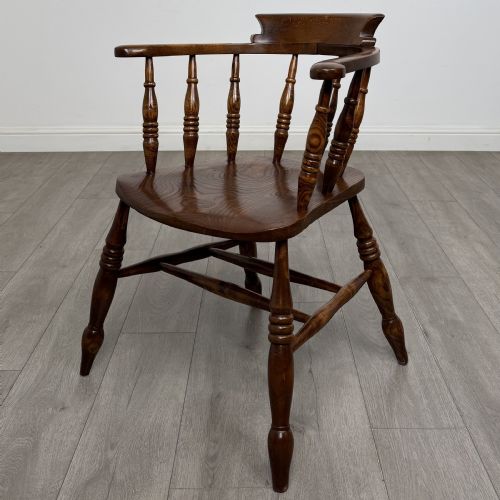
- A low-backed Windsor armchair with a rounded, continuous arm rail supported by turned spindles. These robust chairs were common in country houses and offices.
- Revolving desk chair
- An office chair mounted on a central pivot mechanism, often featuring adjustable height and a cruciform base with castors. They appeared extensively in late Victorian and Edwardian workspaces.
- Cane seat
- A seating surface woven from rattan or split cane material, offering a flexible and lightweight platform. It appears frequently on Edwardian and Regency chairs.
Vintage Desk Seating: Frequently Asked Questions
How do I choose the right desk chair height?
Consider the fixed height of your writing table against the seat deck of the chair, keeping in mind that vintage models lack modern gas-lift pistons.
Many nineteenth-century office chairs feature swivel mechanisms or screw adjustments to help tailor the height for comfortable daily typing or writing.
Are swivel desk chairs sturdy enough for daily use?
Period revolving chairs utilise heavy cast iron and wooden spider bases designed to support constant movement and weight.
Regular maintenance of the central spindle and lubrication of the moving parts keeps these mechanisms operating smoothly for modern workspaces.
What is the difference between a Windsor and a Gainsborough desk chair?
Windsor chairs are constructed entirely from turned wood and solid contoured seats, emphasising rustic structural framing and durability.
Gainsborough chairs are fully upholstered armchairs covered in leather or fabric, offering a formal appearance suited for traditional libraries.
How do I care for antique leather on an office chair?
Apply traditional leather balms sparingly to nourish the hide and prevent drying out, avoiding harsh modern chemical cleaners.
Keeping the leather conditioned preserves the original hand-dyed finish and protects the surface from daily wear.