


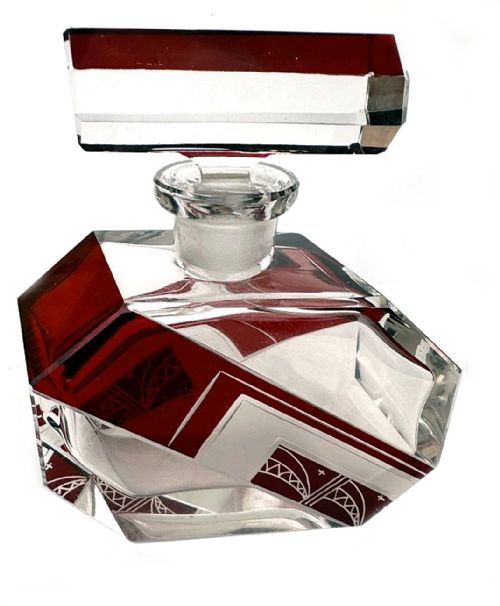


Vintage Czech Glass
These pieces of vintage czech glass bring sharp geometric lines and rich coloured enamel directly from the workshops of Bohemia into modern rooms.
Vintage Czech Glass
When someone searches for vintage czech glass, they encounter items shaped primarily during the Art Deco period of the 1920s and 1930s, alongside earlier Victorian and 1900s Bohemian works. The selections on this page concentrate heavily on tableware and dressing table accessories produced in central Europe.
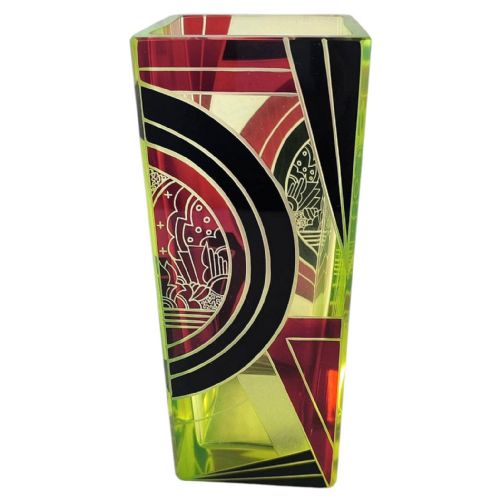
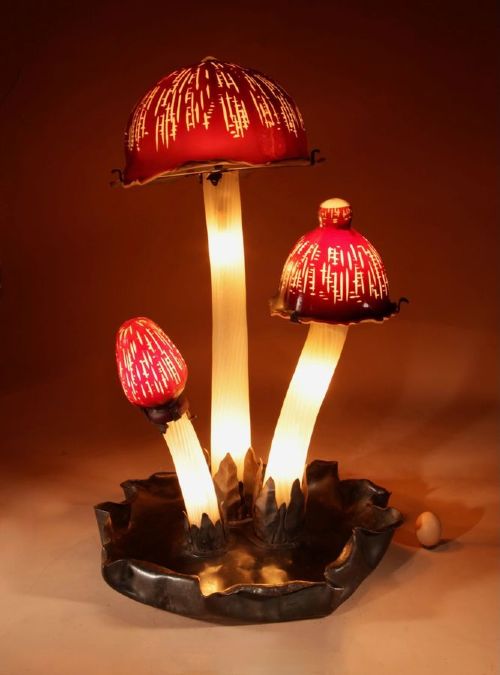
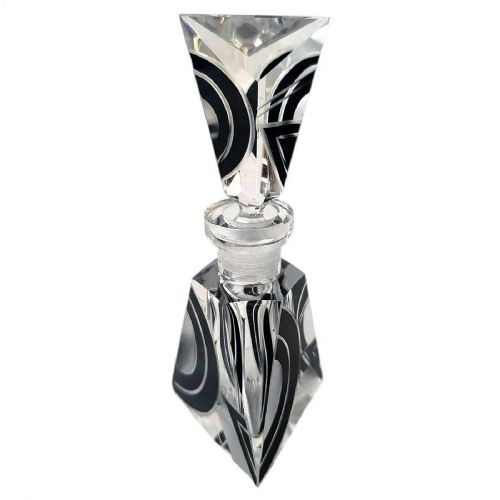
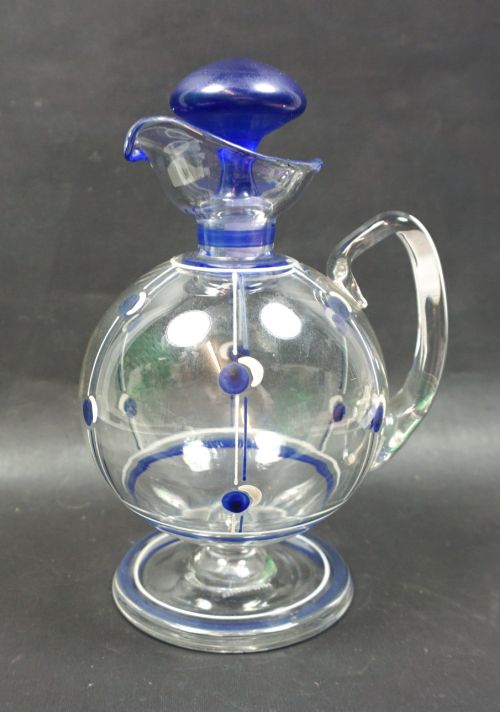
Vases, decanter sets, scent bottles, table lamps and centrepiece bowls dominate the available forms. Buyers most frequently meet geometric decanter sets and moulded perfume bottles bearing the distinct aesthetic of the interwar years.
Production spans from large table lamps and wine jugs down to small liqueur glasses and atomisers. The historical output draws on rich regional traditions originating in Bohemia and Czechoslovakia.
How they were made
Glassmakers utilised lead crystal, cut glass, and moulded glass as the primary mediums for shaping vessels, often incorporating uranium glass for distinct optical reactions under light. These materials allowed artisans to manipulate silhouettes into sharp squares, globes, and figural contours.
Decoration relied heavily on applied enamel, silver overlay, chrome mounts, and gold leaf applied to the finished glass surfaces. Etching provided intricate geometric patterns across decanter sets and vases.
Workshops combined heavy cutting with manual enamelling, particularly on lead crystal blanks produced across Czech factories. The resulting pieces combined clear or coloured glass bodies with tactile surface ornamentation.
Vintage Czech Glass Retail Price Guide 2026
Typical asking prices for vintage czech glass among the pieces listed under this phrase on Sellingantiques today, from the lower quarter to the upper quarter. They describe what is for sale here now, not the wider market.
Listings feature periods spanning from the Victorian era through the 1930s, with Art Deco dominating the material.
What varies in quality
The precision of geometric cutting and the depth of the crystal define the upper tier of production. Sharp facets catch light cleanly, distinguishing finer factory output from simpler moulded items.
The execution of enamel work and the integration of metal components such as silver or chrome determine the refinement of dressing table items. Intricate hand-painted patterns on glass require steady control that separates master workshops from standard commercial output.
Karl Palda·Rudolf Hlousek·Libochovice·Hermanova
The Vintage Czech Glass Glossary
- Art Deco
- A design style characterised by sleek geometric shapes, streamlined forms, and bold colours popular during the 1920s and 1930s. It heavily influences the lines of these Czech vessels.
- Uranium glass
- Glass that contains trace amounts of uranium dioxide to produce a distinctive green or yellow glow under ultraviolet light. It appears frequently in interwar decorative objects.
- Lead crystal
- Glass containing lead oxide to increase weight, clarity, and brilliance. This material provides the heavy, resonant body found in high-end decanters and vases.
- Silver overlay
- A decorative technique where pure silver is bonded to the exterior of a glass vessel in ornate patterns. It requires careful chemical deposition before etching.
- Atomiser
- A spray bottle mechanism fitted to a perfume vessel, usually operated via a bulb and mesh hose. These fittings complete many dressing table scent bottles.
Vintage Czech Glass: Frequently Asked Questions
What is vintage czech glass?
Vintage czech glass refers to decorative and functional glassware produced in Bohemia and Czechoslovakia, predominantly during the early twentieth century. These items include heavy decanter sets, perfume bottles, and geometric vases.
The aesthetic leans heavily into Art Deco modernism, though Victorian and 1900s pieces also emerge. Regional glasshouses combined traditional blowing with innovative cutting and enamelling techniques.
How were czech decanter sets used?
These sets served as functional serveware for spirits and liqueurs during social gatherings in the home. Matching glasses accompanied a central decanter on a tray.
Beyond utility, they functioned as display items on sideboards and drinks cabinets. Their bright colours and geometric cutting made them centrepieces of interwar interior styling.
How do I style vintage czech glass?
Positioning these pieces near natural light allows coloured glass and cut crystal to project tones across a room. Vases and scent bottles work well on dressing tables or mantels.
Grouping decanter sets together on a tray creates a focal point on a sideboard. The strong geometric forms complement both modern and traditional interior settings.
How do I identify czech glass periods?
Victorian and 1900s pieces often feature heavy blue or green coloration with elaborate floral or animal motifs. They reflect traditional Bohemian craftsmanship before industrial modernist shifts.
Items from the 1920s and 1930s adopt sharp Art Deco geometry, clear crystal bodies, and precise enamel work. Makers like Karl Palda defined this interwar period with distinct square and globe silhouettes.