





Vintage Cutlery Carrier
A vintage cutlery carrier keeps serving implements organised and portable, offering both robust utility and rustic charm.
Vintage Cutlery Carrier
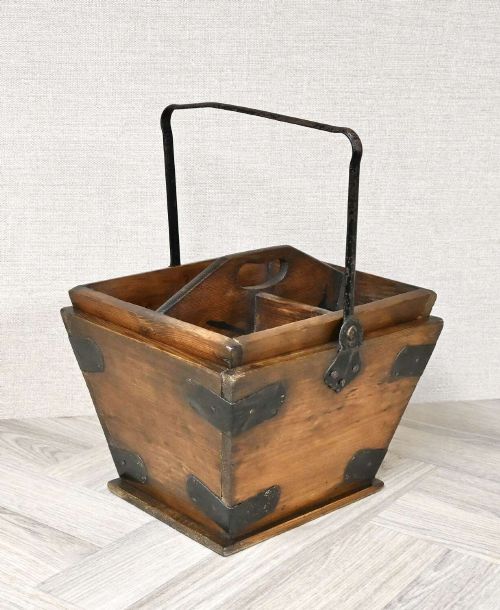
A vintage cutlery carrier is a portable wooden or metal box designed to transport knives, forks and spoons between kitchen and dining spaces. These pieces encompass utilitarian work boxes, housekeeper's carries, footman's trays and kitchen buckets.
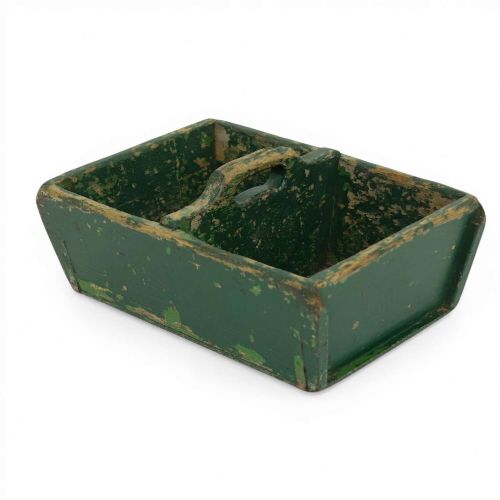
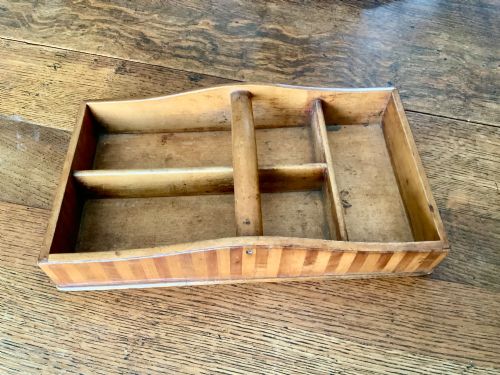
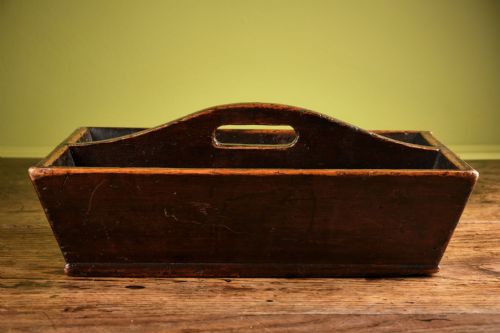
Most examples found on this page date from the Georgian, Victorian and Edwardian periods, reflecting domestic routines of the nineteenth and early twentieth centuries. Forms range from simple partitioned pine trays to sturdy oak and fruitwood caddies with central upright handles.
Originating largely from British and Scandinavian country houses, these utilitarian items served kitchen maids, footmen and costermongers alike. Buyers encounter Welsh vernacular styles, rustic Scandinavian pine boxes and mahogany butler's trays.
How they were made
Makers constructed these carriers using solid timbers such as pine, oak, fruitwood, sycamore and mahogany, selected for durability in working environments. Painted finishes and toleware surfaces also appear, offering protection and colour to metal and wood containers.
Construction techniques focus on practical utility, featuring sturdy lap joints, nailed sides and central upright partitions that double as handles for lifting heavy loads of cutlery and tools.
Vintage Cutlery Carrier Retail Price Guide 2026
Typical asking prices for vintage cutlery carrier among the pieces listed under this phrase on Sellingantiques today, from the lower quarter to the upper quarter. They describe what is for sale here now, not the wider market.
What varies in quality
Quality rests upon the selection of timber and the integrity of the original construction, distinguishing robust artisan work from standard domestic utility pieces. Thick hardwoods like oak and mahogany or well-joined fruitwood indicate superior longevity compared to basic softwood.
Wear patterns and surface patination tell the story of functional use, where untouched aged timber and original paint surfaces command greater interest than heavily restored examples.
The Vintage Cutlery Carrier Glossary
- Trug
- A shallow wooden basket or container traditionally used for gathering garden produce or carrying tools and tableware. These pieces often feature a sturdy arched handle running the length of the body.
- Vernacular
- Everyday objects built by local craftspeople using regional materials and traditional methods rather than following formal academic design styles. This approach creates distinct local characteristics in furniture and utility items.
- Toleware
- Metalware, usually iron or steel, coated with a lacquer or enamel and then hand-painted. It was widely used for household buckets, trays and carriers during the nineteenth century.
- Caddy
- A small box or container originally made for storing tea, but later adopted for cutlery, bottles and general household storage. They typically include internal compartments and a carrying handle.
Vintage Cutlery Carrier: Frequently Asked Questions
What was a cutlery carrier used for?
A cutlery carrier transported knives, forks and spoons from the scullery to the dining room in large houses. They kept serving implements organised and ready for meals.
Servants utilised these wooden boxes and trays daily for clearing tables and resetting dining spaces efficiently.
How do I date a carrier?
Dating relies on identifying the timber species, construction joints and overall style relative to Georgian, Victorian or Edwardian design periods. Mahogany and fine dovetailing often point to the earlier Georgian era.
Later nineteenth-century examples frequently utilise pine, oak or painted toleware in more rustic vernacular formats.
Can I use these for modern dining?
These carriers work well on modern dining tables or kitchen islands for holding everyday cutlery, napkins or condiments. Their sturdy partitions keep items neatly separated during meals.
They also function as desk organisers or garden trugs, fitting easily into contemporary living spaces.
How should I clean the wood?
Dust the surface regularly with a dry cloth and apply a neutral beeswax periodically to nourish the aged timber. Avoid soaking wooden carriers in water or using harsh modern chemical cleaners.
Preserving the original surface patination maintains the character acquired through decades of utilitarian service.