

Vintage Cut Crystal Chandelier
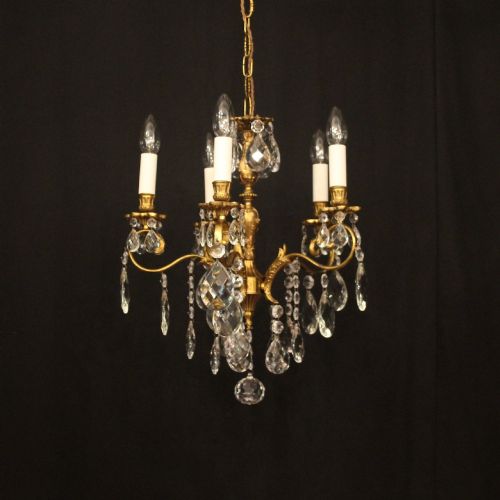
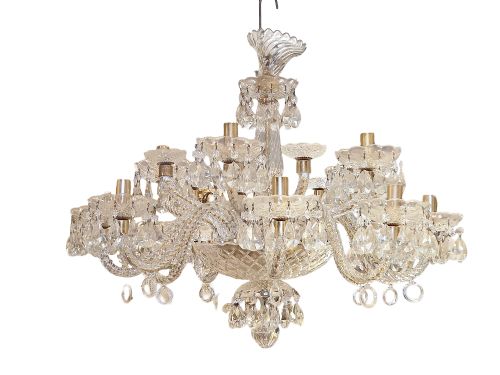
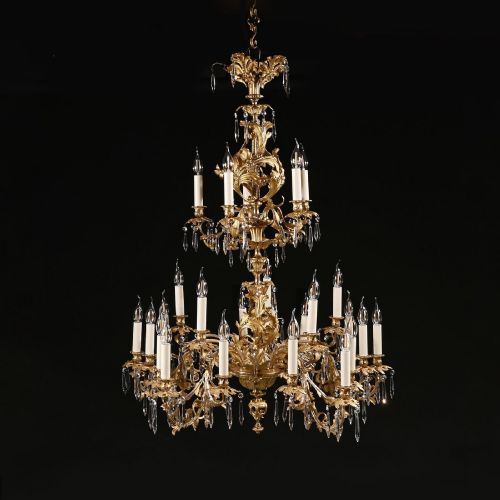
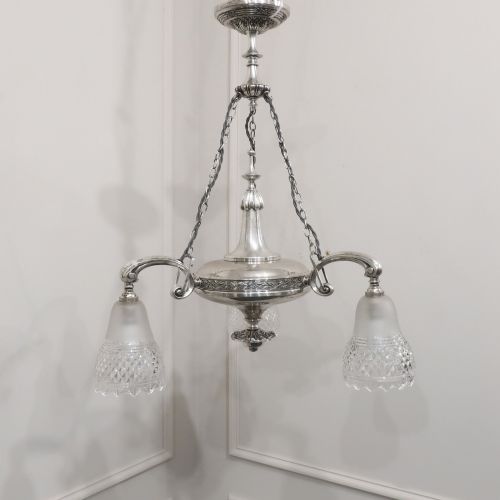
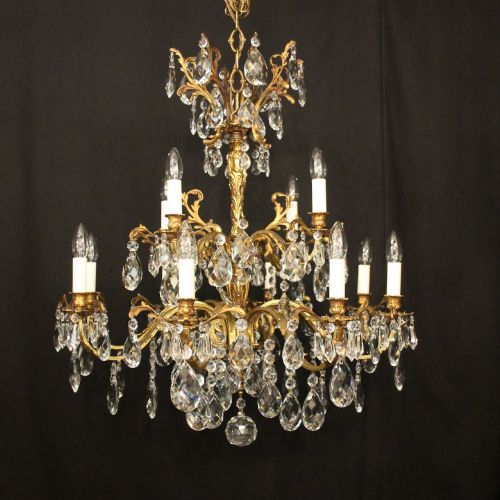
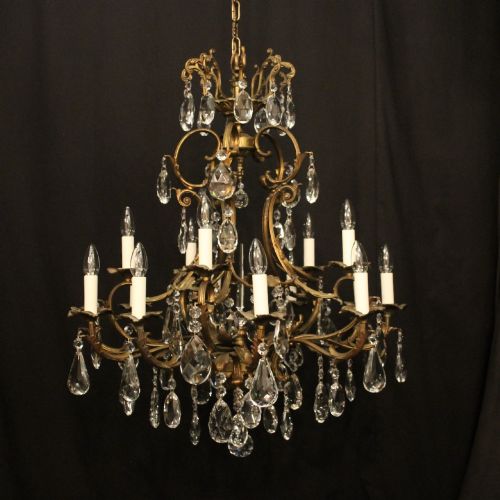
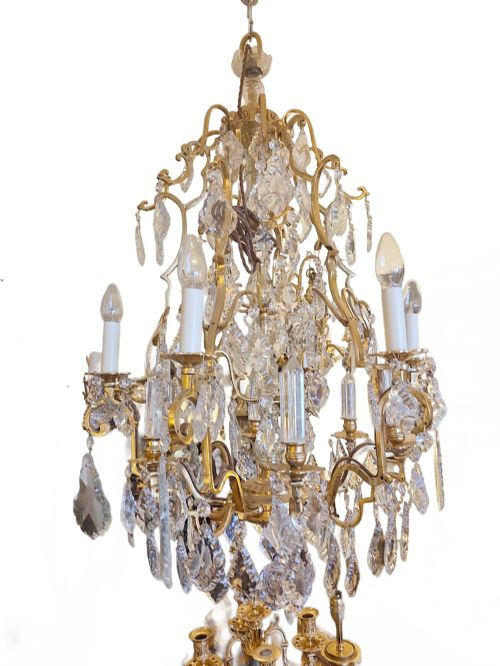
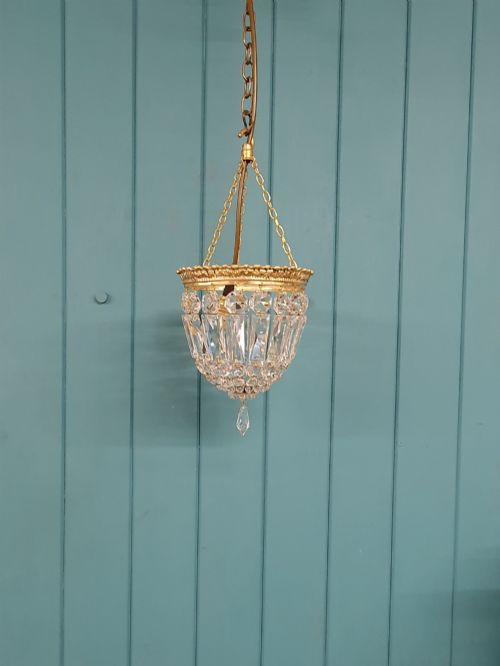
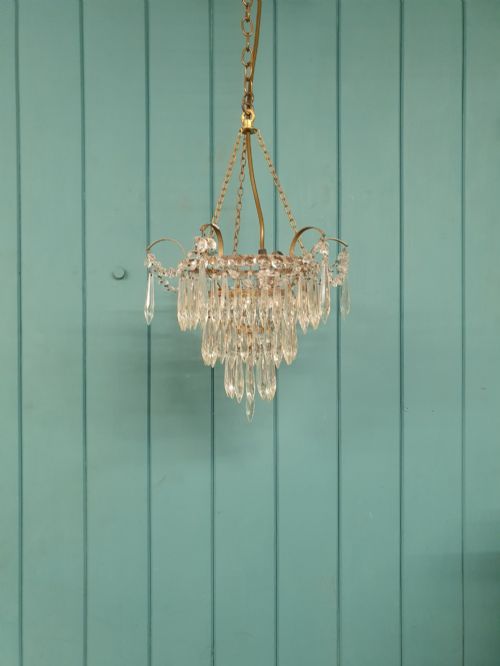
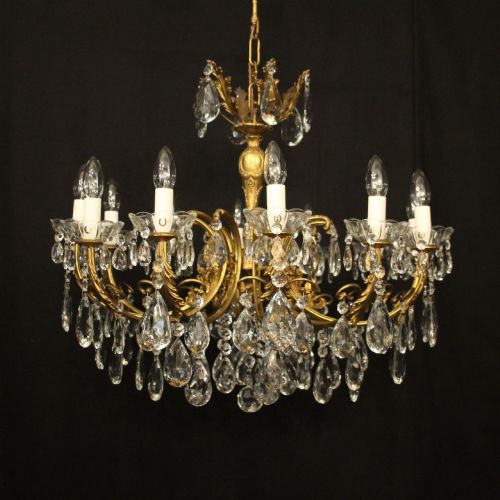
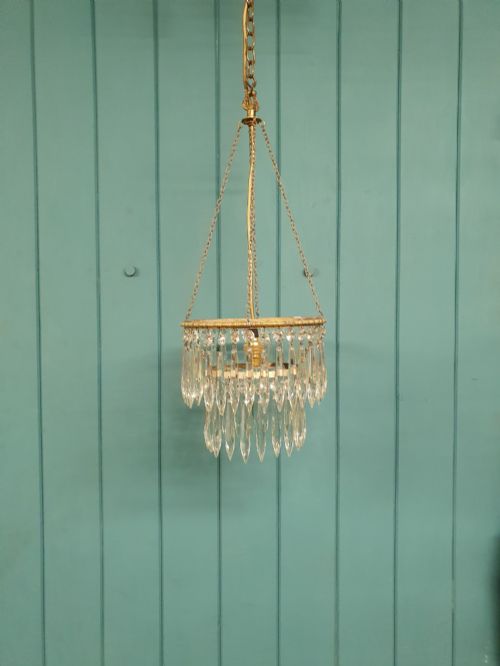
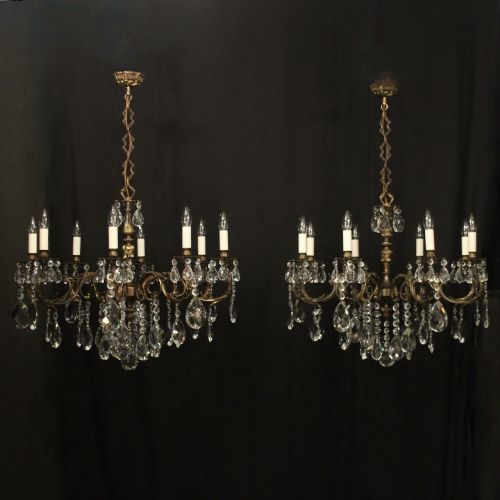
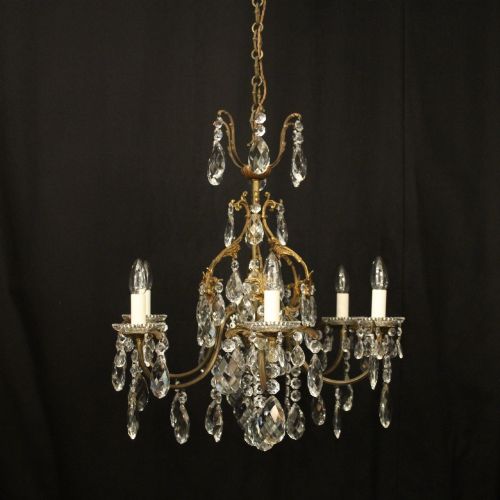
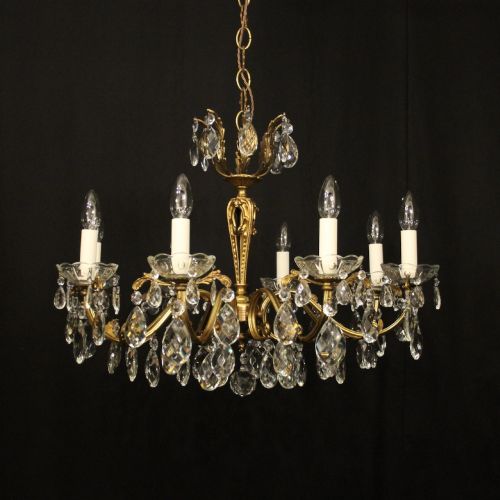
These vintage cut crystal chandelier pieces illuminate a room with refracted light from brass, gilt bronze and glass frames.
Vintage Cut Crystal Chandelier
When searching for a vintage cut crystal chandelier, buyers encounter ceiling lighting spanning the nineteenth century through the nineteen-thirties. The selection includes French Chateau, French Empire, French Rococo, and Louis Revival styles.
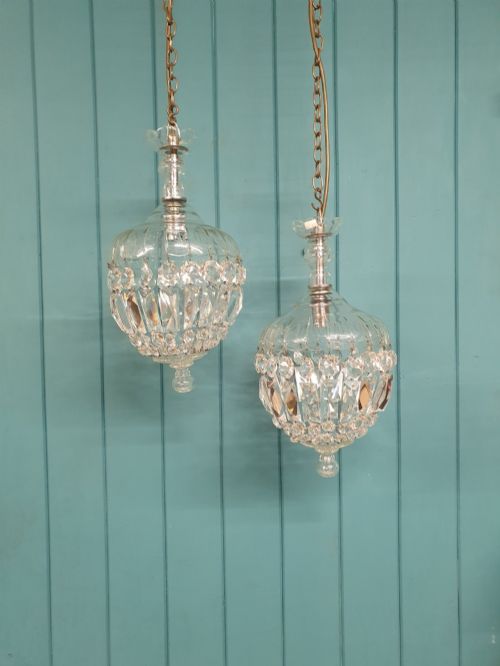
Most examples originate from the early twentieth century, including Edwardian pieces alongside nineteen-twenty and nineteen-thirty designs. Forms range from compact basket and dome top fixtures to large multi-arm ballroom chandeliers.
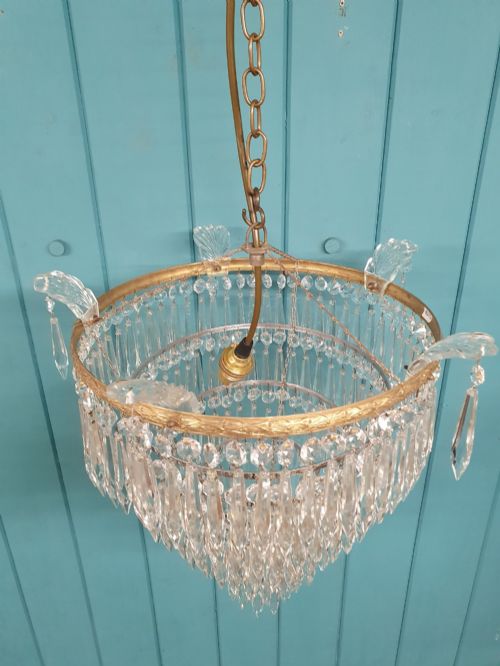
Common configurations feature brass, gilt brass, gilt bronze, and ormolu framing hung with cut glass and crystal. Specialised forms such as tent chandeliers, waterfall designs, and plafonieres also appear in the listings.
How they were made
Frames rely on cast and worked brass, gilt bronze, and ormolu to provide structural support for multiple arms and candle branches. Metal components often receive gilded or silver gilded finishes to enhance the reflective quality of the fixture.
Glass and crystal elements are individually cut, polished, and suspended using wire ties to form bags, spikes, tents, and lustres. Selected Italian pieces incorporate decorative elements such as porcelain flowers alongside standard glass components.
Vintage Cut Crystal Chandelier Retail Price Guide 2026
Typical asking prices for vintage cut crystal chandelier among the pieces listed under this phrase on Sellingantiques today, from the lower quarter to the upper quarter. They describe what is for sale here now, not the wider market.
One tiny Italian chandelier arrives complete with delicate porcelain flowers tucked into the metalwork.
What varies in quality
The sophistication of the metalwork defines the upper tier of production, with chased gilt bronze and heavy cast brass framing outperforming simpler sheet metal bodies. Richer gilding and more intricate arm configurations distinguish grander salon pieces from domestic fixtures.
Crystal composition and cutting depth determine the brilliance of the refraction. Heavier cut glass drops with sharp facets and complete arrays of matching lustres create a denser play of light than thinner, pressed glass alternatives.
The Vintage Cut Crystal Chandelier Glossary
- Tent chandelier
- A lighting fixture featuring an upper canopy of converging glass strings or beads that drop outward to form a tent shape above the lower ring of lights.
- Basket chandelier
- A compact lighting form where crystal drops enclose the lower portion in a rounded or bowl-shaped basket configuration.
- Ormolu
- A metallic technique utilising a gold-coloured alloy applied to bronze or brass to simulate solid gold enrichment.
- Lustre
- A cut glass pendant or drop hung from the arms and crown of a chandelier to refract light.
- Plafoniere
- A ceiling light fixture mounted flush or close to the ceiling surface rather than suspended on a chain.
Vintage Cut Crystal Chandelier: Frequently Asked Questions
How do I hang a heavy chandelier safely?
Suspension requires fixing directly into ceiling joists or using a substantial metal hook rated for the total weight of the brass and crystal assembly. Professional electrical installation ensures the ceiling box supports the load securely.
Heavier multi-arm fixtures demand independent steel safety cables alongside the main electrical chain to prevent accidental drops.
What is the difference between glass and crystal?
Crystal contains lead oxide additives that increase the refractive index, producing sharper prismatic light dispersion and heavier physical weight than standard glass. Cut crystal pieces catch and bend light with greater intensity.
Plain glass components lack the dense lead content, resulting in softer reflections and lighter overall construction.
How do I clean a crystal chandelier?
Maintenance involves spraying a specialist non-drip crystal cleaner onto the hanging drops while placing absorbent towels beneath the fixture to catch runoff. Individual stones can also be wiped by hand using a lint-free cloth.
Harsh chemical solvents should be avoided to protect the underlying gilt bronze, brass, or ormolu surface finishes from damage.
Which period do these chandeliers come from?
The lighting dates predominantly from the early twentieth century, spanning Edwardian examples alongside nineteen-twenty and nineteen-thirty French production. Nineteenth-century survivals also form part of the documented range.
Stylistic revivals such as Louis Revival and French Empire heavily influence the decorative vocabulary of these eras.