



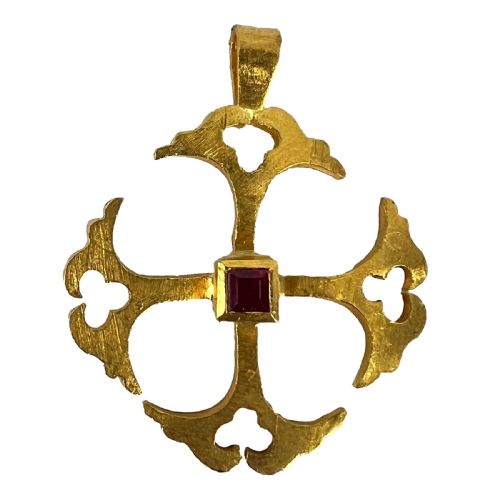


Vintage Crucifix Jewellery
Vintage crucifix jewellery brings together devotion and ornament across gold, silver, sapphire, diamond and pearl.
Vintage Crucifix Jewellery
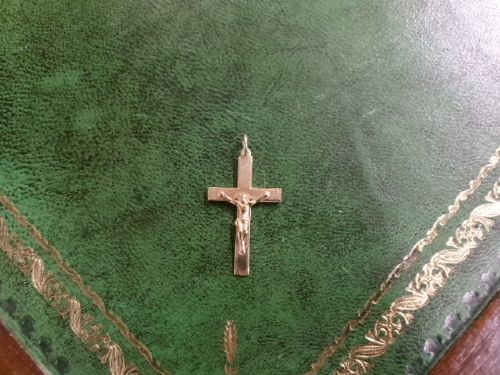
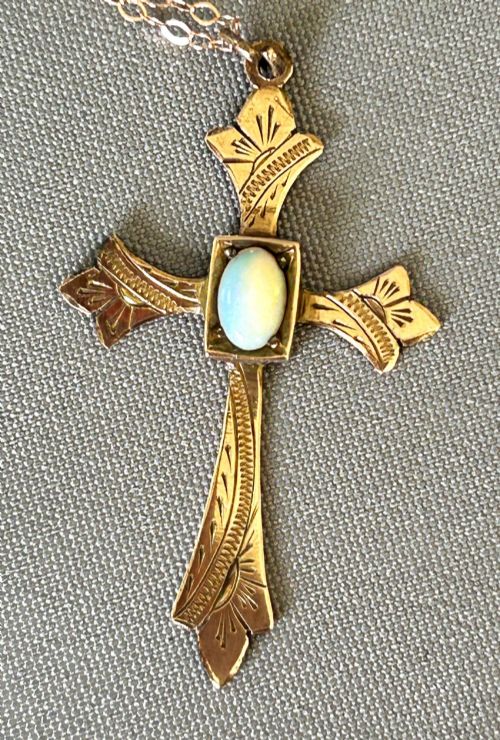
Vintage crucifix jewellery comprises crosses and pendants spanning Victorian, Edwardian, Arts and Crafts, Mid-Century and Modernist periods. These pieces serve primarily as devotional pendants and necklaces, often adapted as brooches or combined with chains.
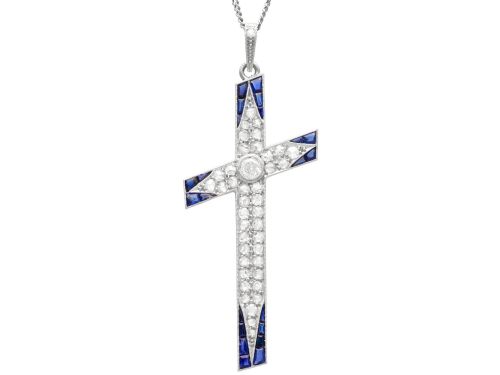
The materials range from modest silver and 9ct gold to substantial 15ct and 18ct yellow gold, alongside platinum and 9ct white gold settings. Gemstones such as sapphire, diamond, ruby, amethyst, moonstone, blue topaz and pearl frequently enrich the designs.
Buyers will encounter diverse aesthetic traditions, from ornate Victorian engravings and Gothic Revival styling to clean-lined Mid-Century and Contemporary interpretations. Each era brings distinct metalwork and stone-setting techniques to the Christian cross form.
How they were made
Goldsmiths shaped crosses from various purities of gold, including 9ct, 15ct, 18ct and 24K, as well as platinum and silver. Metalwork techniques involved hand engraving, casting and wirework to construct the structural frame of the pendant.
Stone-setting methods included grain settings for small diamonds, bezel settings for larger sapphires and rubies, and claw mounts that secured multi-gem arrangements. Pearls were typically half-drilled and mounted on pins with adhesive, while marcasite stones were individually riveted or glued into silver channels.
Vintage Crucifix Jewellery Retail Price Guide 2026
Typical asking prices for vintage crucifix jewellery among the pieces listed under this phrase on Sellingantiques today, from the lower quarter to the upper quarter. They describe what is for sale here now, not the wider market.
Gemstones recorded across the available inventory include sapphire, diamond, ruby, amethyst, moonstone, blue topaz and pearl.
What varies in quality
Quality diverges significantly in the selection and weight of precious metals and gemstones utilised in the construction. Pieces incorporating substantial gold weights, platinum frameworks and high-carat diamonds or sapphires occupy the upper tier of craftsmanship.
The refinement of hand engraving, stone symmetry and the structural integrity of the suspension loop define the standard of execution. Earlier Victorian and Edwardian examples often display intricate detailing that contrasts with simpler Mid-Century mass production.
The Vintage Crucifix Jewellery Glossary
- Crucifix
- A cross bearing the figure of Jesus Christ, distinguishing it from a plain Latin cross. These devotional items carry strong Christian symbolism.
- Pendant
- An ornament that hangs from a necklace, chain or brooch fitting. They are designed to drop freely when worn.
- Marcasite
- Small faceted crystals of iron pyrite set into silver jewellery. They produce a metallic sparkle reminiscent of dark steel.
- Hallmark
- An official stamp applied to precious metals indicating purity, origin and maker. British pieces often feature assay office marks like Birmingham.
- Rose cut
- A vintage diamond cut featuring a flat base and a dome-shaped crown with triangular facets. This historic cut creates a soft, translucent lustre rather than modern brilliance.
Vintage Crucifix Jewellery: Frequently Asked Questions
How do I date a cross pendant?
Dating relies on hallmark stamps, metal purity standards, stone-cutting styles and overall design motifs. Victorian and Edwardian pieces often show hand engraving or high-carat gold, while mid-century items utilise platinum and white gold.
Consulting assay office marks and stylistic traits helps place the piece within a specific decade or period.
Can I wear a vintage cross daily?
Most gold and platinum crucifix pendants are robust enough for everyday wear when paired with a secure chain. Pieces set with softer gems like pearls or moonstones require extra care to avoid impact.
Checking the suspension loop and setting claws regularly ensures the pendant remains secure during routine use.
What is the difference between a cross and crucifix?
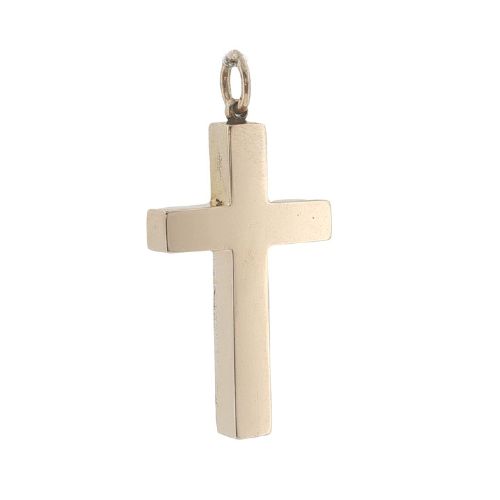
A plain cross represents the structure alone without additional figurative elements, whereas a crucifix specifically incorporates the corpus or figure of Christ. Both forms appear frequently in antique and vintage devotional jewellery.
Historical examples from different eras interpret both styles through prevailing artistic movements such as Gothic Revival or Modernism.