
Vintage Credenza
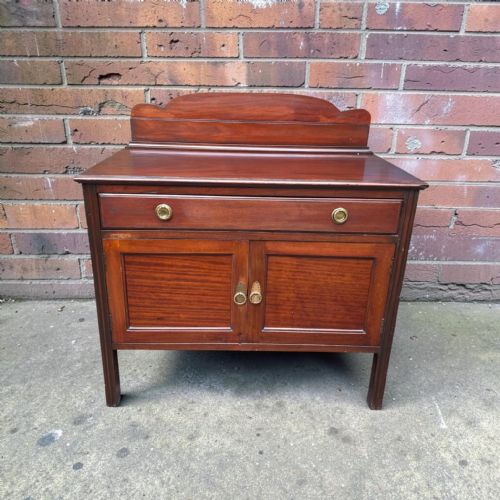
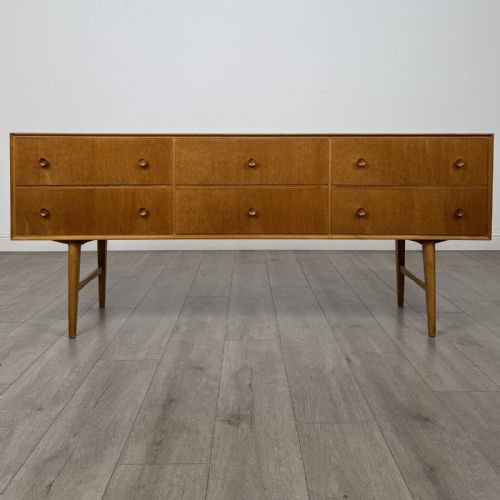
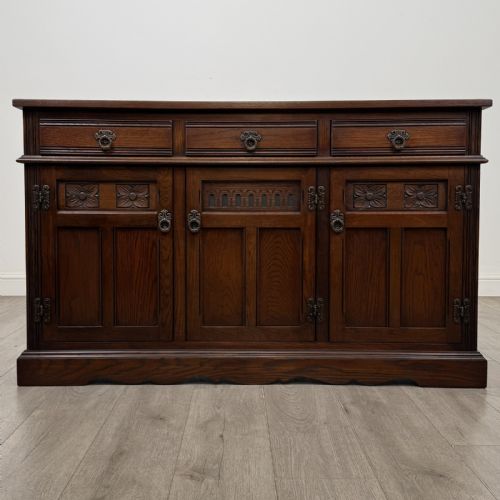
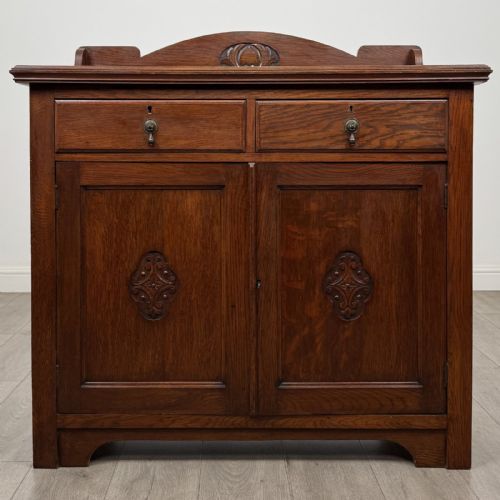
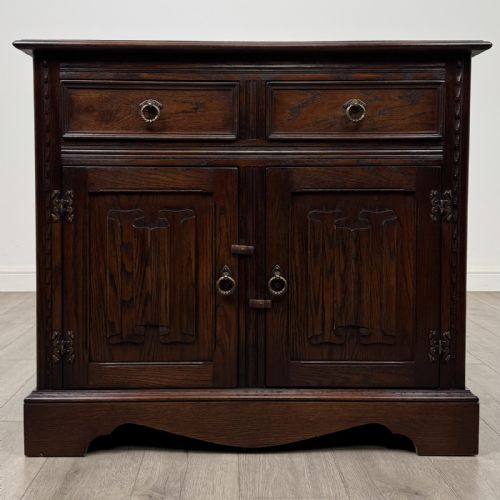
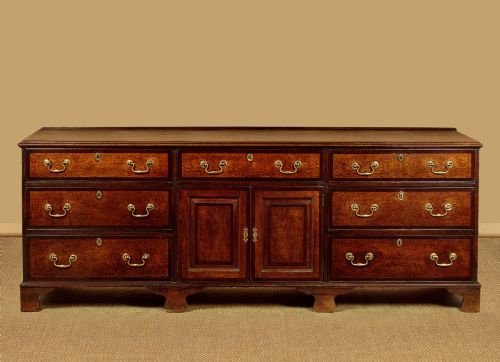
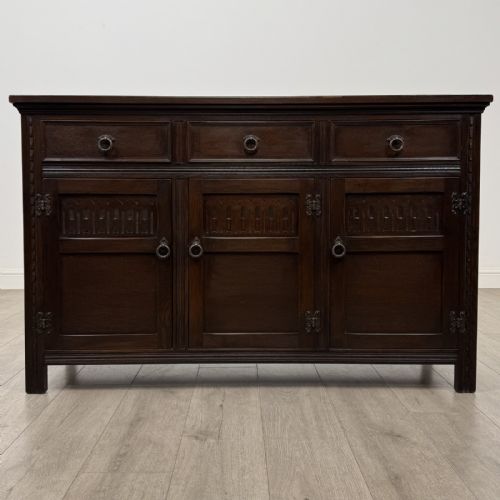
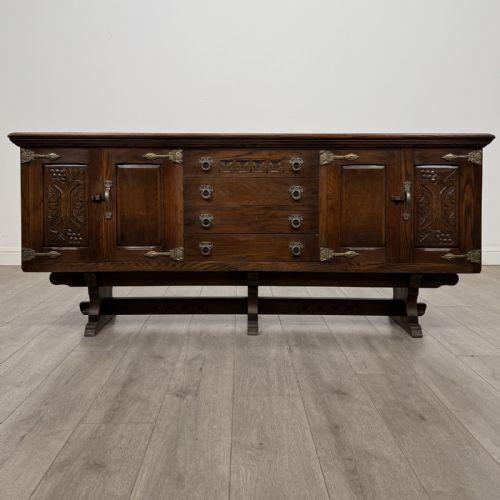
A vintage credenza brings generous storage and rich timber grain to a room, offering everything from heavy oak cupboards to sleek Art Deco sideboards.
Vintage Credenza
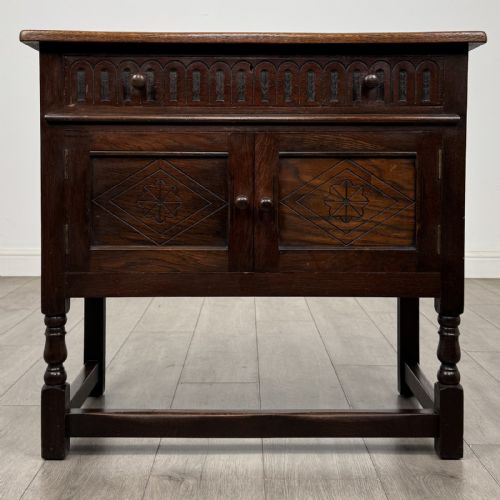
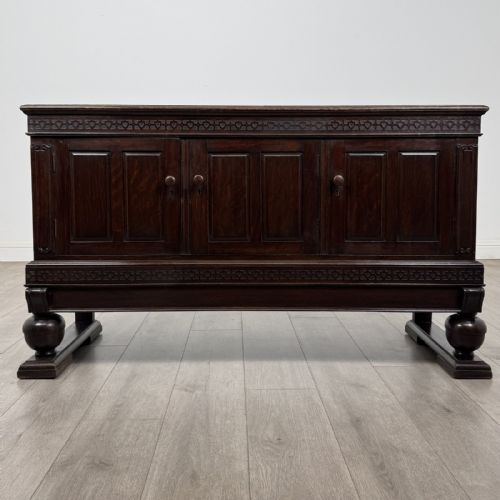
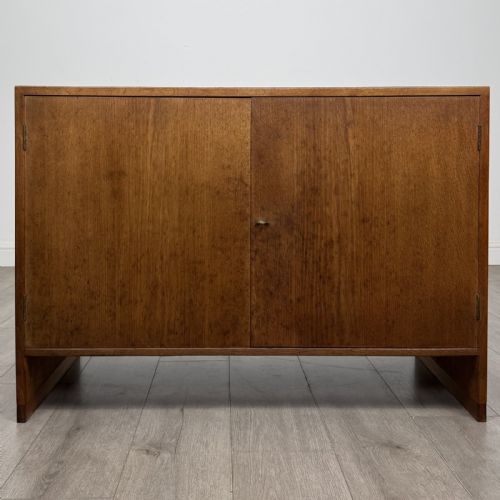
A vintage credenza encompasses low storage cabinets, sideboards, cupboards, and enfilades designed to hold dining ware and household goods. When searching for this phrase, buyers encounter a diverse selection ranging from Georgian and Victorian heavy timber designs to lighter Edwardian and Art Deco forms.
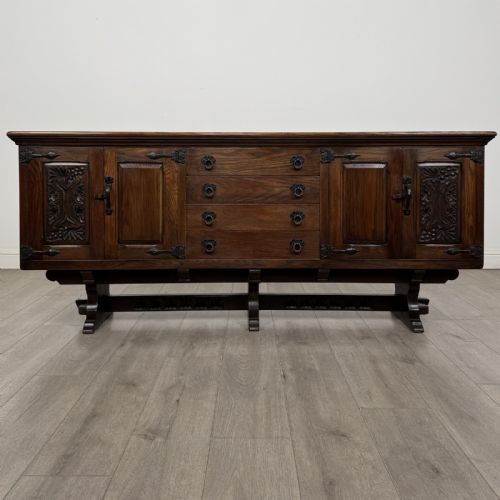
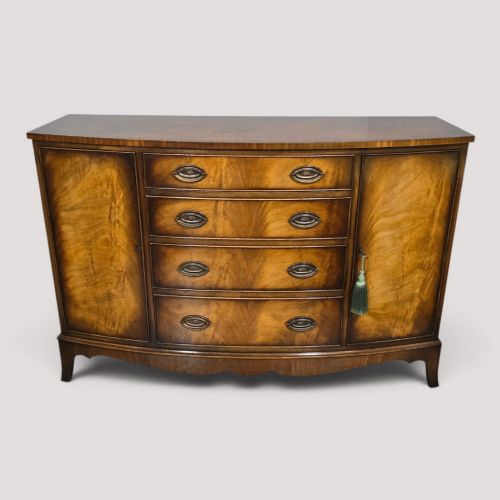
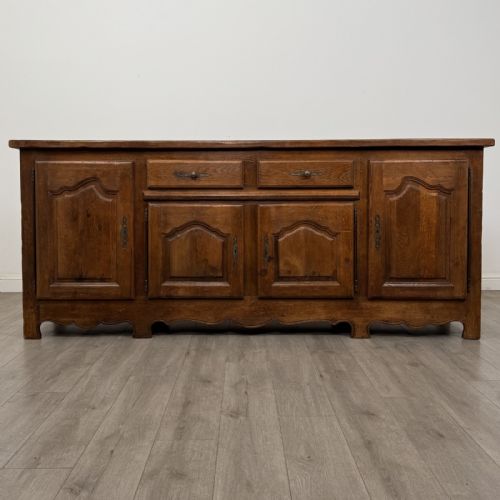
Oak forms the backbone of these listings, appearing across utilitarian cupboards, carved sideboards, and French enfilades. Mahogany and walnut variants provide formal alternatives, often featuring bow fronts or figured wood veneers.
Period influences span several centuries, with pieces dating from the eighteenth century through to the interwar decades. The selection relies heavily on oak furniture from the early twentieth century alongside nineteenth-century French and English cabinetry.
How they were made
Cabinetmakers utilised solid oak, mahogany, and walnut, frequently applying burr walnut veneers to curved and flat surfaces for decorative contrast. Brass handles and iron fixings provide robust functional hardware across many domestic cupboards and sideboards.
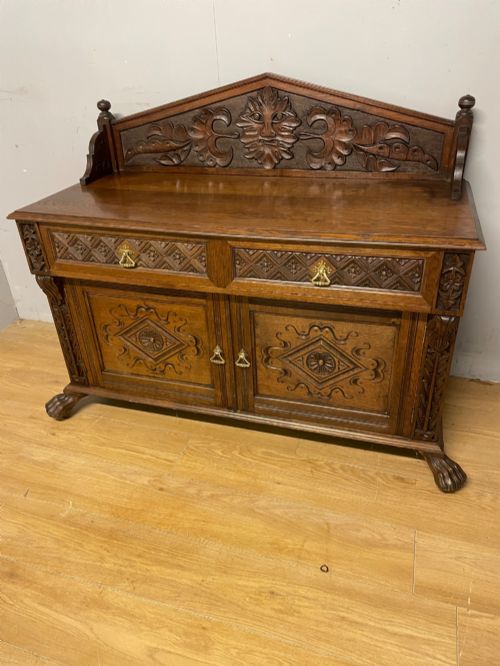
Construction techniques involve traditional joinery, incorporating carved detailing, linenfold panels, raised galleries, and turned or claw and ball legs. Marble tops feature on select continental pieces, adding weight and a smooth contrasting surface to timber frames.
Storage forms range from compact cocktail cabinets and music cabinets to expansive French enfilades and Georgian dresser bases.
What varies in quality
The choice of timber grain and veneer selection dictates visual distinction, with figured mahogany and burr walnut commanding attention through rich patterns. Crispness in carved elements, such as green man decorations or linenfold panels, separates master execution from basic workshop output.
Charles Dudouyt·Epstein
The Vintage Credenza Glossary
- Enfilade
- A long sideboard or buffet featuring a continuous sequence of doors, originating in seventeenth-century France. These large storage units often incorporate marble tops and heavy oak carving.
- Demi lune
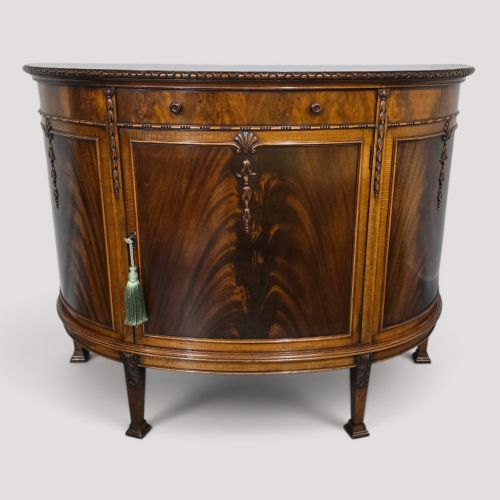
- A semicircular furniture shape utilised for side cabinets and tables designed to sit flush against a wall. This profile saves floor space while offering surface display area.
- Linenfold
- A style of wood carving that mimics folded linen cloth, commonly seen on Tudor and revival oak panels. Cabinetmakers carved this motif in low relief to decorate cupboard doors.
- Canterbury
- A low freestanding rack with partitioned sections designed to hold sheet music, books, or newspapers. Victorian examples often incorporate small drawers and turned wooden legs.
Vintage Credenza: Frequently Asked Questions
What is a credenza used for?
These cabinets serve as practical storage furniture for dining rooms, hallways, and living spaces. They hold tableware, linens, and bottles while providing a sturdy surface for lamps and decorative objects.
Larger sideboards and enfilades offer extensive interior shelving and drawers to keep domestic items organised and out of sight.
How do I date an oak sideboard?
Dating relies on observing construction methods, hardware types, and stylistic motifs present on the timber frame. Heavy carved detailing often points to revival periods, while cleaner geometric lines suggest Art Deco influence.
Drawer construction and timber thickness provide further clues regarding whether a piece originates from the eighteenth, nineteenth, or early twentieth century.
Are marble top credenzas fragile?
The marble slabs on these cabinets are heavy and stable, resting securely on the timber base. They provide a durable, heat-resistant surface that withstands daily placement of objects.
Care is required during relocation to lift the stone separately from the wooden carcase and prevent edge chipping.
How do I fit a vintage sideboard into a modern interior?
A timber storage cabinet anchors a room by introducing natural grain and historical character against neutral walls. Pairing a dark wood sideboard with minimalist surroundings creates a balanced, layered aesthetic.
The deep surfaces and internal shelves provide functional utility that integrates smoothly into contemporary living spaces.