




Vintage Covered Tureens
These vintage covered tureens bring classic presentation to the dining table, offering robust earthen and silver-plated vessels designed to keep soups, vegetables and meats warm.
Vintage Covered Tureens
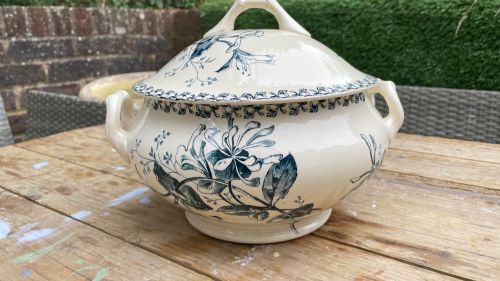
Vintage covered tureens encompass a range of deep serving vessels designed for soups, sauces, vegetables and game pies, usually accompanied by a matching lid to retain heat at the dining table. When searching this phrase, buyers encounter examples stretching from the Georgian and Victorian eras through the Edwardian period and into the early twentieth century.
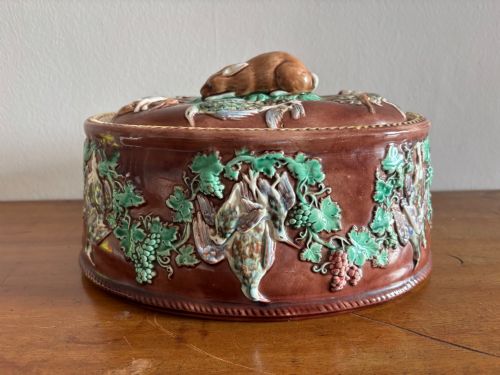
The assortment relies heavily on sturdy earthenware and ironstone, alongside refined silver plate, Old Sheffield Plate and electroplated nickel silver. Forms span from large soup tureens and sauce vessels to rectangular entree dishes and game pie containers.
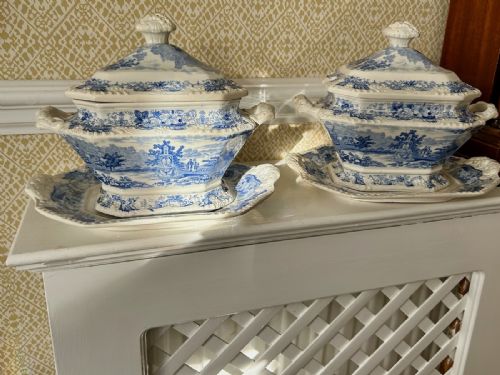
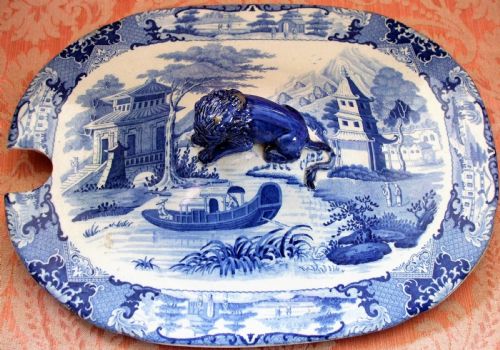
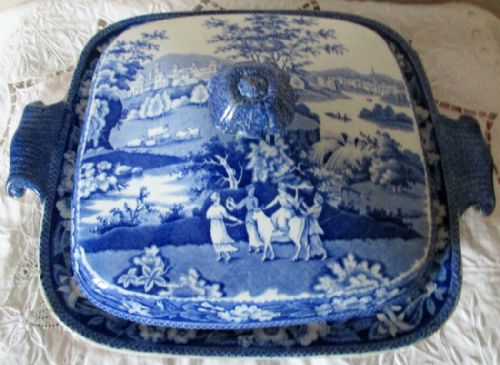
Ceramic pieces often display transfer-printed blue and white scenes, including Canton river views and classical motifs, while metal versions prioritise polished surfaces and functional warmth. Makers represented across these periods include Mappin and Webb, Mason's, Robert Hamilton, and Walker and Hall.
How they were made
Ceramic tureens utilise earthenware or ironstone bodies shaped by moulding or casting, then finished with durable glazes and blue and white transfer printing techniques. Potters applied detailed transfer designs like the Europa pattern or bamboo motifs before firing the pieces to fix the colour.
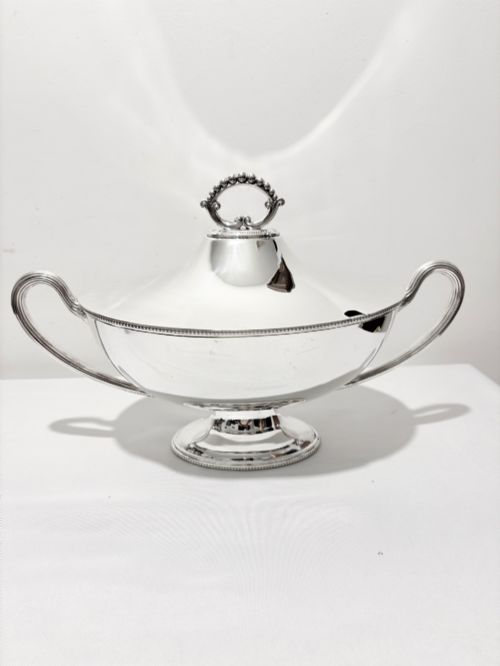
Metal serving dishes employ silver plate, Old Sheffield Plate or nickel silver, often formed over a base metal core through rolling and plating methods. Craftsmen shaped rectangular and oval entree dishes with close-fitting lids, adding applied borders and cast handles for daily use.
Vintage Covered Tureens Retail Price Guide 2026
Typical asking prices for vintage covered tureens among the pieces listed under this phrase on Sellingantiques today, from the lower quarter to the upper quarter. They describe what is for sale here now, not the wider market.
Listings feature periods from the Georgian era through Victorian and Edwardian times, utilising silver plate, ironstone, and earthenware.
What varies in quality
The standard of a tureen rests upon the crispness of its moulded details and the precision of its decorative transfer print or metal plating. Pieces produced by established makers demonstrate superior weight in the metal or ceramic body and better balance in the handles and finials.
Preservation of the original surface plating or ceramic glaze directly influences the desirability of each piece. Even wear across silver-plated edges or clean, bright transfer patterns on ironstone indicate careful handling and superior initial manufacture.
Robert Hamilton·John and Richard Riley·Mappin and Webb·Hamilton and Inches·Müller Volkstedt·Richard Ginori·Walker and Hall·Matthew Linwood·Copeland and Garrett·Christofle Gallia
The Vintage Covered Tureens Glossary
- Tureen
- A deep covered bowl or dish used for serving soups, stews or vegetables at the table. These vessels usually include matching lids to keep contents warm.
- Entree dish
- A shallow covered serving dish typically used for side dishes or meat courses. They frequently feature removable handles for versatile serving arrangements.
- Ironstone
- A heavy, durable type of earthenware patented in the nineteenth century. It resists chipping and provided a sturdy base for printed dinner services.
- Old Sheffield Plate
- An early composite material made by fusing a thin sheet of silver to a thicker copper core. This technique predates modern electroplating methods.
- Transfer printing
- A method of applying detailed designs to ceramics using an engraved copper plate and tissue paper. It allowed complex blue and white scenes to be replicated consistently.
Vintage Covered Tureens: Frequently Asked Questions
What were vintage covered tureens used for?
These vessels served soups, sauces, vegetables and meats at the dining table. The matching lids kept the food warm between the kitchen and the dining room.
Larger versions held soups or stews for multiple guests, while smaller sauce tureens and entree dishes accompanied individual courses.
How do I care for silver plated tureens?
Silver plated pieces require gentle cleaning with a soft cloth and mild, non-abrasive silver polish when necessary. Avoid harsh scrubbing to protect the underlying metal plating.
Store them in a dry environment to prevent tarnishing, and wash them by hand rather than placing them in a dishwasher.
How can I tell ironstone from porcelain?
Ironstone is a heavy, opaque earthenware that feels thicker and more robust in the hand. It does not transmit light when held up to a bulb.
Porcelain is finer, lighter and often translucent with a more vitreous body. Ironstone prioritised durability for everyday family dining.
Can I use antique tureens for serving food?
Many ceramic and metal tureens remain entirely suitable for serving dry foods, vegetables or breads at the modern table. Check each piece for internal hairline cracks or heavy wear before serving wet dishes.
Silver-plated and ironstone vessels from the nineteenth and twentieth centuries were built for functional use and continue to perform their original role.