

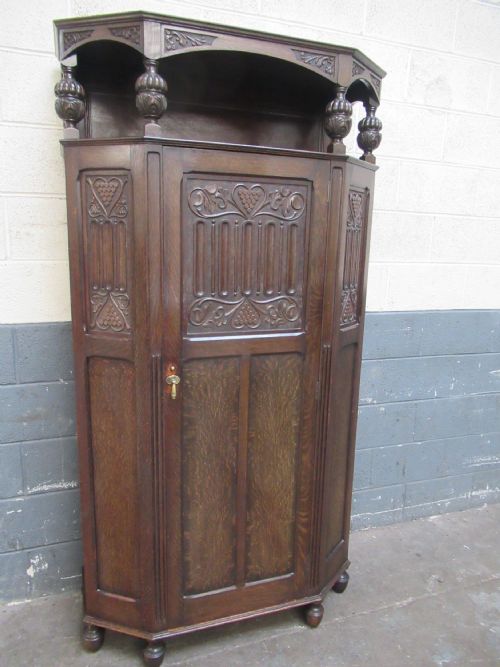


Vintage Corner Wardrobe
A vintage corner wardrobe turns neglected angles into useful floor space while housing daily attire.
Vintage Corner Wardrobe
A vintage corner wardrobe is a specialised storage piece designed to fit neatly into the ninety-degree angle of a room, maximising space that standard rectangular furniture leaves empty. These items range from compact hanging cupboards originating in the Georgian era to larger Edwardian and Victorian designs.
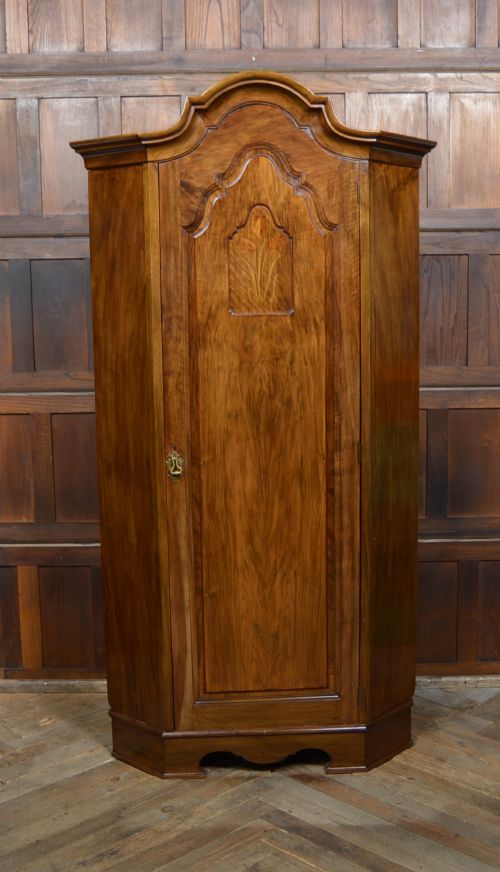
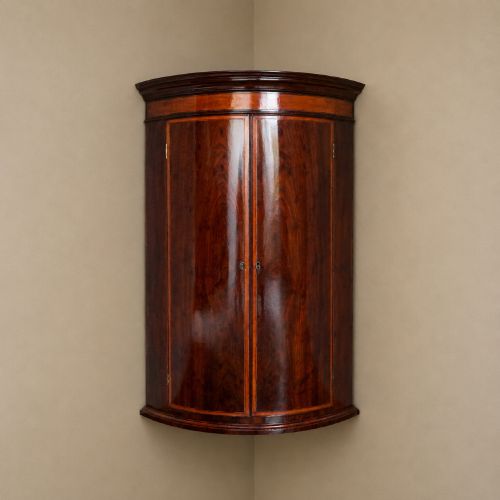
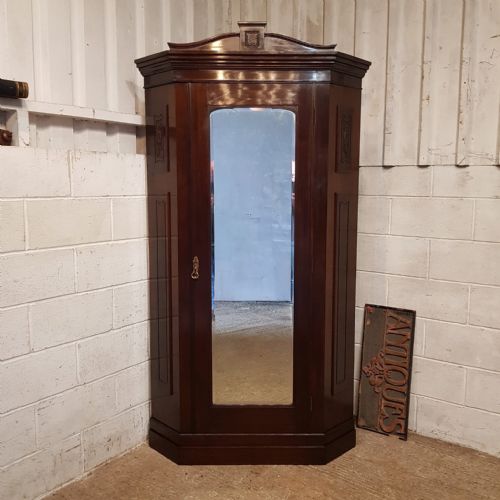
Buyers on this page most frequently encounter mahogany and oak corner cabinets and wardrobes, often featuring single or double doors. Examples span multiple centuries, including pieces from the eighteenth and nineteenth centuries alongside later Edwardian and 1920s variants.
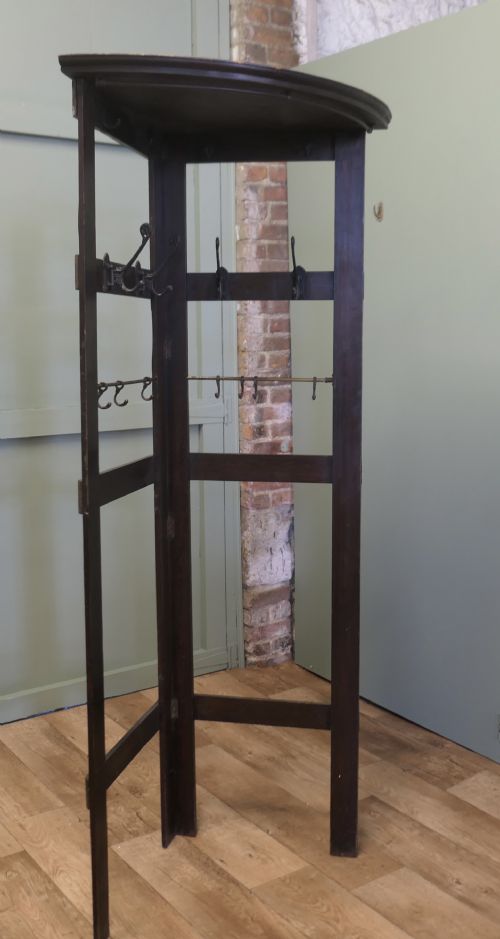
Many of these units function as hanging corner cupboards, utilising internal depth to store garments despite their angular footprint. The selection also includes portable folding sports wardrobes and tall pine configurations suited to various domestic settings.
Materials and construction methods
Makers utilised dense hardwoods such as mahogany, oak, and walnut, frequently selecting flame mahogany and plum pudding mahogany for decorative impact. Boxwood stringing and marquetry occasionally provide subtle contrast on door panels and cornices.
Cabinetmakers relied on sturdy joinery techniques, including panelled construction for doors and internal framing designed to support hanging loads. Brass hardware such as hinges and escutcheons secured doors and added functional detail.
Secondary timbers and iron fixings appear within the internal structure, while stained wood treatments alter the finish of pine and other base materials according to period tastes.
Vintage Corner Wardrobe Retail Price Guide 2026
Typical asking prices for vintage corner wardrobe among the pieces listed under this phrase on Sellingantiques today, from the lower quarter to the upper quarter. They describe what is for sale here now, not the wider market.
Listings feature woods spanning mahogany, oak, walnut, and pine, alongside decorative elements like boxwood inlay and marquetry across multiple centuries.
Judging quality in corner furniture
Quality rests primarily in the selection of timber veneers and solid boards, where rich figuring like flame mahogany elevates a piece above plain pine or stained wood. The crispness of panel moulding and the subtlety of boxwood inlay also distinguish finer workshops.
Proportion and scale dictate visual success, as angular furniture must manage depth without overwhelming the corner it occupies. Pieces retaining original brass hardware and stable, unwarped panel doors demonstrate superior preservation.
The Vintage Corner Wardrobe Glossary
- Flame mahogany
- A veneer cut from timber where the branches join the trunk, creating a characteristic rippled, flame-like pattern. This decorative wood was favoured by Georgian cabinetmakers for prominent surfaces.
- Marquetry
- The art of applying pieces of veneer to a structure to form decorative patterns and pictures. It utilises various tinted woods to achieve tonal contrast.
- Boxwood stringing
- Thin inlay lines of pale boxwood set into darker timbers to outline panels and drawers. It requires precise woodworking skill to execute cleanly.
- Panelled construction
- A method where wooden panels are allowed to float within a grooved frame to accommodate natural wood movement. This technique prevents splitting as humidity changes.
Vintage Corner Wardrobe: Frequently Asked Questions
How do I fit a corner wardrobe into a small bedroom?
Measure the wall depth extending from the corner rather than just the floor diagonal to ensure the doors clear adjacent furniture. These units use awkward angles efficiently, but you must check that crown mouldings do not collide with picture rails or skirting boards.
Position the piece where foot traffic allows the doors to swing fully open. Ensure the floor level is reasonably even so the heavy frame settles squarely against both walls.
Can these older wardrobes hold modern adult clothing?
Many older corner cupboards and cabinets were built for shallower garments or folded storage rather than bulky modern coats. Verify the internal hanging depth before purchase, as older hangers may need to face forward rather than sideways.
Some pieces function better for linens, folded items, or lighter garments. Consider retrofitting slimline hanging rails if the internal depth permits modern hanger sizes.
How do I distinguish Georgian pieces from later Victorian ones?
Georgian examples often display select timbers like flame mahogany or plum pudding mahogany with refined proportions and subtle boxwood stringing. They tend to prioritize elegant cornices and fine cabinetwork suited to formal rooms.
Victorian and later iterations frequently employ heavier mouldings, darker stained finishes, or utilitarian pine construction. Examining the interior secondary woods and backboards often clarifies the manufacturing era.
How should I care for antique mahogany and oak?
Keep wooden furniture away from direct heat sources and radiators to prevent timber shrinkage and veneer lifting. Maintain stable room humidity and dust regularly with a soft, dry cloth.
Apply a quality wax sparingly when the wood appears dry to nourish the grain. Avoid silicone-based polishes that build up residue and attract dust over time.