


Vintage Copper Fire Bucket
These vintage copper fire bucket items combine practical hearth storage with durable metalwork that anchors a room.
Vintage Copper Fire Bucket
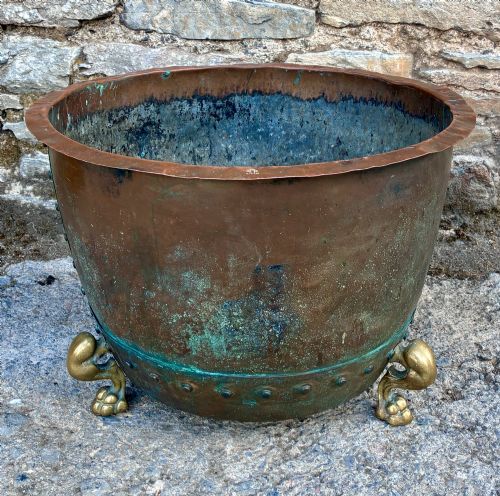
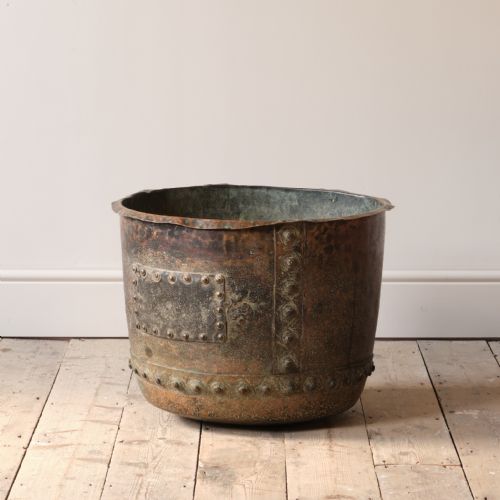
When you search for vintage copper fire bucket pieces, you encounter heavy hearth vessels alongside related log bins, scuttles, and planters. The pieces on this page span the Georgian, Victorian, and Arts and Crafts periods, reflecting domestic utility from the nineteenth and early twentieth centuries.
You are most likely to meet nineteenth-century copper log bins and coal buckets featuring brass fittings, iron swing handles, and riveted seams. Many of these sturdy containers transition easily from fireplace accessories to planters or waste paper baskets in modern interiors.
Materials and construction
Makers formed these vessels primarily from sheet copper, often reinforced with brass rims, iron swing handles, and sturdy wrought iron mounts. Rivets secure the overlapping seams of the metal bodies, providing the structural strength needed for carrying heavy loads of coal or logs.
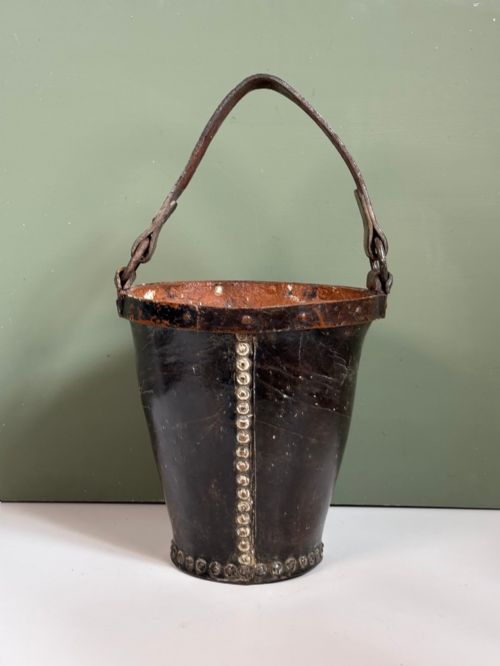
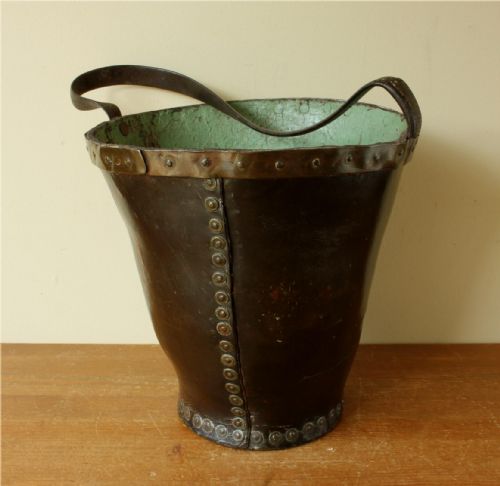
Alternative materials such as boiled leather appear in the evidence, sometimes studded with copper for decorative and functional reinforcement. Interior zinc linings protect certain vessels from moisture, while brass handles and feet add contrasting metal tones to the polished or verdigris copper surfaces.
Some sturdy waste paper baskets began life as eighteenth-century leather fire buckets.
Judging construction and character
The distinction between standard utility vessels and finer decorative examples lies in the weight of the metal and the neatness of the hand-beaten or riveted joints. Pieces originating from the Arts and Crafts period often display deliberate hand-craftsmanship in their surface texture and handle mounts.
Patina and structural integrity dictate the overall appeal of each piece. Surviving brass handles, solid iron drop rings, and intact riveted seams indicate a higher standard of original manufacture and better preservation through decades of domestic use.
The Vintage Copper Fire Bucket Glossary
- Riveted
- Joined together using metal pins hammered flat at the ends. This technique secures the overlapping seams of heavy copper bodies.
- Verdigris
- A green patina that forms naturally on copper over time through atmospheric exposure. It provides a distinct aged surface character.
- Purdonium
- A specialised coal box or scuttle designed for household use. These containers often feature drop fronts and integrated scoops.
- Ferrat
- A traditional vessel type associated with hearth storage. The term denotes robust metal containers utilised for fuel management.
- Cauldron
- A large round metal pot with a stable base or handle. These heavy forms frequently serve as decorative log bins.
Vintage Copper Fire Bucket: Frequently Asked Questions
How were these metal buckets originally used?
Households utilised these heavy vessels to transport coal, store firewood, or hold water near open hearths. Their robust construction handled daily domestic demands before transitioning to decorative home accessories.
Over decades, many containers shifted roles entirely. Owners repurposed them as indoor planters, umbrella stands, or waste paper baskets in living spaces.
How do I clean a copper bucket?
Basic maintenance involves gentle dusting with a dry cloth to remove surface particles. Avoid harsh abrasive cleaners that strip the historic patina accumulated over generations.
If you prefer a polished finish, apply a specialised copper cream using soft cloths. Leaving the natural verdigris undisturbed preserves the aged character of older pieces.
How can I tell a Victorian piece apart?
Victorian items frequently exhibit heavy gauge copper bodies paired with substantial brass rims and iron swing handles. Their proportions tend toward deep cylindrical or slightly tapered forms built for practical utility.
Later Arts and Crafts examples often show more pronounced hand-beaten surface textures and decorative rivets. Georgian precursors lean toward leather construction with copper studding.
Can I use these buckets outdoors?
Many of these sturdy vessels function effectively as garden planters or patio log holders. Copper and brass withstand outdoor environments well while developing a deeper atmospheric verdigris.
Check for interior moisture protection or drainage needs depending on the specific metal or lined construction. Ensuring adequate airflow helps preserve the base metal integrity.