




Vintage Convex Glass
Vintage convex glass gathers light across rooms through curved lenses set in heavy mahogany, gleaming brass and gilded wood.
Vintage Convex Glass
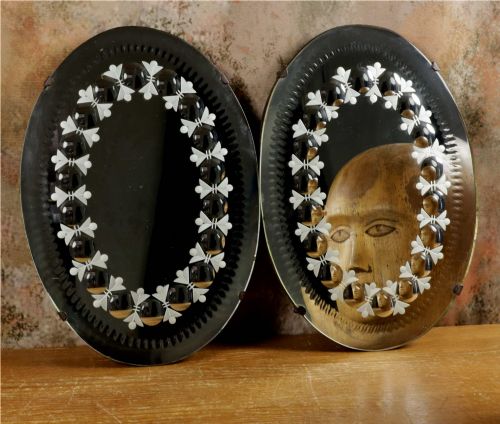
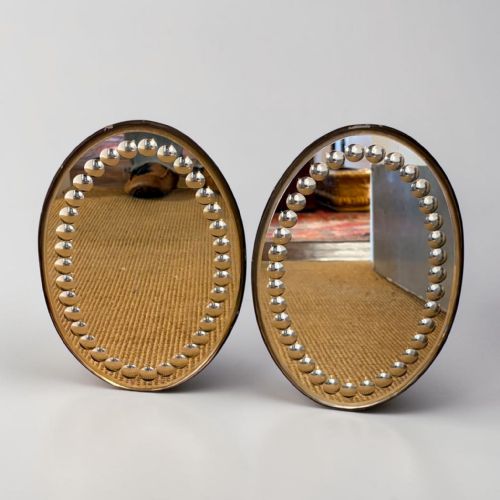
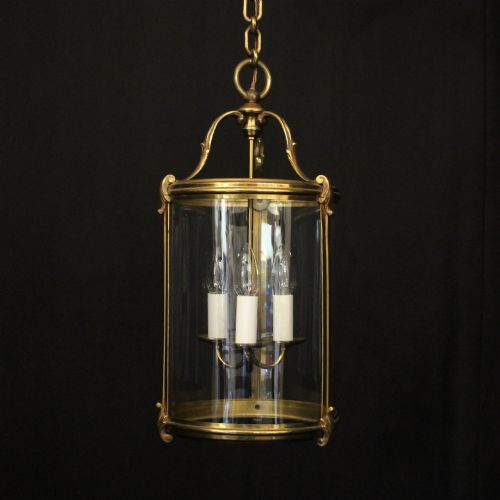
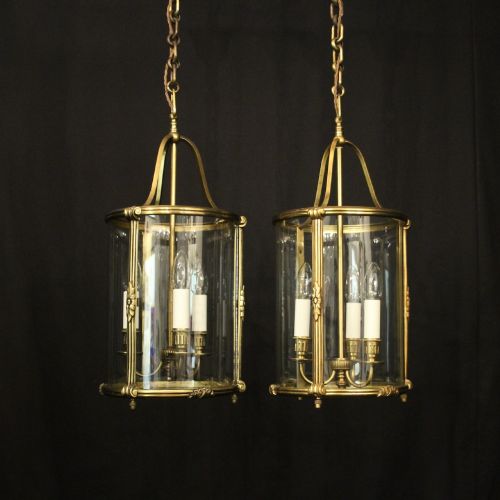
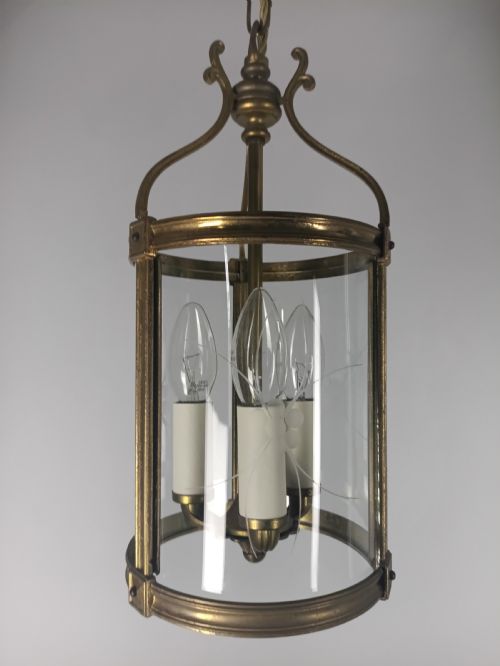
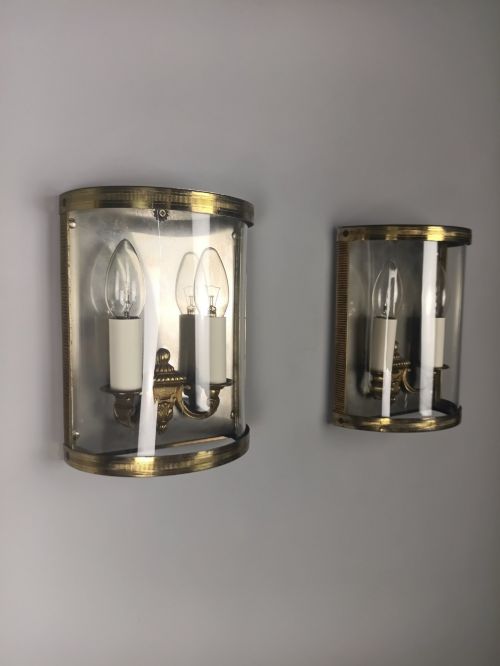
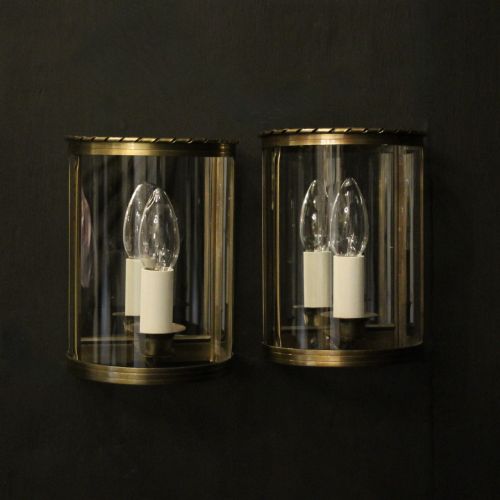
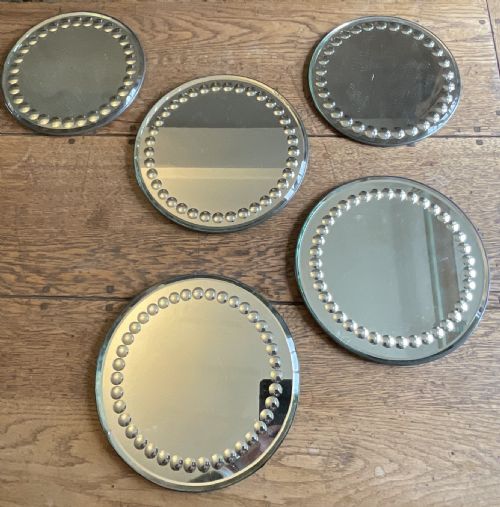
Vintage convex glass encompasses optical lenses shaping wall mirrors, wall clocks, hall lanterns and chrystoleums. These pieces manipulate interior space by projecting a wide, curved reflection back into the room.
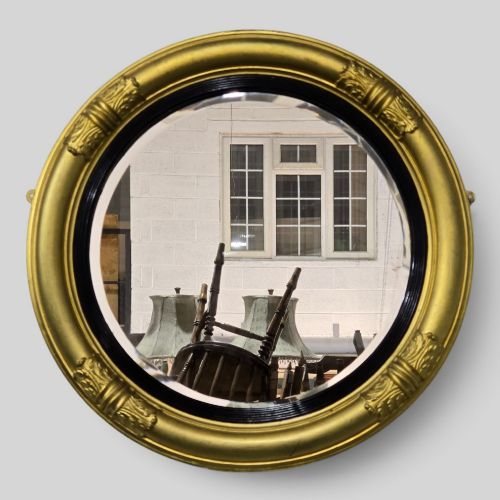
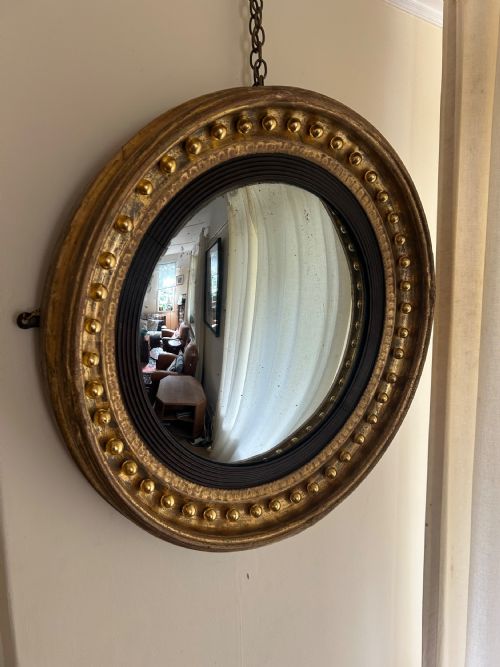
The versions most frequently encountered on this page include Regency and Victorian gilt mirrors, alongside French hall lanterns and school clocks dating from the nineteenth century into the twentieth century. Mahogany and brass frame these curved lenses, providing structural weight and metallic contrast.
The inventory ranges from ornate sorcerer mirrors to functional dial clocks and brass ceiling lighting. Each object relies on the optical distortion of the curved glass panel to create depth and movement within domestic interiors.
Materials and construction methods
Makers utilised heavy glass, blown or moulded to achieve a consistent curvature before setting it into robust frames of mahogany, brass, or giltwood. Gilding applied to wood or metal surfaces provided a bright, reflective border that complemented the curved lens.
Lanterns and wall lights combined cast brass and bronze with etched or clear convex glass panels, housing internal lighting components securely. Wooden clock cases and barometer surrounds turned solid mahogany into deep, protectivehousings for delicate dials and fusee movements.
Vintage Convex Glass Retail Price Guide 2026
Typical asking prices for vintage convex glass among the pieces listed under this phrase on Sellingantiques today, from the lower quarter to the upper quarter. They describe what is for sale here now, not the wider market.
Listings feature items spanning the Regency, Victorian, and Edwardian periods, constructed from mahogany, brass, and giltwood.
Defining factors of quality
The clarity and purity of the curved glass distinguish finer examples from standard production, as older lenses often display subtle ripples and bubbles from early manufacture. The integrity of the wooden or gilded frame, particularly the crispness of carved gesso details on Regency mirrors, dictates the overall refinement of the piece.
Mechanical precision in wall clocks and barometers, alongside the heavy gauge of cast brass on hall lanterns, marks out superior craftsmanship. The preservation of original surface finishes, whether patinated mahogany or bright gilding, underpins the integrity of each item.
John Wilson·W.E. Pain of Cambridge·J C Moretti·Schweninger
The Vintage Convex Glass Glossary
- Convex glass
- Curved glass that bulges outward toward the viewer, creating a wide-angle reflection of the surrounding interior. It is commonly found on Regency mirrors and school clocks.
- Sorcerer mirror
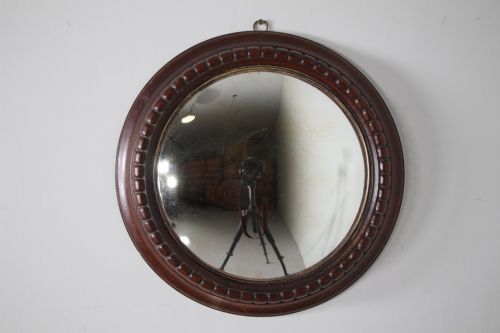
- A convex mirror designed to distort the perspective of a room, historically attributed with magical or protective properties. These pieces often feature deep circular frames.
- Fusee movement
- A clock mechanism utilising a cone-shaped pulley to maintain even tension as the mainspring unwinds. This system ensures consistent timekeeping on dial clocks.
- Chrystoleum
- A Victorian method of applying a hand-coloured paper print to the inside of a convex glass panel, then painting behind it. The curved glass gives the image a three-dimensional depth.
- Wheel barometer
- A domestic weather instrument housed in a wooden case, typically mahogany, featuring a dial displayed beneath a curved glass face. It measures atmospheric pressure using a mercury siphon.
Vintage Convex Glass: Frequently Asked Questions
What is a sorcerer mirror?
A sorcerer mirror uses a strongly curved glass lens to capture a panoramic view of an entire room within a compact circular frame.
Historically placed in grand entertaining spaces, these mirrors allowed hosts to observe guests from a single vantage point.
How do I hang a heavy convex mirror?
These mirrors require robust wall fixings secured directly into masonry or solid studs due to the substantial weight of the glass and wooden frame.
Using a rated picture hook or brass bracket matching the weight distribution ensures the piece hangs securely.
How do I clean antique convex glass?
Cleaning requires a soft microfiber cloth and a gentle, ammonia-free glass cleaner applied to the cloth rather than directly onto the curved surface.
Avoiding harsh abrasives protects both the fragile glass and the surrounding antique gilt or wood finish.
Are convex glass clock dials original?
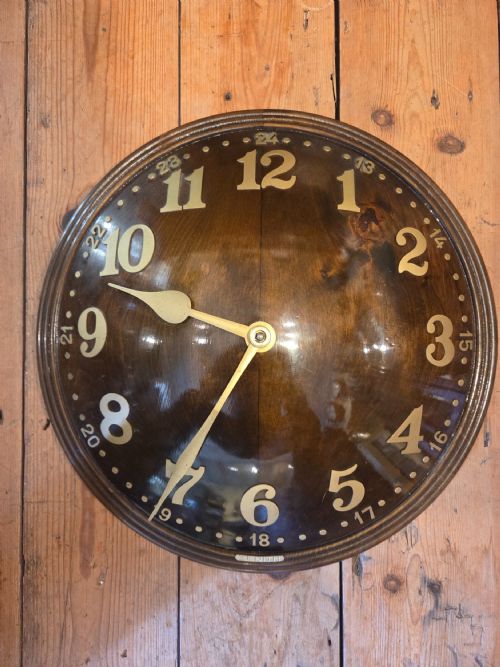
Many wall clocks retain their bowed glass covers, which protect the painted paper or metal dials from dust and damage.
Examining the fit within the wooden bezel helps determine whether the glass and movement date from the same period.